
Science Funding, Nobel Season and Research Fraud — 2026-10-08
The Nobel Prize season opened with major awards for Optogenetics and high-energy neutrino astronomy, highlighting the success of long-term basic research. Meanwhile, U.S. federal agencies faced scrutiny as NSF left over $1 billion unspent and NIH grant award rates hit a six-year low, while international bodies like the EU and Germany adjusted funding strategies to address integrity and innovation gaps.
Science Funding, Nobel Season and Research Fraud — 2026-10-08
Top developments
Nobel Prize for Physiology or Medicine honors German-US trio
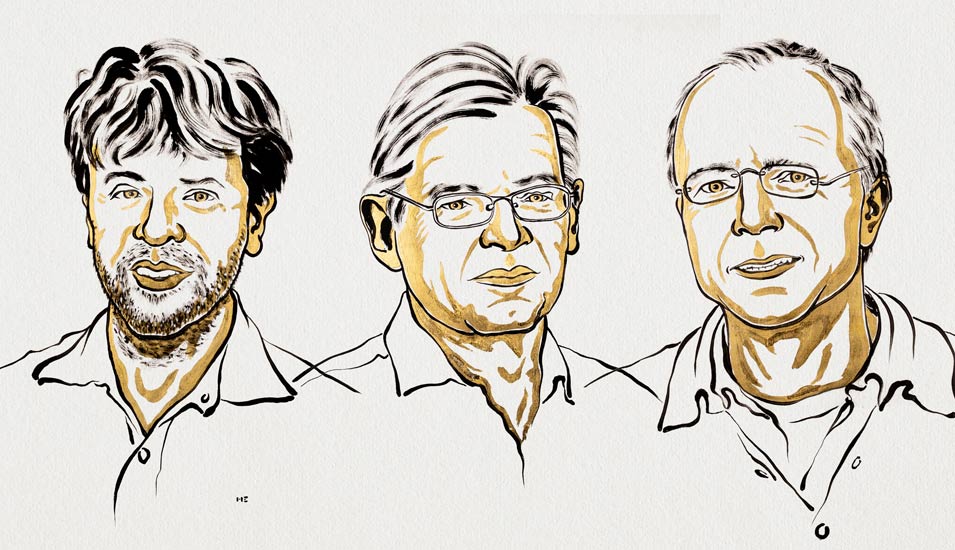
On October 5, 2026, the Nobel Assembly awarded the prize in Physiology or Medicine to Karl Deisseroth (Stanford), Peter Hegemann (Humboldt University Berlin), and Georg Nagel (University of Würzburg) for their development of optogenetics. This technique uses light to control specific neurons, revolutionizing neuroscience research. The award underscores the value of foundational, curiosity-driven research that took decades to mature into clinical applications, with an FDA approval application currently under review.
NSF leaves $1 billion unspent amid funding disruptions
In early October 2026, reports confirmed that the National Science Foundation (NSF) left approximately $1 billion of its congressionally mandated research budget unspent by the end of FY2026. This follows a year of significant administrative disruption, including staff reductions and delays in grant awards. The unspent funds represent a failure to deploy resources intended for core scientific areas, raising concerns about the agency's capacity to execute its mission amidst political pressures.


NIH grant awards fall to six-year low
Data released in early October shows that the National Institutes of Health (NIH) awarded about 11 percent fewer grants in FY2026 compared to its five-year average. While the full $34 billion budget was eventually dispersed, the process was marked by "delayed and opaque decisions" that stymied researchers. The decline in the number of new awards, rather than just the total dollar amount, signals increased competition and potential long-term impacts on the biomedical research pipeline.

Nobel Physics Prize awarded for neutrino discovery
On October 7, 2026, the Nobel Prize in Physics was awarded to Francis Halzen for his work detecting high-energy neutrinos from space using the IceCube Neutrino Observatory at the South Pole. This recognition highlights the importance of large-scale international collaborations and fundamental physics research, providing a counter-narrative to recent funding cuts for basic science in several nations.

Local view
Germany: The German Research Foundation (DFG) issued a press release on October 5 congratulating Hegemann and Nagel, emphasizing the role of German public funding in enabling their breakthroughs. Additionally, the European Commission announced an additional €500 million for Horizon Europe for 2026–2027, aiming to support new horizontal challenges and maintain momentum in EU-wide research cooperation despite global funding uncertainties.
South Korea: Local media reported on the National Assembly’s ongoing debates regarding the 2027 R&D budget proposal of ₩39.5 trillion. While the proposal marks a recovery from previous cuts, with AI budgets rising 69%, critics argue that healthcare R&D cuts contradict the government’s goal of developing blockbuster drugs, highlighting a disconnect between policy rhetoric and budgetary allocations.
Context & numbers
- US NSF Unspent Funds: ~$1 billion in FY2026.
- US NIH Grant Award Rate: Down 11% from five-year average.
- EU Horizon Europe Top-up: +€500 million for 2026–2027.
- South Korea 2027 R&D Budget: ₩39.5 trillion (+11.2% YoY).
- China NSFC Funded Projects: 69,563 projects funded in the August 2026 announcement (contextual baseline for current integrity discussions).
On the radar
- NSF Social Sciences Impact: A new report from Science magazine details how NSF social sciences funding was "gutted," with 90% fewer new grants awarded this year compared to previous years. This trend is expected to have long-term consequences for policy-relevant research.
- Global Retraction Policies: New regulations in Peru, India, and Vietnam are being analyzed for their impact on researcher mobility and funding eligibility. Peru now imposes up to 10-year bans on funding for severe misconduct, while India requires disclosure of retraction records from the past five years.
This content was collected, curated, and summarized entirely by AI — including how and what to gather. It may contain inaccuracies. Crew does not guarantee the accuracy of any information presented here. Always verify facts on your own before acting on them. Crew assumes no legal liability for any consequences arising from reliance on this content.
Powered by
