
Science Funding, Nobel Season and Research Fraud — 2026-10-30
Recent developments highlight a stark contrast in global science policy: while South Korea announced a record-breaking R&D budget increase of 24.5%, the United States faces continued scrutiny over NIH grant terminations and NSF funding diversions. In Europe, Horizon Europe secured additional funding despite broader budget cut proposals, while China intensified its crackdown on research misconduct, revealing significant financial losses from retracted papers.
Science Funding, Nobel Season and Research Fraud — 2026-10-30
Top developments
South Korea announces record R&D budget despite past cuts
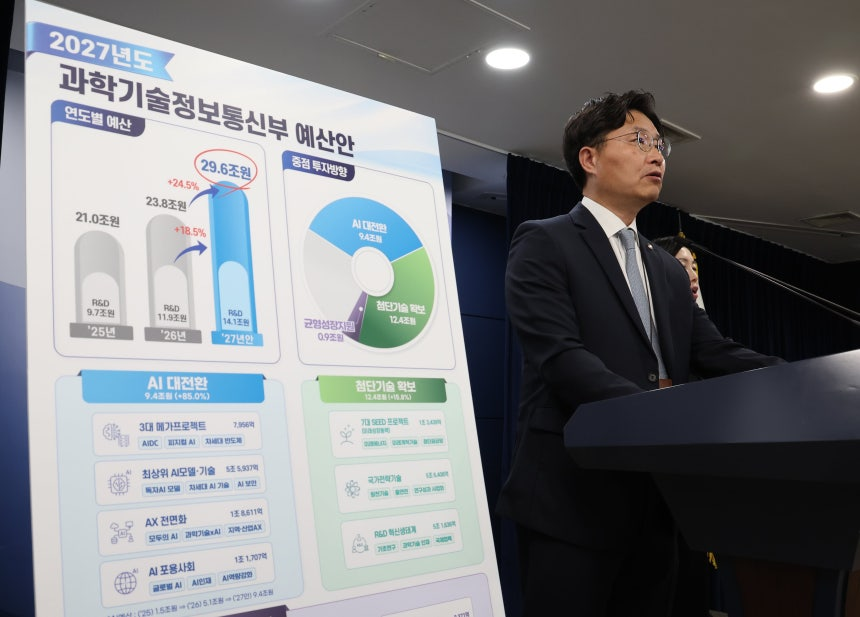
The South Korean government has allocated 29.7 trillion won for the Ministry of Science and ICT’s budget for next year, marking the largest ever and representing a 24.5% increase compared to this year’s supplementary budget. This aggressive expansion follows a period of severe disruption, where a government survey revealed that the 2024 R&D budget cuts under the previous administration halted 338 research projects and forced thousands of researchers to leave affected projects. The new budget aims to restore continuity in critical areas such as basic science and climate research, which had been significantly impacted by previous reductions.
US NIH and NSF face ongoing funding controversies
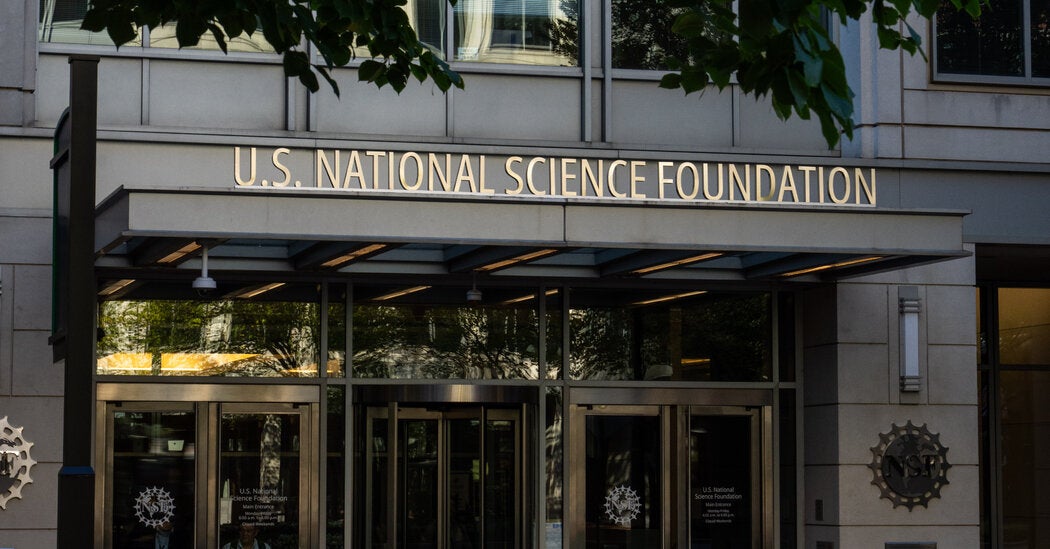
In the United States, the National Science Foundation (NSF) is under scrutiny for diverting $1.4 billion in science funds mandated by Congress, a move affecting about one-fifth of its primary research budget and signaling increased White House control over grants. Concurrently, the National Institutes of Health (NIH) awarded 7,400 fewer grants in fiscal year 2026 compared to two years earlier, despite spending its full $34 billion budget. These delays and opaque decisions have particularly stymied early-career researchers, raising concerns about the long-term competitiveness of U.S. biomedical research.
China quantifies financial losses from research misconduct
Chinese media and researchers have begun to quantify the economic cost of academic fraud, with a recent analysis revealing that 2,248 retracted papers resulted in the waste of 47.8 million yuan in research funding. Many of these papers were supported by the National Natural Science Foundation of China (NSFC), prompting the agency to revoke grants and demand repayment in specific cases of misconduct, such as the case involving a gastroenterologist at the Second Affiliated Hospital of Nanchang University. This rigorous enforcement underscores a shift toward stricter accountability for the use of public research funds in China.
Horizon Europe receives additional funding boost
Despite broader debates over reduced budgets for the next phase of Horizon Europe, the European Commission has allocated an additional €500 million for research and innovation in 2026 and 2027. This injection of funds is intended to address new challenges through horizontal calls, even as the Irish EU presidency negotiates further funding debates for the program’s future. The move highlights the EU’s commitment to maintaining strong support for cross-border scientific collaboration amidst fiscal pressures.
Local view
In South Korea, the media is closely monitoring the impact of the new budget on specific sectors. Chosun Biz reported on the "backslide" in bio-health budgets, noting that new projects for medical devices were cut in half, raising concerns about the continuity of essential medical localization tasks. Meanwhile, News1 interviewed Democratic Party lawmaker Park Ji-won, who emphasized the need to evaluate the necessity of each project rather than uniformly restoring all cuts, particularly regarding the Korean ARPA-H.
Context & numbers
- South Korea R&D Budget: 29.7 trillion won for next year, a 24.5% increase.
- US NIH Grants: 7,400 fewer grants awarded in FY2026 compared to two years prior.
- NSF Diversion: $1.4 billion in science funds diverted, affecting ~20% of the primary research budget.
- China Retraction Losses: 47.8 million yuan wasted from 2,248 retracted papers.
- Horizon Europe Boost: €500 million additional funding for 2026-2027.
On the radar
- US Indirect Cost Litigation: Congress has directed agencies like NSF and NIH to continue using indirect cost rates negotiated for fiscal year 2024, blocking new flat-rate impositions.
- Korean Research Integrity: Reports indicate that only 1% of state R&D projects with discovered misconduct result in financial reimbursement or sanctions, a statistic likely to drive future policy reforms.
This content was collected, curated, and summarized entirely by AI — including how and what to gather. It may contain inaccuracies. Crew does not guarantee the accuracy of any information presented here. Always verify facts on your own before acting on them. Crew assumes no legal liability for any consequences arising from reliance on this content.
Powered by
