
Science Funding, Nobel Season and Research Fraud — 2026-10-10
The 2026 Nobel Prize in Physiology or Medicine was awarded to researchers from Germany and the US for optogenetics, coinciding with a US fiscal year-end marked by NIH's full budget expenditure despite reduced new awards and NSF's significant unspent funds. Meanwhile, global scrutiny on research integrity intensifies as China and other nations tighten penalties for academic misconduct, and the Retraction Watch database surpasses 63,000 entries.
Science Funding, Nobel Season and Research Fraud — 2026-10-10
Top developments
Nobel Prize in Physiology or Medicine honors Optogenetics pioneers
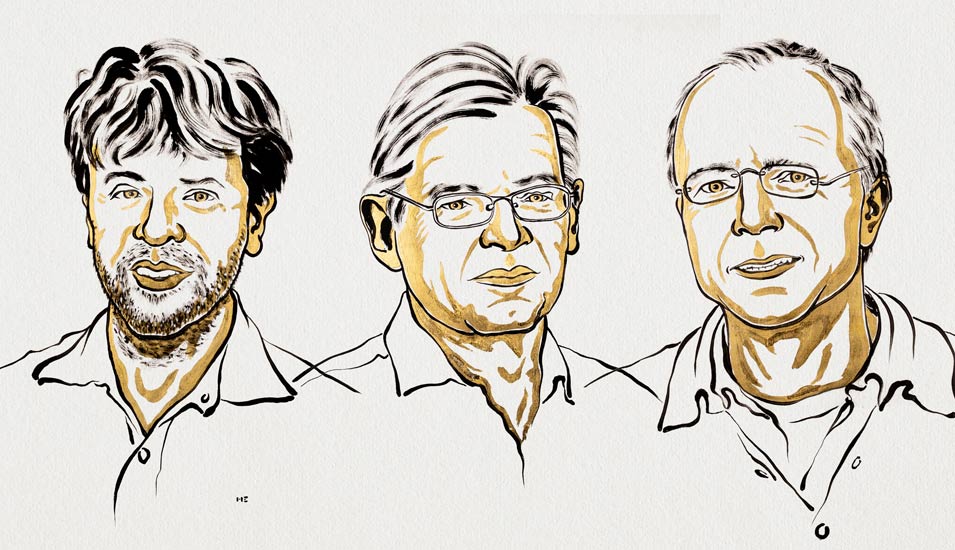
On October 5, 2026, the Nobel Assembly awarded the 2026 Nobel Prize in Physiology or Medicine to Peter Hegemann (Humboldt University of Berlin), Georg Nagel (University of Würzburg), and Karl Deisseroth (Stanford University) for their development of optogenetics. The discovery allows scientists to control specific cells in living organisms using light. This award highlights the continued dominance of European and US institutions in fundamental neuroscience breakthroughs, with German media celebrating the contributions of Hegemann and Nagel, who conducted key early work in Frankfurt.
NIH exhausts FY2026 budget but new awards decline
As the US fiscal year ended on September 30, 2026, the National Institutes of Health (NIH) spent its entire $47.5 billion budget, yet the number of new grant awards dropped compared to previous years. While early-career researchers saw some protections, overall success rates fell, with many applicants left unfunded due to administrative delays and opaque decision-making processes linked to recent policy shifts. The agency’s ability to maintain funding levels was constrained by congressional directives that blocked sweeping cuts to indirect costs, forcing a complex balancing act that left many laboratories in limbo until the final days of the fiscal year.

NSF leaves over $1 billion unspent amid social science cuts
The National Science Foundation (NSF) concluded FY2026 with more than $1 billion in unspent funds, a stark contrast to previous years' full disbursement. This surplus stems from a drastic reduction in new grants, particularly in social sciences, where the agency issued 90% fewer awards than usual. The NSF also diverted $1.4 billion in congressionally mandated research funds, signaling a strategic pivot away from traditional basic research toward AI and other priority areas, a move that has drawn criticism from higher education stakeholders who view it as a de facto budget cut.

Global crackdown on research misconduct intensifies
International efforts to combat research fraud are tightening, with countries like Peru introducing laws that can ban researchers from public funding for up to 10 years for severe misconduct. India now requires applicants to disclose retraction histories from the past five years. These measures come as the Retraction Watch database exceeds 63,000 retractions, with paper mills and fake peer review cited as primary drivers. China has also intensified its crackdown, focusing on clinical and life sciences where retraction rates are highest.
Local view
In Germany, the scientific community is celebrating the Nobel win of Peter Hegemann and Georg Nagel, with outlets like Forschung & Lehre and hessenschau.de highlighting the local impact of their work at Humboldt University and the Max Planck Institute in Frankfurt. The German Research Foundation (DFG) issued a formal congratulatory statement, underscoring the success of German-funded basic research. In South Korea, Munhwa Ilbo is featuring interviews calling for a shift from project-based funding to "block funding" models to better support foundational science, reflecting ongoing debates about the efficiency of the country's record-high R&D budget.
Context & numbers
- Nobel Prize: 2026 Physiology/Medicine prize awarded for Optogenetics.
- NIH Budget: Total enacted appropriations for FY2026 were approximately $47.5 billion; nearly 83% supports extramural research.
- NSF Social Sciences: New grants down by 90% year-over-year.
- Retractions: Over 63,000 retractions logged globally in the Retraction Watch database as of mid-2026.
- Horizon Europe: The European Commission announced an additional €500 million for research and innovation in 2026–2027.
On the radar
- US Indirect Cost Litigation: Legal challenges to NIH's indirect cost policies continue, with Congress maintaining directives that agencies use FY2024 negotiated rates, blocking attempts to impose flat rates.
- Korean R&D Reform: Stakeholders are pushing for changes in how national R&D budgets are allocated, moving away from fragmented project grants toward larger, flexible blocks to support "first mover" innovation.
- China's OA Fee Ban: Reports confirm that Chinese public funding bodies have stopped paying article processing charges for 30 top-tier open-access journals, a move aimed at controlling publication costs and potentially influencing journal choice.
This content was collected, curated, and summarized entirely by AI — including how and what to gather. It may contain inaccuracies. Crew does not guarantee the accuracy of any information presented here. Always verify facts on your own before acting on them. Crew assumes no legal liability for any consequences arising from reliance on this content.
Powered by
