
Asteroids and Planetary Defence: Bennu, Apophis, Hera — 2026-10-12
JAXA has reported a technical anomaly with Hayabusa2's final ion engine, potentially impacting its extended mission to Asteroid 1998 KY26. Meanwhile, recent scientific analyses of Bennu samples continue to refine our understanding of early solar system chemistry, with new data pinpointing the asteroid's origin near the solar system's ice line.
Asteroids and Planetary Defence: Bennu, Apophis, Hera — 2026-10-12
Top developments
Hayabusa2 Ion Engine Anomaly Reported
JAXA confirmed that the last remaining ion engine on the Hayabusa2 probe is experiencing an abnormality, raising concerns about the spacecraft's ability to perform future maneuvers. This news, published in early October 2026, marks a critical juncture for the extended mission, which aims to fly by Asteroid 1998 KY26 in July 2031. The probe successfully completed its primary mission at Ryugu and performed a flyby of Asteroid Torifune in July 2026, but the engine issue may limit further trajectory adjustments.

Bennu Samples Pinpoint Origin Near Ice Line
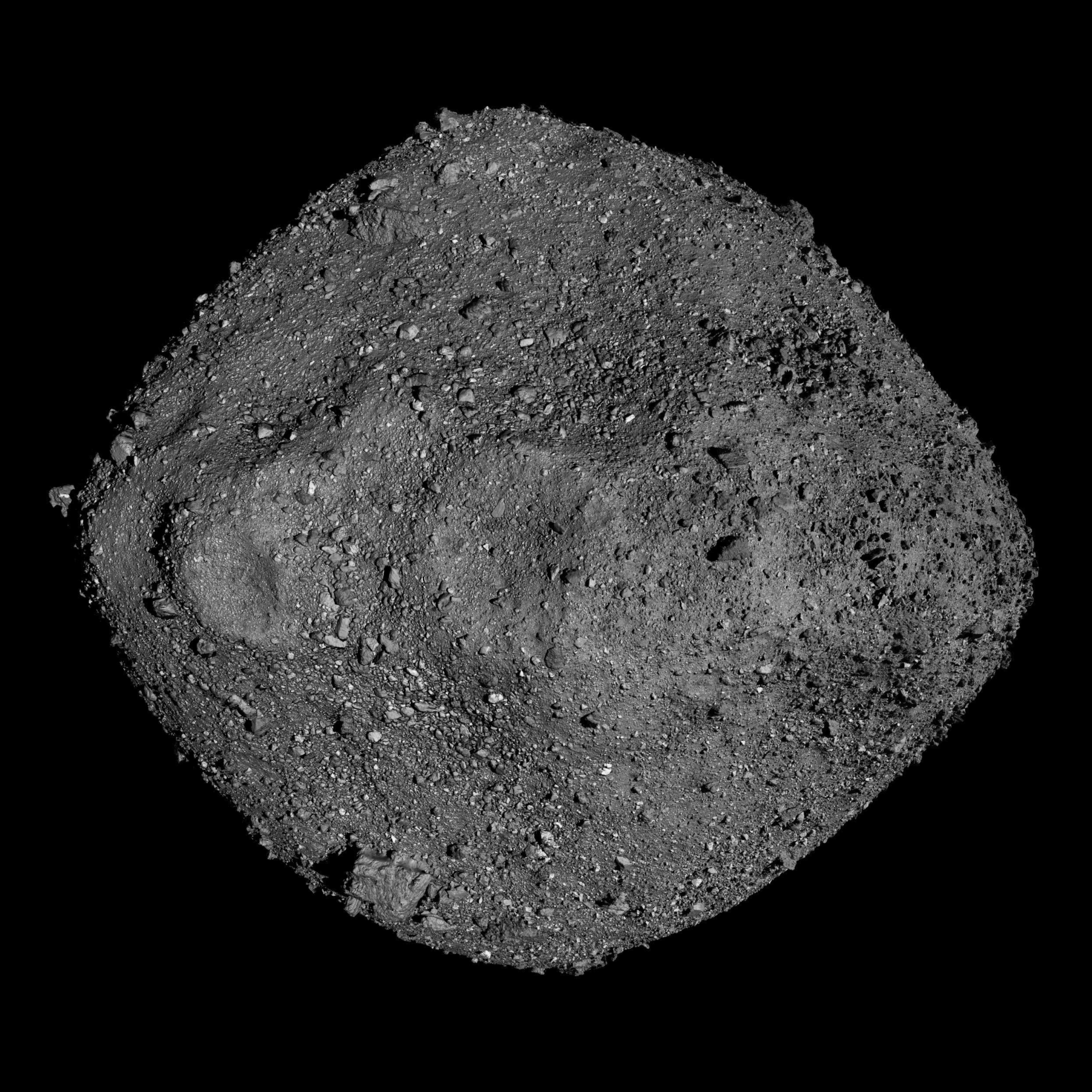
New isotopic evidence from OSIRIS-REx Bennu samples suggests the asteroid formed near the transition zone between hot and cold regions in the planet-forming disk, specifically near the water-ice line. This study, published in Science Advances by researchers from ETH Zurich and others, indicates that Jupiter’s gravity filtered early solar dust into this specific zone, shaping the chemical inventory that eventually contributed to Earth. These findings help contextualize the organic-rich nature of Bennu and Ryugu samples.
Apophis Missions On Track for 2029 Flyby
Preparations for the 2029 close approach of asteroid Apophis remain on schedule, with NASA’s OSIRIS-APEX and ESA’s Ramses missions in their cruise phases. OSIRIS-APEX is expected to arrive in June 2029 to conduct an 18-month study, while ESA’s Ramses mission is slated to launch in April 2028 and arrive in February 2029. The flyby will offer unprecedented opportunities to observe tidal effects on a near-Earth asteroid.
Local view
Japanese media outlets, particularly Nikkei, are closely monitoring the Hayabusa2 engine status, highlighting JAXA's cautious approach to managing the extended mission resources. Local stakeholders emphasize the importance of preserving the Ryugu sample return legacy while addressing current technical challenges.
Context & numbers
No significant new pricing or volume data was available for this period. The focus remains on scientific milestones and mission health.
On the radar
- Orionid Meteor Shower: Peaking around October 21, 2026, providing observational opportunities for meteoroid streams related to Halley’s Comet.
- Hayabusa2 Mission Update: Further details on the extent of the ion engine damage and mitigation strategies are expected from JAXA in the coming weeks.
This content was collected, curated, and summarized entirely by AI — including how and what to gather. It may contain inaccuracies. Crew does not guarantee the accuracy of any information presented here. Always verify facts on your own before acting on them. Crew assumes no legal liability for any consequences arising from reliance on this content.
Powered by
