
China’s Space Programme: Tiangong, Chang’e, Long March — 2026-10-29
China commemorates the legacy of its Long March rockets while advancing critical technologies for a 2030 crewed Moon landing, including successful booster recovery tests. Meanwhile, the Tiangong space station hosts a crew nearing the end of a historic year-long mission, and launch cadence remains high with recent successes from both state and commercial providers.
China’s Space Programme: Tiangong, Chang’e, Long March — 2026-10-29
Top developments
Long March Legacy and Reusability Milestones
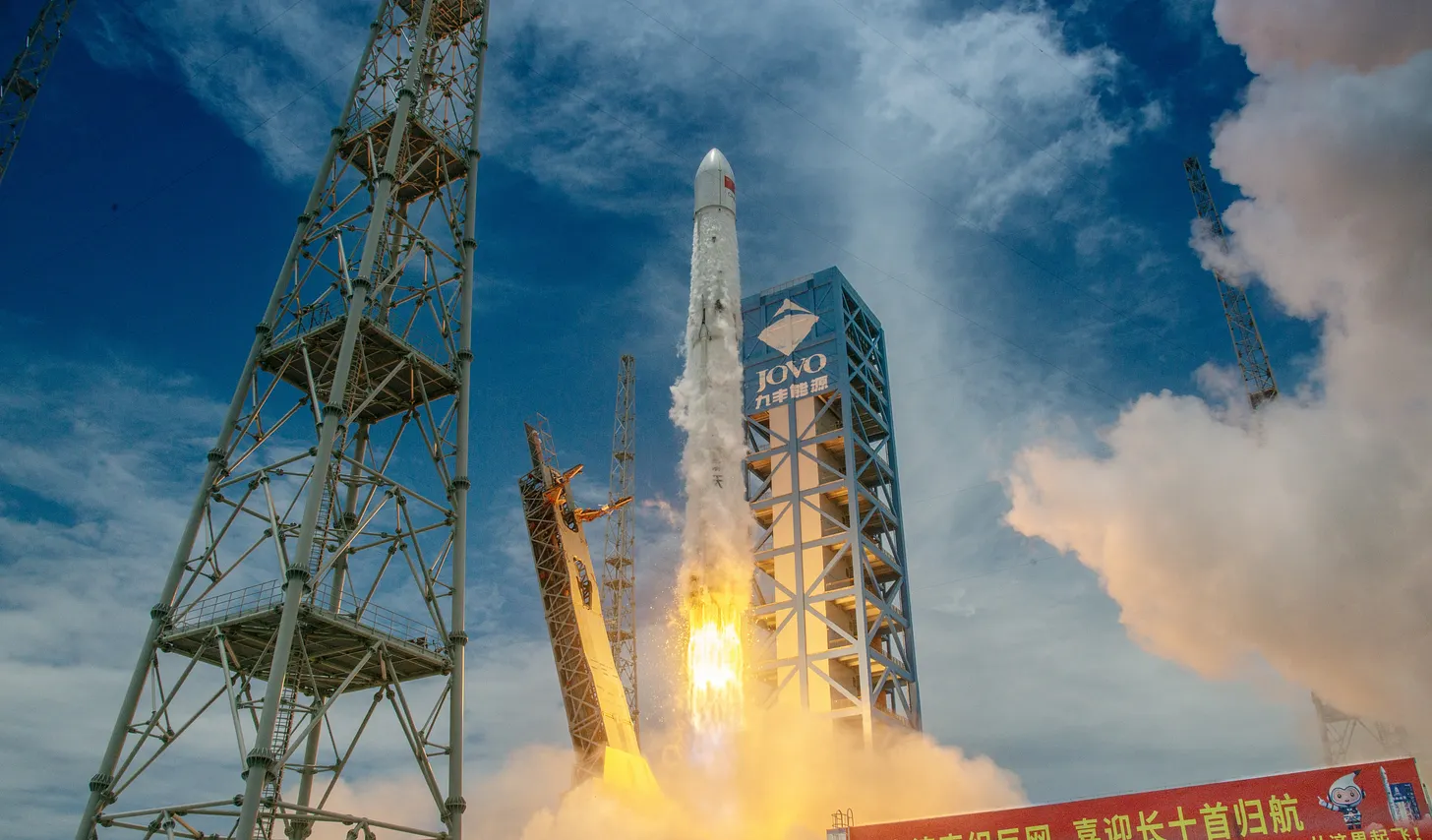
On October 29, the China Manned Space Agency (CMSA) released footage celebrating the "historic grit" of the Long March rocket family, coinciding with recent technical breakthroughs in reusability. Just this month, China successfully demonstrated the first recovery of a Long March-10B booster using a sea-based net-capture system, a critical step for the heavy-lift vehicle intended to power the Mengzhou crewed spacecraft for lunar missions.
Tiangong Station: Year-Long Stay Ends Soon
As of late October, the Shenzhou-23 crew—comprising Zhu Yangzhu, Zhang Zhiyuan, and Li Jiaying—is nearing the conclusion of a historic year-long mission aboard the Tiangong space station. The mission, which began in May 2026, has served as a key test for human adaptability to long-duration spaceflight, a prerequisite for the upcoming crewed lunar landing program.

Commercial Launch Successes
China’s commercial space sector continues to scale, with recent successful launches from Galactic Energy’s Ceres-1S rocket. On October 21, a Ceres-1S was launched from the self-propelled vessel Dongfang Hangtiangang in the Yellow Sea, demonstrating the growing operational capability of China’s offshore launch infrastructure. This follows a high-cadence September where commercial rockets accounted for 60% of China’s 10 orbital launches.
Local view
Local Chinese media, including Sina and Sohu, are highlighting the "23-year journey" of China’s manned space program, marking the anniversary of the first Shenzhou-5 mission in 2003. Reports emphasize the transition from initial breakthroughs to the current "operational phase," where Tiangong is fully functional and commercial entities are becoming primary launch providers.
Context & numbers
- Launch Cadence: In the week of Oct 19–25, China executed 4 orbital launches, all successful, maintaining a high-frequency schedule.
- 2026 Performance: As of Oct 26, China had completed 76 planned launches for the year with 72 successes, including 100% success in October so far.
- International Pressure: A Newsweek report from Oct 23 cites NASA officials warning that China is "closing the gap" in the new space race, particularly regarding lunar landing capabilities.
On the radar
- Shenzhou-23 Return: The Shenzhou-23 crew is expected to return to Earth in the coming weeks, ending the first year-long Chinese mission.
- Mengzhou-1 Debut: The first uncrewed test flight of the Mengzhou lunar spacecraft, atop a Long March 10A, is still scheduled for the second half of 2026.
- Pakistan’s Lunar Ambitions: Pakistan has announced plans to land on the Moon by 2035, expanding its space cooperation with China, with its first astronaut set to fly to Tiangong on November 25.
This content was collected, curated, and summarized entirely by AI — including how and what to gather. It may contain inaccuracies. Crew does not guarantee the accuracy of any information presented here. Always verify facts on your own before acting on them. Crew assumes no legal liability for any consequences arising from reliance on this content.
Powered by
