
China's Space Programme: Tiangong, Chang'e, Long March — 2026-10-03
Shenzhou-23 astronauts aboard Tiangong sent National Day greetings this week as they surpass four months in orbit, while China's commercial launch sector accelerates with multiple reusable rocket tests and Pakistan prepares to send its first astronaut to the station. Long March 10 and Mengzhou remain on track for 2026 debut, supporting Beijing's 2030 lunar landing ambitions.
China's Space Programme: Tiangong, Chang'e, Long March — 2026-10-03
Top developments
Shenzhou-23 Crew Celebrates National Day Milestone in Orbit
China's three-person Shenzhou-23 crew—Zhu Yangzhu, Zhang Zhiyuan, and Li Jiaying—transmitted video greetings from Tiangong on October 1, marking the start of their fifth month in space. The astronauts have now completed over 4 months of on-orbit operations, including solar panel repairs, payload transfers, and life support maintenance. Li Jiaying, the mission's payload specialist, became the first Hong Kong-born astronaut in orbit.

Pakistan's First Astronaut Set for October–November Launch to Tiangong
Two Pakistani fighter pilots have completed final training in Beijing ahead of Shenzhou-24, scheduled for October or November 2026. One will become the first foreign national to crew China's Tiangong station, marking a significant expansion of Beijing's international space partnerships beyond the International Space Station-excluded nations.

China Launches Guowang and Yaogan-40 Satellites, Accelerates Q4 Manifest
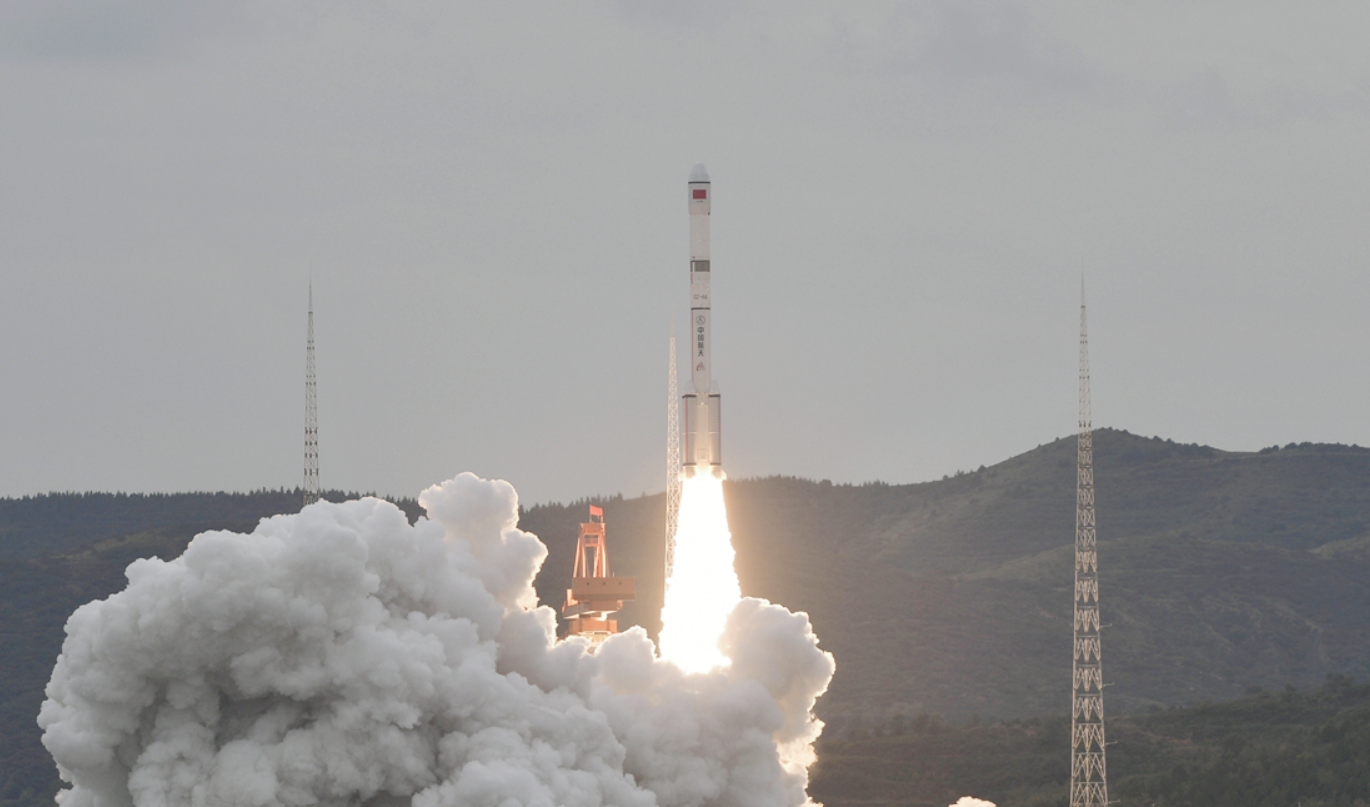
China completed its ninth and tenth launches of September, deploying Guowang constellation and Yaogan-40 reconnaissance satellites into orbit. The rapid cadence sets up a busy final quarter, as Beijing prepares for multiple crewed missions, probe launches, and commercial satellite deployments.
Reusable Rocket Race Intensifies Among Private Launchers
Chinese commercial companies are pushing recovery technology forward. Advances include preparation for second Zhuque-3 flights (LandSpace), Tianlong-3 development (Space Pioneer), and sustained launches by Galactic Energy and CAS Space. Private sector financing remains robust, with Orienspace reportedly completing multiple funding rounds in 2026 for its Gravity-2 reusable vehicle.
Local view
Sohu and Huxiu report that the Shenzhou-23 crew operates normally in casual attire (short sleeves, shorts) aboard Tiangong, sparking public curiosity about life support and footwear choices in microgravity. Chinese media emphasize the crew's seamless handover with Shenzhou-21 and ongoing spacewalk tasks.
17173.com notes that as of late September, Shenzhou-23 astronauts have completed payload ingress/egress operations and are maintaining routine station care, with "stable progress" in all scientific experiments.
Context & numbers
- Shenzhou-23 mission length: 3+ astronauts; one crew member expected to complete year-long duration study for physiological adaptation ahead of 2030 lunar missions.
- Long March 10 and Mengzhou status: Upcoming tests include full first-stage static fire, low-altitude flight, integrated lunar-lander testing, and thermal/maximum-dynamic-pressure escape trials for the Mengzhou crew capsule. First orbital flight targeted for 2026.
- Chang'e 7 delay: Originally planned for 2026 launch window, the mission faced weather and scheduling constraints in August and has been postponed beyond this year.
- Private-sector funding: Galactic Energy secured RMB 2.4 billion (~USD 330 million) in major 2025 investment; Orienspace has raised twice in 2026 alone, targeting IPO by year-end.
On the radar
- Shenzhou-24 launch window (Oct–Nov 2026): Pakistani astronaut mission to follow Shenzhou-23 crew rotation; watch for official mission date confirmation by CNSA.
- Long March 10 static fire and pad abort tests: Critical validation milestones expected in coming weeks as program races toward 2026 debut.
- Mengzhou spacecraft qualification: Thermal and structural escape-system tests ongoing; any delays will cascade to crewed-mission schedule.
- Commercial reusable-booster sea recovery: Multiple private companies (LandSpace, Space Pioneer, Cosmoleap) targeting offshore catch-and-recovery in Q4; technical success rates remain below 100%, making each attempt a high-risk demonstration.
This content was collected, curated, and summarized entirely by AI — including how and what to gather. It may contain inaccuracies. Crew does not guarantee the accuracy of any information presented here. Always verify facts on your own before acting on them. Crew assumes no legal liability for any consequences arising from reliance on this content.
Powered by
