
China’s Space Programme: Tiangong, Chang’e, Long March — 2026-09-03
China successfully completed a critical spacewalk on the Tiangong space station on August 28, with the Shenzhou-23 crew installing debris protection and repairing solar wings. Meanwhile, the Chang’e-7 lunar south pole mission has been officially delayed to 2027 due to weather and technical precautions, shifting the immediate focus to the upcoming Long March-10 and Mengzhou test flights for the 2030 crewed lunar landing goal.
China’s Space Programme: Tiangong, Chang’e, Long March — 2026-09-03
Top developments
Shenzhou-23 Crew Completes 5.5-Hour Spacewalk on Tiangong
On August 28, 2026, at 13:59 Beijing Time, the Shenzhou-23 crew—astronauts Zhu Yangzhu, Zhang Zhiyuan, and Li Jiaying—completed a 5.5-hour extravehicular activity (EVA). The team, working in coordination with the station’s robotic arm and ground control, successfully repaired solar wing panels and installed new space debris protection devices on the Tiangong station. This EVA is significant as it demonstrates China’s capability to maintain its orbital outpost against the growing threat of orbital debris, a prerequisite for the sustained operations required before the 2030 lunar landing era begins.

Chang’e-7 Lunar Mission Delayed to 2027
The China Manned Space Agency (CMSA) announced that the Chang’e-7 mission, originally scheduled for launch on August 24, 2026, from Wenchang, has been postponed to 2027. The delay was attributed to typhoon weather conditions and a decision to adhere to "the principle of proceeding prudently and reliably." This mission was set to be the most ambitious lunar robotic mission to date, targeting the lunar south pole to search for water ice. The slip pushes back key data collection needed to support the infrastructure planning for China’s 2030 crewed lunar landing.

Private Launcher LandSpace Achieves Reusable Rocket Milestone
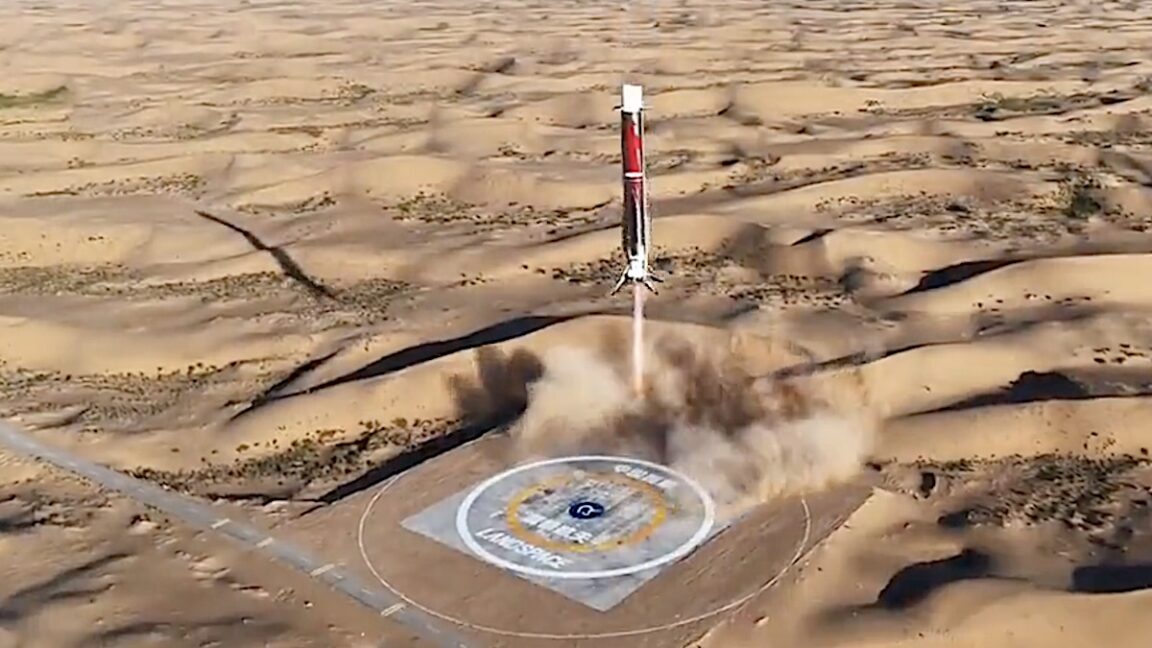
Although the event occurred on August 19, its impact continues to resonate this week as analysts assess the implications for the 2030 lunar timeline. LandSpace’s Zhuque-3 rocket successfully completed China’s first land-based recovery of an orbital-class reusable rocket stage. This breakthrough by a private Chinese firm complements the state-owned CASC’s efforts with the Long March-10 and 10B variants. The success of commercial reusability is critical for reducing the cost of access to space, potentially accelerating the cadence of launches required for the Mengzhou crewed spacecraft and Lanyue lander test flights.
Local view
Chinese state media and technical outlets have emphasized the resilience of the Shenzhou-23 crew’s operations, framing the successful EVA as a testament to the robustness of the Tiangong platform. Sina News highlighted the precise coordination between the astronauts and the ground team, noting that the installation of debris protection is a direct response to recent concerns about orbital safety. Meanwhile, coverage of the Chang’e-7 delay has been framed as a demonstration of "scientific rigor" rather than failure, with official statements stressing that safety and mission success take precedence over rigid timelines. This narrative aims to maintain confidence in the 2030 lunar landing schedule despite the setback.
Context & numbers
- EVA Duration: The August 28 spacewalk lasted approximately 5.5 hours.
- Launch Cadence: China’s orbital launch count reached 97 in 2025, with a target of 140+ in 2026, driven by both state mega-constellations and private launchers like LandSpace and Orienspace.
- Lunar Timeline: The 2030 crewed landing remains the central goal, but the delay of Chang’e-7 to 2027 compresses the schedule for subsequent robotic precursors (Chang’e-8) and the full-scale Long March-10/Mengzhou tests.
On the radar
- Long March-10 Test Flight: The debut flight of the Long March-10A rocket and the Mengzhou-1 spacecraft are still targeted for later in 2026 or early 2027. This uncrewed test is the next major gatekeeper for the 2030 crewed landing.
- Orienspace IPO: Watch for further announcements regarding Orienspace’s IPO preparation and funding rounds for their Gravity-2 reusable rocket, which aims to compete directly with LandSpace in the low-cost launch market.
- Shenzhou-24 Launch: Rumors suggest Shenzhou-24 may launch earlier than usual to accommodate the first foreign astronaut on Tiangong, though no official date has been confirmed beyond the general 2026 window.
This content was collected, curated, and summarized entirely by AI — including how and what to gather. It may contain inaccuracies. Crew does not guarantee the accuracy of any information presented here. Always verify facts on your own before acting on them. Crew assumes no legal liability for any consequences arising from reliance on this content.
Powered by
