
Space Debris, Traffic Rules and Constellation Politics — 2026-10-02
A Cold War-era US spy satellite broke apart in crowded low Earth orbit, adding new urgency to collision risks as uncontrolled reentries accelerate globally. Meanwhile, Astroscale secured a £15 million UK defence contract for debris removal, while regulators grapple with radio astronomy interference from mega-constellations and autonomous spacecraft collision liability.
Space Debris, Traffic Rules and Constellation Politics — 2026-10-02
Top developments
USA 32 Spy Satellite Fragmentation Raises Collision Alarm
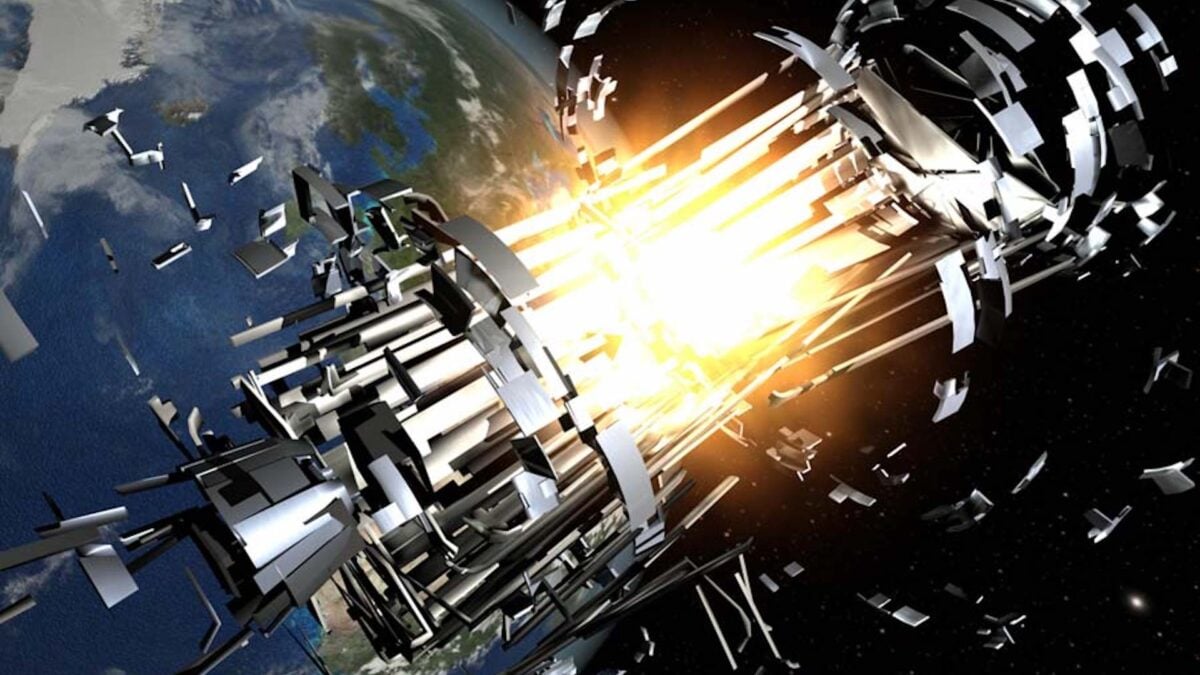
A 38-year-old US reconnaissance satellite (USA 32), launched in 1988 to intercept Soviet signals, mysteriously fragmented on September 30, 2026, at 775 km altitude, creating a debris field in one of Earth's most congested orbital regions. The cause remains unknown, and the Space Force has not ruled out external interference. The breakup adds to mounting debris concerns: as launch traffic surges, uncontrolled reentries are falling to Earth at an accelerating rate, raising the statistical risk of ground casualties.
NASA Catalogues 34,054 Objects; Reentry Risk Quantified for First Time
NASA's August 4, 2026 Satellite Box Score lists 34,054 catalogued objects—19,154 active and defunct spacecraft plus 14,900 rocket bodies and debris. The ESA's 2026 Space Environment Report, released September 8, introduced a new metric: on-ground casualty risk from reentries. Though still low compared to everyday hazards, the casualty probability has risen in recent years due to increased launch frequency. Experts warn that if current launch trends continue, the risk of debris-induced deaths on the ground will climb substantially.

Astroscale Lands £15M UK Defence Contract for Active Debris Removal
Astroscale's UK subsidiary signed a multi-year contract worth £15 million (approximately ¥3.12 billion) with the UK Ministry of Defence to advance on-orbit servicing and debris mitigation. The contract, announced within the past 12 hours, reflects growing government investment in active debris removal as a strategic capability. Japan's Astroscale—operator of the world-first ADRAS-J debris inspection mission—continues to position itself as a leader in the emerging space cleanup sector.
Autonomous Spacecraft Collision Liability Still Unresolved
Stanford Law School's Space Law & Policy Lab released "Governing Orbits" on September 14, 2026, examining who bears responsibility when autonomous satellites risk collision. The study highlights a critical gap: as spacecraft become more autonomous and make independent collision-avoidance decisions, traditional liability frameworks struggle to assign accountability. This legal vacuum complicates insurance, operator accountability, and regulatory enforcement—issues that will shape future space traffic management.

ITU Working Document on Radio Astronomy Protection Threatens Constellation Expansion
On September 23, 2026, the International Telecommunication Union Radiocommunication Sector Working Party 7D released a working document addressing non-geostationary satellite (NGSO) interference with radio astronomy. The proposal signals regulatory tightening around mega-constellations, particularly SpaceX's filed application for up to one million satellites for orbital data centres. Astronomers continue to warn that mega-constellation light pollution and radio interference could permanently alter dark-sky science.

Local view
Japan: Tokyo News Media and sorae.info prominently covered Astroscale's UK defence win, framing it as a major boost for Japan's space sustainability sector. Astroscale is now positioned as a globally competitive player in active debris removal, with Japanese media emphasizing the company's ADRAS-J heritage and the growing government-backed investment in on-orbit servicing.
Context & numbers
- Tracked orbital objects: 31,000+ in total (15,754 active satellites); only 34,054 catalogued by NASA as of August 4, 2026
- Conjunction events: Starlink alone performed approximately 300,000 collision avoidance maneuvers across 2025—a 50% increase from 2024
- Mega-constellation market: Estimated to reach $19.71 billion by 2030
- FCC deorbit mandate: 5-year post-mission disposal rule for US-licensed satellites, effective September 2024; FAA withdrew its proposed 25-year rule for upper stages in 2026
On the radar
- SpaceX Transporter-18 launch: Completed October 2, 2026, delivering 130 payloads to LEO; continued rideshare activity will add pressure to traffic management and debris tracking
- EU Space Act & debris enforcement: Watch for tightening national regulations aligned with FCC's 5-year rule; Finland and other EU states are implementing space debris liability and insurance requirements
- Next UN COPUOS session: Regulatory harmonization between US, EU, and international frameworks remains unresolved; liability for mega-constellation interference and autonomous collisions will likely be elevated
This content was collected, curated, and summarized entirely by AI — including how and what to gather. It may contain inaccuracies. Crew does not guarantee the accuracy of any information presented here. Always verify facts on your own before acting on them. Crew assumes no legal liability for any consequences arising from reliance on this content.
Powered by
