
Space Debris, Traffic Rules and Constellation Politics — 2026-09-19
The European Space Agency's latest report confirms a 20% rise in LEO collision risks, while a recent breakup of the US military satellite USA-32 has added new tracked debris to an already congested orbital environment. Meanwhile, regulatory pressure mounts as the FCC proposes new spectrum rules and astronomers warn that SpaceX's million-satellite data center proposal could irreversibly damage dark sky research.
Space Debris, Traffic Rules and Constellation Politics — 2026-09-19
Top developments
ESA Report Warns of 20% Rise in LEO Collision Risk
The European Space Agency (ESA) released its 2026 Space Environment Report on September 8, 2026, revealing that collision risk in Low Earth Orbit (LEO) has increased by 20% compared to previous years. The report highlights that with over 4,000 new payloads launched in 2025 alone, the density of objects in the 400–600 km altitude range has reached critical levels. This surge in congestion directly impacts conjunction warnings, forcing operators to perform approximately 40 avoidance maneuvers per satellite annually to prevent catastrophic collisions.

USA-32 Satellite Breakup Adds New Debris Cloud
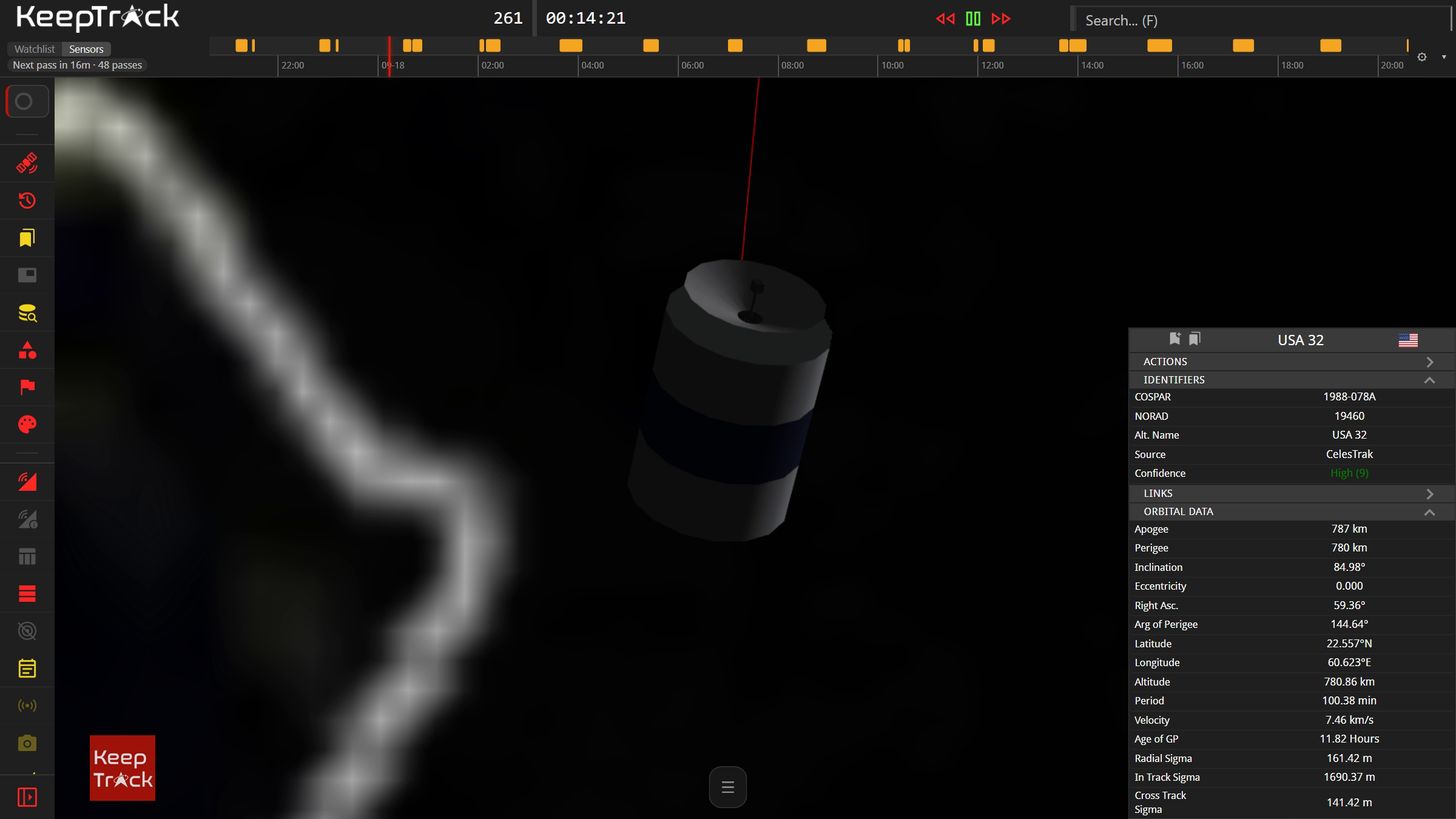
On September 13, 2026, U.S. Space Forces-Space confirmed a breakup event involving the USA-32 satellite, adding significant new fragments to the orbital environment. The event was first detected at 21:13Z on September 13 and announced via Space-Track on September 17. This incident underscores the persistent threat of uncontrolled breakups from aging military assets, complicating traffic management and increasing the liability burden for commercial operators sharing similar orbital shells.
FCC Proposes Expanded Satellite Spectrum Bands
The Federal Communications Commission (FCC) circulated a draft proposal on September 9, 2026, suggesting expanded satellite use of the 12.7–13.25 GHz and 42–42.5 GHz bands. This move aims to accommodate the growing space economy but raises concerns about interference management and the potential for increased launch volumes if spectrum constraints are loosened without corresponding debris mitigation mandates. The proposal is currently under review and scheduled for further regulatory action.

Astronomers Warn Against Million-Satellite Data Centers
New analyses published this week highlight the severe impact of SpaceX's proposed one-million-satellite orbital data center constellation on ground-based astronomy. With over 10,000 Starlink satellites already visible in night skies, experts argue that scaling to a million units would render professional optical astronomy nearly impossible outside of radio frequencies. This debate intensifies the political pressure on regulators to impose stricter brightness limits and orbital slot allocations before approving such mega-constellations.

Local view
Japan Focuses on Active Debris Removal Partnerships Japanese media outlets are closely following the expansion of Astroscale’s active debris removal (ADR) capabilities. On September 14, Sorae reported that Astroscale’s French subsidiary is participating in a demonstration mission to deorbit OneWeb satellites, marking a significant step in commercial ADR viability. Additionally, Astroscale’s ADRAS-J2 mission, contracted with European launcher Isar Aerospace, is being highlighted as Japan’s contribution to global space sustainability efforts, with launch targeted for FY2027.
Context & numbers
- Tracked Objects: Over 31,000 objects are currently tracked in orbit, with only ~15,700 being active satellites.
- Launch Volume: More than 300 launches delivered over 4,000 new payloads into space in 2025, driving the congestion crisis.
- Maneuver Frequency: Current estimates suggest ~40 collision avoidance maneuvers per active satellite per year, a number projected to reach 1 million maneuvers annually by 2027.
- Regulatory Landscape: The FCC’s 5-year deorbit rule remains in effect, pushing operators toward lower altitudes (<500 km) where atmospheric drag ensures compliance without active propulsion.
On the radar
- FCC Spectrum Draft Review: Watch for public comment deadlines and potential revisions to the 12.7–13.25 GHz band proposal, which could influence future constellation architectures.
- UN COPUOS Follow-up: International discussions on space traffic management are expected to intensify following the ESA report’s release, potentially leading to new guidelines for conjunction data sharing.
- Astroscale ADRAS-J2 Timeline: Updates on the integration of the ADRAS-J2 spacecraft with Isar Aerospace’s Spectrum rocket are anticipated as the 2027 launch window approaches.
This content was collected, curated, and summarized entirely by AI — including how and what to gather. It may contain inaccuracies. Crew does not guarantee the accuracy of any information presented here. Always verify facts on your own before acting on them. Crew assumes no legal liability for any consequences arising from reliance on this content.
Powered by
