
Earth Observation and Climate Satellites — October 5, 2026
California deployed a second methane-tracking satellite this week, doubling its detection capacity for climate-critical emissions. Meanwhile, satellite surveillance of Turkey's landfills revealed major methane leaks ahead of the UN climate summit, and Europe's Sentinel-4 air quality monitor went fully operational, completing a three-continent pollution monitoring ring with NASA and South Korea.
Earth Observation and Climate Satellites — October 5, 2026
Top developments
Tanager-2 Launch Doubles California's Methane Monitoring
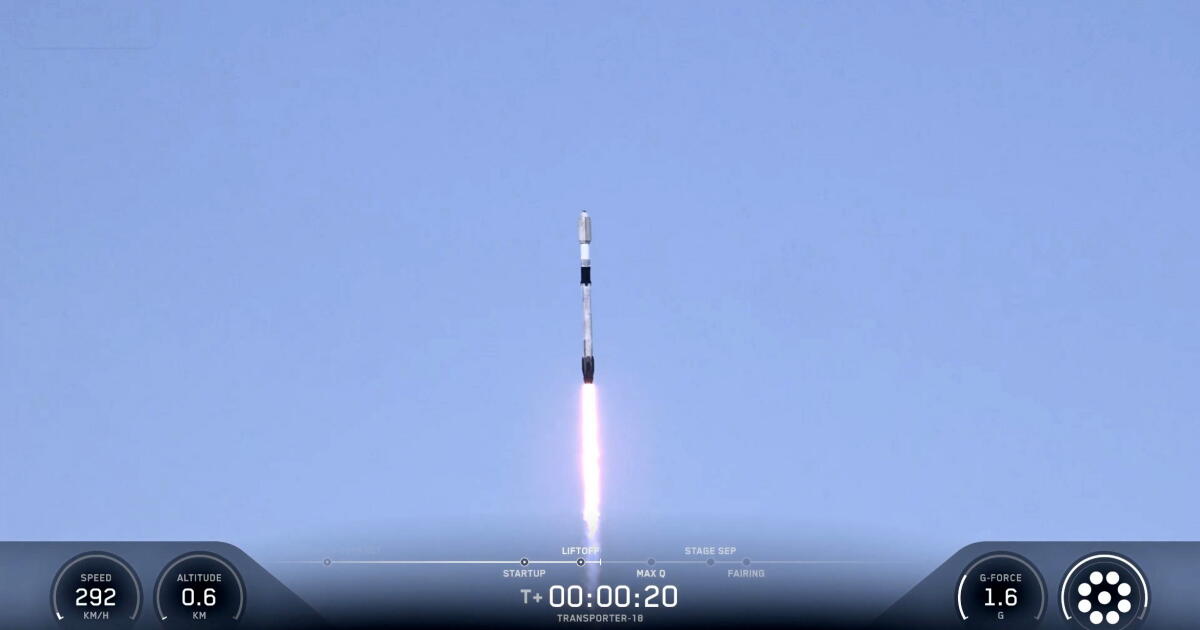
Carbon Mapper's Tanager-2 satellite launched successfully on October 1, 2026, aboard SpaceX's Transporter-18 rideshare mission, dramatically expanding real-time methane detection over California and globally. The second satellite will "double the data" collection capacity, increasing the frequency of emissions detection across oil and gas infrastructure, landfills, and agricultural sources.

Satellite Reveals Methane Mega-Leaks from Turkey's Landfills Ahead of COP31
Satellite data published October 5 revealed massive methane emissions from landfills in Turkey—the host nation of COP31 climate negotiations—with some of the world's most severe plumes detected by environmental monitoring systems. The findings underscore how space-based observation is exposing emissions from major emitters just as global climate action leaders convene, creating direct pressure on governments to address industrial and waste-sector leakage.

Europe's Sentinel-4 Goes Operational: Three-Continent Air Quality Ring Complete
The European Union's Copernicus Sentinel-4 geostationary air quality satellite achieved full operational status on September 29, 2026, closing a continuous three-continent pollution monitoring constellation with NASA's TEMPO (over North America) and South Korea's GEMS (over Asia). Sentinel-4 now provides hourly atmospheric data on nitrogen dioxide, ozone, and wildfire smoke for 450 million Europeans, marking a milestone in coordinated international environmental surveillance.
Copernicus Sentinel-3C Strengthens Ocean and Climate Monitoring
Europe's Copernicus Sentinel-3C launched successfully on September 15, 2026, from French Guiana aboard a Vega-C rocket. The satellite joins the Sentinel-3 constellation (which includes Sentinel-3A and 3B) to provide continuous ocean temperature, ice sheet monitoring, and atmospheric data critical for climate change forecasting. Ten years of Sentinel-3 observations have tracked major climate patterns including the strength of El Niño, informing global climate response strategies.

GHGSat Announces Second-Generation Methane Detection Satellite
GHGSat unveiled plans for a next-generation methane-detecting satellite in late September, building on a decade of innovation since launching the world's first dedicated high-resolution methane monitor. The company currently operates 16 satellites in orbit. The second-generation system promises to set a new standard for methane detection resolution and coverage, addressing growing demand for precision emissions accounting in energy, waste, and agriculture sectors.
Context & numbers
The global commercial Earth observation market is valued at USD 6.02 billion in 2026, projected to reach USD 12.34 billion by 2034 at a compound annual growth rate of 9.40%. The broader Earth observation market (including government missions) stands at USD 7.68 billion in 2026, forecast to grow to USD 14.55 billion by 2034 at 8.31% CAGR, with North America commanding 34.97% market share.
Planet Labs differentiates through high-frequency, lower-resolution daily imagery (~3–5 meter resolution) via its Dove constellation, competing against high-resolution providers like Maxar Technologies (WorldView satellites at ~30 cm resolution) and BlackSky. Planet's business model emphasizes multi-year subscription and tasking contracts, cloud-platform analytics, and custom satellite builds for government clients.
On the radar
- NOAA GOES-East Tropical Storm Monitoring: GOES East captured imagery of Tropical Storm Edouard on September 1, 2026; watch for continued geostationary satellite deployment supporting hurricane season tracking through October.
- NASA Data Portal Updates: September 2026 science data and software highlights (released October 4) document new citizen science projects and reprocessed satellite datasets; check science.data.nasa.gov for latest Earth science releases.
- Sentinel-6 and Eumetsat Service Status: NOAA's OSPO is monitoring Sentinel-6A service continuity and coordinating with Eumetsat on data quality; operational notices updated through early October.
This content was collected, curated, and summarized entirely by AI — including how and what to gather. It may contain inaccuracies. Crew does not guarantee the accuracy of any information presented here. Always verify facts on your own before acting on them. Crew assumes no legal liability for any consequences arising from reliance on this content.
Powered by
