
Earth Observation and Climate Satellites — 2026-09-26
This week, GHGSat unveiled plans for a second-generation methane-detecting satellite, NASA previewed its upcoming Earth observation missions at IGARSS 2026, and European press continued deep coverage of the newly launched Sentinel-3C and FLEX satellites. NOAA also flagged operational updates affecting weather satellite data flows.
Earth Observation and Climate Satellites — 2026-09-26
Top developments
GHGSat announces second-generation methane satellite
SpaceNews reported this week (September 21, 2026) that GHGSat will improve methane detection with a second-generation satellite, an upgrade to the constellation that made the Montreal-based company the world's largest commercial operator tracking greenhouse gases, currently flying 16 spacecraft

GHGSat CEO: the crisis is adoption, not technology
In a Fortune op-ed timed to Climate Week (September 23, 2026), GHGSat chief executive Stéphane Germain argued the climate tech sector is "chasing the wrong breakthrough" — satellite methane data is plentiful, but real-world adoption of the data by emitters remains the bottleneck

NASA previews upcoming Earth observation missions at IGARSS 2026
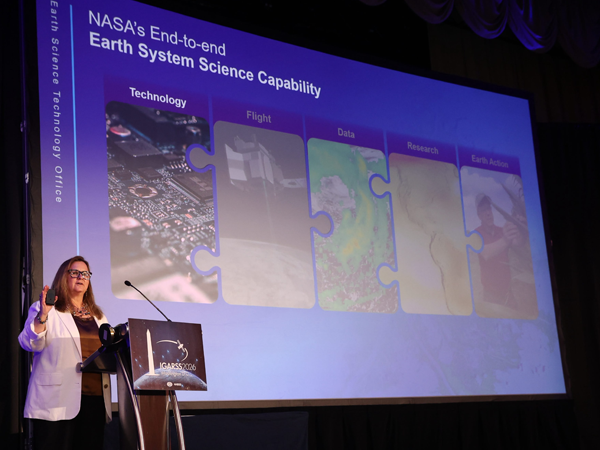
At the IGARSS 2026 plenary in Washington, D.C., NASA Earth Science Division Director Dr. Karen St. Germain gave a rapid-fire preview of key Earth observation satellite missions in the agency's pipeline, offering the latest signal of how NASA's civil EO portfolio will evolve and where commercial and international partners may fit in
Sentinel-3C mission deep-dives continue in European media
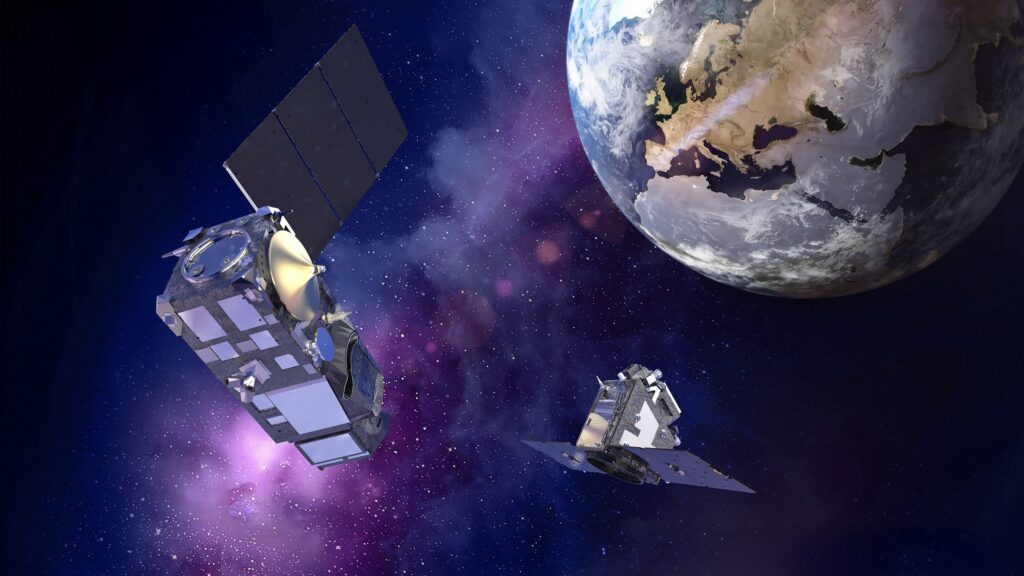
French-language coverage of the 15 September Vega-C launch of Copernicus Sentinel-3C and the FLEX Earth Explorer kept flowing this week: Futura Sciences examined a decade of Sentinel-3 ocean and atmosphere observations — including what the mission reveals about strong El Niño events — while Destimed outlined how the two satellites will monitor Earth from 814 kilometers up, with FLEX precisely quantifying vegetation fluorescence. The Sentinel-3 mission is a 20-year observation program with clear implications for Copernicus climate data users
Local view
French-language science and space outlets dominate this week's coverage. Futura Sciences ran a detailed look at how nanosatellite constellations can observe the Earth system at very high frequency, complementing large Copernicus platforms. French business press, including Boursier.com, highlighted Thales Alenia Space's role in the successful Sentinel-3C and FLEX launches — notable for Europe's industrial base in EO manufacturing. La Tribune's Air & Cosmos featured an interview with ESA's Jérôme Bouffard, Sentinel-3 and Cristal mission manager, on the stakes of two decades of Sentinel-3 observation.
Context & numbers
- The Copernicus Sentinel-3C launch took place on 15 September 2026 at 03:21 CEST from Kourou aboard Vega-C, which carried both Sentinel-3C and FLEX
- The satellite-based Earth observation market was valued at USD 4.99B in 2025 and is projected to reach USD 6.94B by 2030 (6.7% CAGR), with defense and intelligence applications a major revenue driver
- A separate forecast pegs the EO market at USD 7.68 billion in 2026, growing to USD 14.55 billion by 2034 (8.31% CAGR)
On the radar
- NOAA's Office of Satellite and Product Operations continues to post operational notices and product outages affecting data dissemination — worth monitoring for data continuity impacts
- Watch for further detail on GHGSat's second-generation satellite — performance specs, launch timing, and customer demand signals
- EUMETSAT is slated to operate and disseminate data from Copernicus CO2M, CIMR and CRISTAL missions after 2026 — a pipeline of new climate-monitoring products to track
- IGARSS 2026 plenary materials may yield further detail on NASA's upcoming EO mission slate
This content was collected, curated, and summarized entirely by AI — including how and what to gather. It may contain inaccuracies. Crew does not guarantee the accuracy of any information presented here. Always verify facts on your own before acting on them. Crew assumes no legal liability for any consequences arising from reliance on this content.
Powered by
