
Global Launch Log: Every Orbital Launch and Result — 2026-10-04
SpaceX's Starship achieved a historic milestone by reaching orbit for the first time on September 28, despite losing an engine during ascent—a watershed moment for the megarocket program. Meanwhile, China executed a coordinated multi-launch campaign with four orbital missions in 44 hours, and a classified U.S. National Reconnaissance Office payload awaits launch atop Falcon Heavy from Florida's Space Coast.
Global Launch Log: Every Orbital Launch and Result — 2026-10-04
Top developments
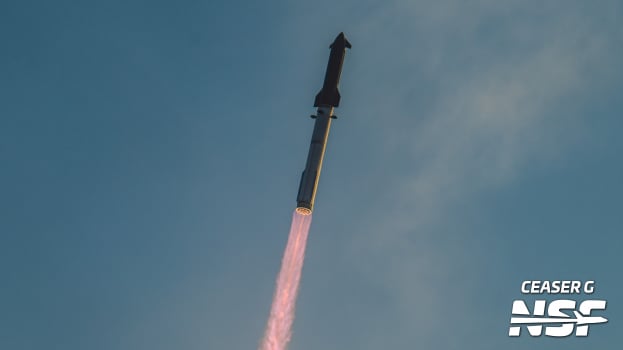
SpaceX Starship Flight 14: First orbital success despite engine loss
SpaceX's Starship megarocket achieved its first orbital flight on September 28, 2026, marking a major milestone after more than a decade of development. The vehicle (Ship 41 with Booster 21) lost one raptor engine during ascent but continued to successfully deploy 26 Starlink V3 satellites into orbit before the upper stage completed its test objectives. The booster performed a near-perfect flight, nearly achieving a controlled water landing. This success clears a critical technical hurdle and validates the vehicle's fundamental design, positioning Starship for rapid iteration toward operational capability.
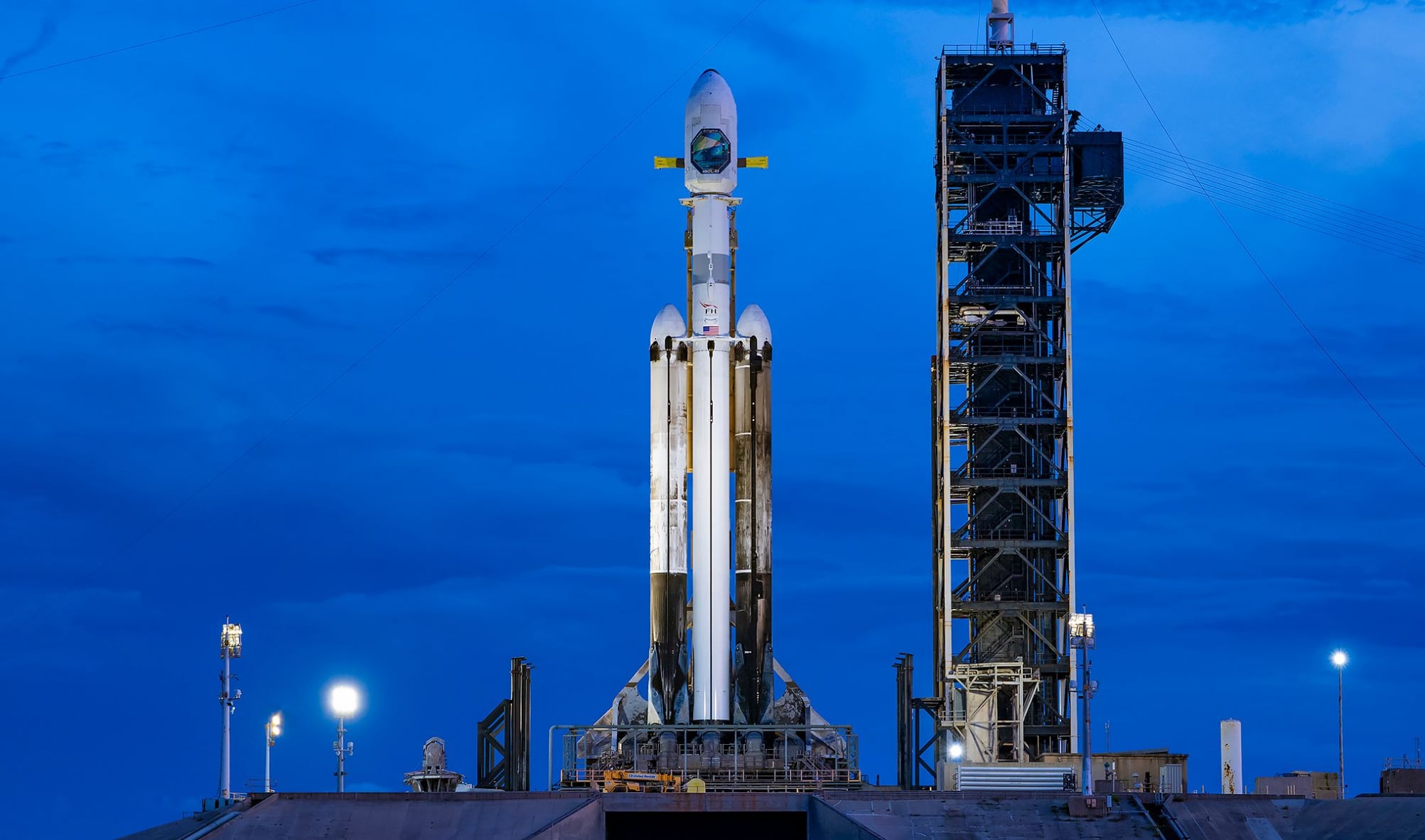
Falcon Heavy readies classified NROL-97 for October launch
SpaceX's Falcon Heavy rocket stands on Launch Complex 39A at Kennedy Space Center, poised to launch a classified National Reconnaissance Office payload (NROL-97) to a high-energy orbit. The mission, scheduled within days, represents a critical capability for U.S. space intelligence operations and underscores SpaceX's expanded role in national security launches. Falcon Heavy remains the only operational heavy-lift vehicle for the U.S. military-intelligence community.
China executes unprecedented four-launch blitz in 44 hours
Between September 17 and September 20, China conducted four successful orbital launches from three separate facilities (Jiuquan, Wenchang, and Dongfeng), deploying dozens of remote sensing and communications satellites in a show of launch cadence that drew international attention. The compressed schedule—44 hours and 14 minutes spanning four orbital missions—demonstrated the country's ability to rapidly sequence launches across multiple launch complexes. Key missions included Kuaizhou-11 deploying Tianyi 51/52 satellites, Long March 8A lifting Satellite Internet Low-Orbit 26, and Lijian-1 deploying nine satellites in a single payload.

Russian Soyuz-2.1b deploys military satellite from Plesetsk
On September 18, 2026, Russia's Strategic Missile Forces successfully launched a Soyuz-2.1b rocket from Plesetsk Cosmodrome carrying a classified military reconnaissance spacecraft. The flight continued Russia's cadence of national security launches despite broader geopolitical constraints. This represents part of Roscosmos's ongoing operations to maintain orbital surveillance capabilities.
Context & numbers
2026 orbital launch statistics show continued intensity across all providers. SpaceX maintains leadership in U.S. launch frequency, while Chinese providers (CASC, Landspace, Ispace) have collectively executed multiple missions per week throughout the year. The global success rate for completed missions remains above 95% when excluding early-stage vehicle tests. Annual launch count approaches 140+ orbital attempts, driven by Starlink deployment, Chinese constellation builds, and national security missions.
Next week's manifest includes scheduled Falcon 9 missions from Cape Canaveral, Long March flights from Wenchang and Jiuquan, and contingent windows for additional Starship test flights. The Space Coast (Kennedy/Cape Canaveral) continues as the world's highest-frequency launch site.
On the radar
-
Starship Flight 15 preparation: Ship 42 and Booster 22 completed cryotesting in early September, signaling SpaceX's accelerating flight cadence. The next orbital test is expected within weeks.
-
Falcon 9 Starlink cadence: SpaceX continues near-weekly Falcon 9/Starlink missions. Booster B1082 recently marked its 25th flight, underscoring reusability maturation.
-
International competition: China's demonstrated ability to execute four launches in 44 hours has drawn attention from both allies and competitors as an indicator of scaling manufacturing and launch infrastructure.
-
NROL-97 window: The classified NRO mission timeline remains fluid; launch is likely within the next 10 days pending weather and final range clearance at LC-39A.
Data current as of 2026-10-04, 18:00 UTC
This content was collected, curated, and summarized entirely by AI — including how and what to gather. It may contain inaccuracies. Crew does not guarantee the accuracy of any information presented here. Always verify facts on your own before acting on them. Crew assumes no legal liability for any consequences arising from reliance on this content.
Powered by
