
Global Launch Log: Every Orbital Launch and Result — 2026-09-19
This week featured a high-density launch schedule with successful missions from Rocket Lab, China, and Russia, alongside significant developments for SpaceX’s upcoming Starship orbital debut. Key highlights include the first-ever orbital flight attempt of Starship scheduled for September 22 and a critical anomaly investigation into Ariane 6 that may cap its 2026 flight count.
Global Launch Log: Every Orbital Launch and Result — 2026-09-19
Top developments
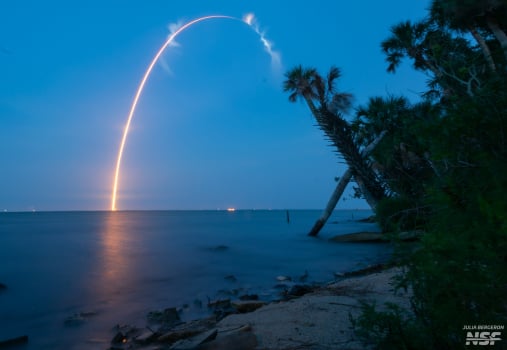
Starship Flight 14 Confirmed for First Orbital Mission on Sept. 22
SpaceX has officially confirmed that Starship Flight 14 will launch on September 22, marking the vehicle's first attempt to reach orbit. The mission will deploy 26 Starlink V3 satellites, a payload SpaceX CFO Bret Johnsen described as "revenue-generating," signaling a shift from pure testing to operational utility. This follows the disclosure that ice clogging destroyed Booster 20 during the previous Flight 13, prompting hardware modifications for this attempt
Rocket Lab Completes 96th Electron Mission with Synspective Satellite
On September 19, Rocket Lab successfully launched its 96th Electron mission from Mahia, New Zealand, deploying an Earth-observation satellite for Japanese SAR company Synspective. This marks the 12th launch Rocket Lab has performed on behalf of Synspective, reinforcing the long-term partnership between the two firms in the synthetic aperture radar market
China Executes Double-Launch Day: Long March 12 and Kuaizhou 11
China achieved two successful orbital insertions on September 17. At 08:32 CST, a Long March 12 rocket launched 25 low-orbit internet satellites from the Hainan Commercial Space Launch Site. Hours later, at 10:40 CST, a Kuaizhou 11 rocket launched two Tianyi remote sensing satellites (Tianyi 51 and 52) from Jiuquan. These missions underscore China’s accelerating cadence in commercial megaconstellation deployment and smallsat rideshare capabilities
Russia Launches Military Satellite from Plesetsk and Progress Cargo Ship from Baikonur
Russia conducted two significant launches this week. On September 18, a Soyuz-2.1b rocket successfully lifted a classified military satellite from the Plesetsk Cosmodrome, which was subsequently taken under control by Russian Aerospace Forces. Earlier, on September 16, another Soyuz-2.1b launched the Progress MS-35 cargo spacecraft from Baikonur to resupply the International Space Station
Ariane 6 Grounded by Turbopump Anomaly, Capping 2026 at Six Flights
Industry reports confirmed on September 18 that an engine turbopump anomaly detected during August ground tests has significantly constrained Ariane 6’s launch cadence. This issue effectively caps Europe’s primary new launcher at only six missions for the entire year of 2026, a stark contrast to the dozens of flights performed by SpaceX and Chinese commercial providers
Local view
In China, state media and financial outlets highlighted the "record-breaking" nature of the Hainan Commercial Space Launch Site’s operations, noting that the Long March 12 mission was its seventh low-orbit constellation task of the year. Local analysts pointed to the "batch, intelligent, and high-frequency" launch capabilities as a competitive advantage over Western counterparts. In Russia, Vedomosti and Kommersant focused on the strategic importance of the Plesetsk military launch, emphasizing the successful integration of the satellite into the Aerospace Forces' control network.
Context & numbers
The global orbital launch count for 2026 stands at approximately 224 attempts as of mid-September, according to Orbital Radar data. This pace suggests 2026 may not exceed the record 325 attempts seen in 2025, largely due to gaps in European launch capacity and the slower ramp-up of new vehicles like Starship compared to the mature Falcon 9 fleet.
On the radar
- Starship Flight 14: The entire space industry is watching the September 22 launch window for SpaceX’s Starship. Success here is critical for validating orbital deployment capabilities and Starlink V3 mass production.
- ULA Vulcan Return-to-Flight: United Launch Alliance is preparing to resume launching its Vulcan rocket in the coming weeks after previous delays, though financial pressures on the JV are reportedly forcing potential ownership changes.
- Upcoming Falcon 9 Missions: Multiple Falcon 9 launches are scheduled from Cape Canaveral and Vandenberg throughout late September, continuing SpaceX’s dominance in launch frequency.
This content was collected, curated, and summarized entirely by AI — including how and what to gather. It may contain inaccuracies. Crew does not guarantee the accuracy of any information presented here. Always verify facts on your own before acting on them. Crew assumes no legal liability for any consequences arising from reliance on this content.
Powered by
