
Global Launch Log: Every Orbital Launch and Result — 2026-10-30
This week’s orbital launch activity was defined by a high-cadence Chinese launch streak and a critical announcement regarding the return-to-flight of United Launch Alliance’s Vulcan rocket. While China executed three successful missions in three days, including a rare "one-rocket, six-satellites" deployment, ULA confirmed a mid-November target for Vulcan’s first flight since its February grounding. Meanwhile, SpaceX maintained its dominant cadence with Starlink deployments, despite a recent scrub.
Global Launch Log: Every Orbital Launch and Result — 2026-10-30
Top developments
Vulcan targeted for November 13 return with Amazon Leo payload
United Launch Alliance (ULA) has officially announced that its Vulcan Centaur rocket is scheduled to return to flight on November 13, 2026. This mission will carry 40 Amazon Leo satellites to orbit, marking the first flight for the heavy-lift rocket since a mid-flight nozzle failure on a solid rocket booster grounded it in February. The Space Force has not yet restored military launch authorization, conditioning that decision on the success of this commercial flight, effectively making the Amazon Leo 1 mission an unofficial national security test.

China completes three launches in three days
China achieved a rapid launch cadence this week, successfully completing three orbital missions within a 72-hour window. On October 24, a Long March-4B rocket launched six remote sensing satellites (Yaogan-53 and Yaogan-56 series) from the Jiuquan Satellite Launch Center in a "one-rocket, six-satellites" configuration. This was followed by a Long March-8A launch from the Hainan Commercial Space Launch Site on October 25, deploying the 28th group of low-orbit internet satellites. These successes contribute to China’s reported 72 successful launches out of 76 attempts for the year.

SpaceX Starlink cadence continues despite scrub
SpaceX continued its high-frequency Starlink deployment with the launch of Group 15-16 on October 27. This follows an earlier scrub of a 27-satellite Starlink mission on October 21. The company’s ability to quickly recover from scrubs remains a key factor in its dominant annual launch count, with SpaceX currently leading global orbital launch attempts.
Local view
Chinese media highlights "Rocket Cloud" phenomenon
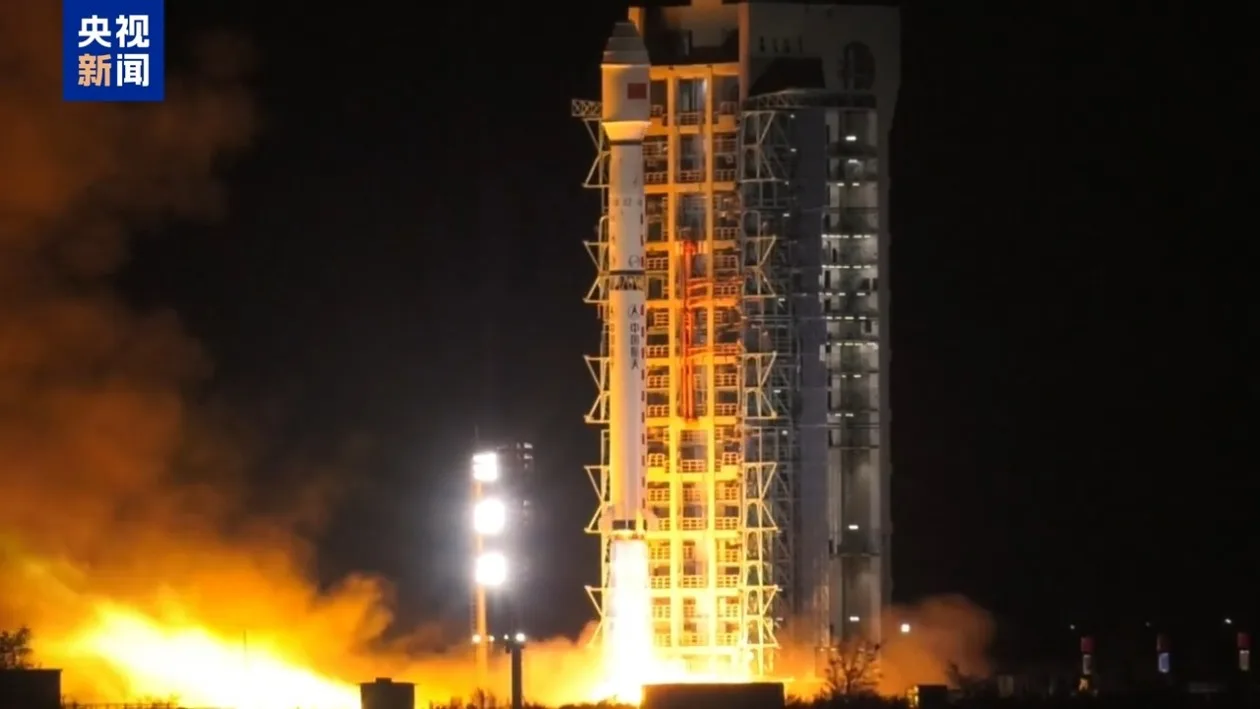
Local Chinese media outlets, including Sohu and Sina, focused heavily on the visual spectacle of the October 23 launch from the Taiyuan Satellite Launch Center. The evening launch created a massive "rocket cloud" in the twilight, a phenomenon caused by the rocket's exhaust expanding in the upper atmosphere. Reports emphasized the successful deployment of the Yaogan-50 03 satellite, noting its role in scientific experiments and disaster prevention.
Russian coverage focuses on cost reduction
Russian media reported on Roscosmos’s efforts to lower launch costs. At the "Russian Engineer" congress, officials announced new methods to reduce the price per kilogram of payload delivered to orbit. This comes as Russia continues to rely on Soyuz-2.1b launches from Plesetsk for military satellites, maintaining its launch cadence despite geopolitical constraints.
Context & numbers
Annual launch race
As of late October 2026, the global launch race remains dominated by SpaceX and China. SpaceX has completed 732 orbital launches since its inception, while China’s CASC and commercial providers have collectively reached 658. The total number of successful orbital launches worldwide this year is tracking closely with previous records, with China reporting 72 successes out of 76 attempts for the year to date.

Success rates
Global launch success rates remain high, with 2025 data showing a 96.1% success rate across 325 attempts. The recent weeks have seen no major failures in the US or China, though the Vulcan grounding in February remains a significant anomaly in the otherwise high-success-rate environment.
On the radar
Upcoming manifest highlights
- Electron Launches: Rocket Lab is scheduled to launch multiple Electron rockets from New Zealand in early November, carrying HawkEye 360 and BlackSky Gen-3 satellites.
- Vulcan Military Clearance: The US Space Force will review data from the November 13 Amazon Leo 1 flight before deciding whether to clear Vulcan for future military missions.
- Artemis III Complexity: NASA officials highlighted in late October that Artemis III, expected in 2027, will be one of the most complex missions due to the testing of SpaceX and Blue Origin landers.
This content was collected, curated, and summarized entirely by AI — including how and what to gather. It may contain inaccuracies. Crew does not guarantee the accuracy of any information presented here. Always verify facts on your own before acting on them. Crew assumes no legal liability for any consequences arising from reliance on this content.
Powered by
