
India and Japan in Space: ISRO, Gaganyaan, JAXA, H3 — 2026-09-06
ISRO successfully launched the EOS-05 Earth observation satellite aboard the GSLV-F17 on September 4, marking a critical success after a seven-month launch gap. Simultaneously, ISRO Chairman V. Narayanan reaffirmed that the first uncrewed Gaganyaan mission is on track for late 2026, with over 8,000 tests completed. In Japan, JAXA has finalized the October 20 launch date for the H3 rocket carrying the MMX mission to Mars' moon Phobos.
India and Japan in Space: ISRO, Gaganyaan, JAXA, H3 — 2026-09-06
Top developments
ISRO Successfully Launches EOS-05 (GISAT-1A)
On September 4, 2026, ISRO successfully launched the EOS-05 (also known as GISAT-1A) Earth observation satellite from the Satish Dhawan Space Centre using the GSLV-F17 rocket. This mission breaks a seven-month launch hiatus for ISRO and places India’s first geosynchronous imaging satellite into orbit, capable of monitoring the entire Indian subcontinent and surrounding regions for disaster management and strategic surveillance. The successful deployment underscores the reliability of the GSLV-Mk III system ahead of more complex human-rating tests.
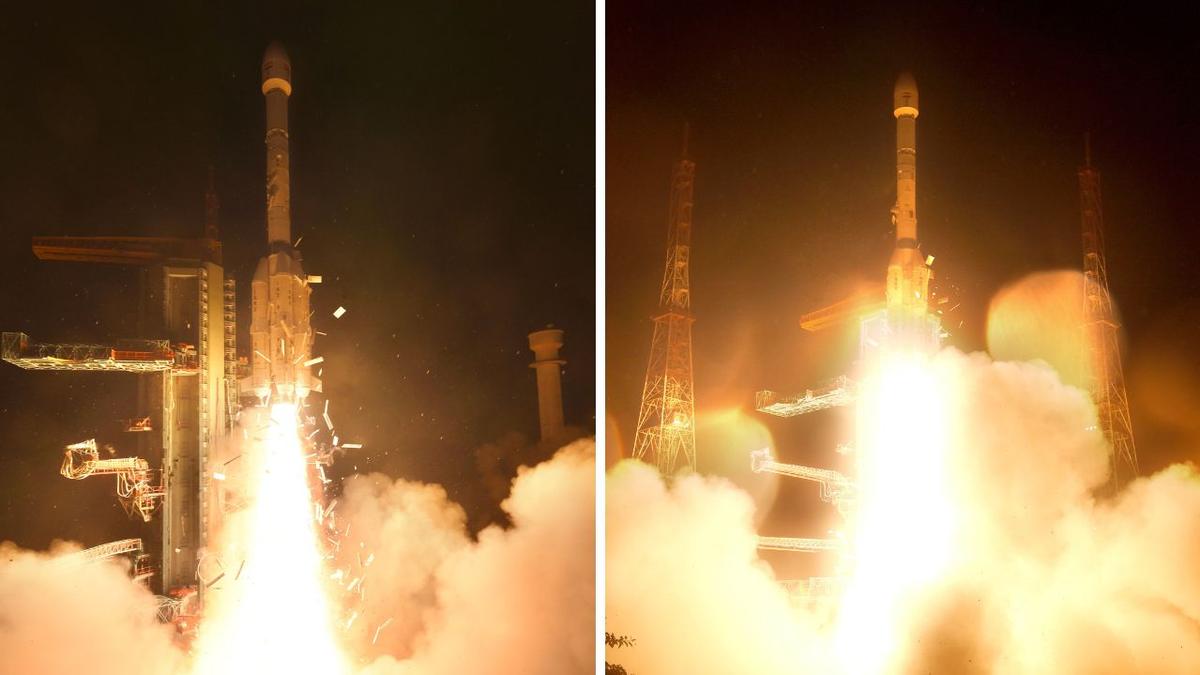
Gaganyaan Uncrewed Mission Confirmed for Late 2026
ISRO Chairman V. Narayanan confirmed on September 4 that the first uncrewed Gaganyaan test flight is scheduled for this fiscal year, likely by December 2026. He stated that "vigorous and systematic work" is underway, with approximately 8,000 tests already completed for the human-rated LVM3 rocket and the crew module. This timeline aligns with previous statements but gains credibility following the recent GSLV success, signaling that the three planned uncrewed missions before the crewed flight are proceeding as planned.

JAXA Sets October 20 Launch for MMX Mission
JAXA has officially announced that the Martian Moons eXploration (MMX) mission will launch on October 20, 2026, at 04:41 JST from the Tanegashima Space Center. The spacecraft will ride atop the H3-24L variant (H3 Flight 10) to travel to Phobos, where it aims to collect surface samples and return them to Earth by 2031. This mission represents a major milestone for Japan’s deep space capabilities and follows the successful debut of the H3 rocket’s previous flights.

India’s Private Space Sector Expands to 440 Startups
Recent data highlights that India now hosts approximately 440 space technology startups, with private investment in the sector rising six-fold to $618 million. The Indian National Space Promotion and Authorization Centre (IN-SPACe) has authorized 18 of these companies, including Skyroot Aerospace, Agnikul Cosmos, and Pixxel, to conduct launch and satellite operations. This growth provides a commercial backbone for future ISRO collaborations and independent small-satellite launches.
Local view
Indian media outlets have focused heavily on the nationalistic significance of the EOS-05 launch, with Hindi-language outlets like Aaj Tak describing the satellite as a "Naughty Boy" that will keep watch over enemy movements and aid in disaster relief. The narrative emphasizes self-reliance (Atmanirbhar Bharat) in space technology. Meanwhile, Japanese outlets such as Sorae and Nikkei have covered the MMX launch date announcement with cautious optimism, highlighting the technical complexity of the sample return mission and its potential to be the first of its kind globally.
Context & numbers
- ISRO Launch Cadence: The GSLV-F17 launch ended a seven-month gap in ISRO's orbital launches, with the agency targeting six more launches in the current fiscal year (ending March 2027).
- Gaganyaan Testing: Over 8,000 tests have been conducted for the Gaganyaan mission, including full-system tests and environmental simulations for the crew module.
- Private Investment: Private investment in India’s space sector has reached $618 million, driven by startups authorized by IN-SPACe.
- EOS-05 Orbit: The satellite was placed into a geosynchronous transfer orbit (GTO) at an altitude of approximately 36,000 km, allowing for continuous imaging of the Indian subcontinent.
On the radar
- October 20, 2026: JAXA’s H3 Flight 10 launch window for the MMX mission opens. Any delays in the H3 rocket’s preparation could impact the narrow planetary alignment window for Mars.
- Q4 2026: ISRO is expected to conduct the first uncrewed Gaganyaan test flight (G1). Watch for announcements regarding the Vyommitra robot’s final integration and the specific date for the LVM3 launch.
- NVS-03 Launch: ISRO Chairman mentioned upcoming NavIC navigation satellite launches; NVS-03 is likely next in the queue after EOS-05, potentially in late 2026.
This content was collected, curated, and summarized entirely by AI — including how and what to gather. It may contain inaccuracies. Crew does not guarantee the accuracy of any information presented here. Always verify facts on your own before acting on them. Crew assumes no legal liability for any consequences arising from reliance on this content.
Powered by
