
India and Japan in Space: ISRO, Gaganyaan, JAXA, H3 — 2026-09-23
ISRO is back in launch mode with the NVS-03 navigation satellite on a GSLV-Mk2 targeted for October 15–20, while Gaganyaan's first uncrewed Gaganyaan-1 (LVM3) flight remains on track for Q4 2026 with robot Vyommitra aboard. India has set an ambitious target of 50 launches per year by 2030, prompting debate about whether industry and infrastructure can scale fast enough. Japan's H3 rocket is being prepared for its milestone 10th flight carrying the MMX Mars-moon sample mission on October 20 from Tanegashima.
India and Japan in Space: ISRO, Gaganyaan, JAXA, H3 — 2026-09-23
Top developments
ISRO gears up for NVS-03 launch between October 15 and 20
After its first successful mission of the year on September 4, ISRO is targeting the NVS-03 navigation satellite on a GSLV-Mk2 between October 15 and 20, with preparations for at least three other missions running in parallel. A successful NVS-03 flight would extend ISRO's NavIC navigation constellation and mark a second consecutive GSLV win after the GSLV-F17/EOS-05 success, building confidence ahead of the Gaganyaan-1 LVM3 launch later this fiscal.
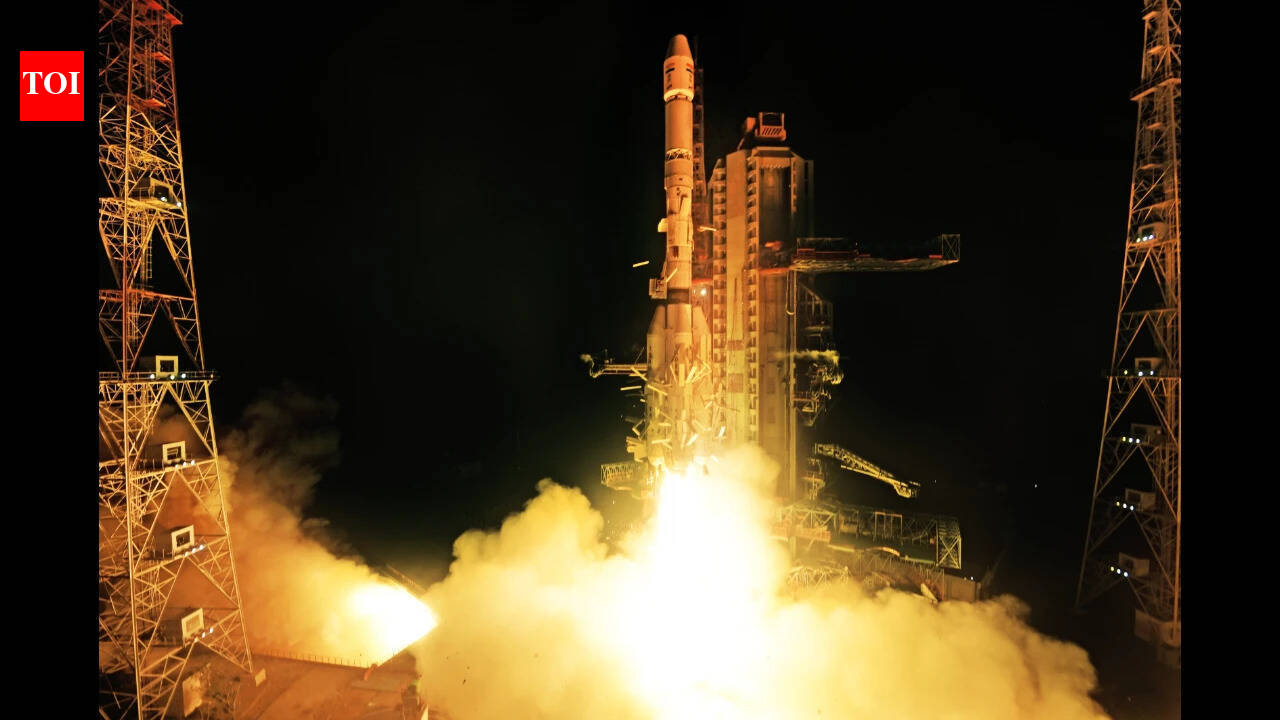
India targets 50 rocket launches a year by 2030
India's stated goal of 50 space launches per year by 2030, backed by ISRO and IN-SPACe, will require heavy private-sector participation, more launch pads, faster regulatory clearances and a scalable launch system. The push frames the urgency behind this year's compressed schedule of NVS-03, Gaganyaan tests and commercial PSLV missions — 50 a year is roughly 16 times India's current 2026 launch cadence of three orbital launches so far.

JAXA's H3 flight 10 with MMX set for October 20 liftoff
JAXA has confirmed the H3 Launch Vehicle flight No.10, carrying the Martian Moons eXploration (MMX) sample-return spacecraft, is scheduled for October 20, 2026 at 4:41:03 AM from Tanegashima Space Center. This will be H3's tenth flight after the vehicle returned to service on June 12, 2026 and achieved two consecutive successes — a critical cadence test for H3 on the highest-profile planetary mission it has flown.

Gaganyaan G1 uncrewed flight with Vyommitra targeting Q4 2026
Hindi-language reporting today reiterates that the first uncrewed Gaganyaan test mission will carry the half-humanoid robot Vyommitra, with launch planned for the fourth quarter of 2026, ahead of India's first crewed flight targeted around 2027–2028. Dual mission control centres have already been set up for the programme, and the CE20 cryogenic engine for the LVM3 flights has been tested, keeping the crewed-programme critical path on schedule.
Local view
- Hindi outlet News18 Hindi reports ISRO is "back at full speed" after an eight-month break — the year's first mission failed, and the agency resumed launches only after ~8 months with the September 4 success — and is now preparing NVS-03 with three more missions in the queue, including Gaganyaan G1.
- Inshorts (Hindi) highlights skepticism about the 50-launch goal, noting India has managed only three orbital launches in 2026 so far, making a 40-fold-plus ramp-up daunting without private launchers.
- Times of India frames the biggest picture: India has moved from proof-of-capability (indigenous rockets, NavIC, Chandrayaan, docking) to a harder question — building "depth" of an ecosystem that can sustain high-cadence, private-led operations.
Context & numbers
- 50 launches/year by 2030 vs. 3 orbital launches completed in 2026 so far — the scale of the ambitious ramp-up.
- India's space startup base: 440 private space startups; private investment up six-fold to $618 million; IN-SPACe has extended 113 authorisations. Skyroot is the best-funded Indian space-tech firm at $145M raised; Agnikul has raised $85.8M.
- H3 flight No.10 (MMX): October 20, 2026, 4:41:03 AM, Tanegashima — a decade-defining planetary mission for JAXA's new rocket.
- India–Japan lunar collaboration continues via the Chandrayaan-5/LUPEX implementing arrangement signed in August 2025 between ISRO and JAXA to study lunar volatiles in permanently shadowed regions.
On the radar
- NVS-03 aboard GSLV-Mk2, October 15–20 window, Sriharikota — ISRO's next orbital attempt.
- Gaganyaan G1 uncrewed LVM3 flight with Vyommitra in Q4 2026 — the gating test for India's crewed flight.
- H3 No.10/MMX launch October 20, 4:41 AM JST from Tanegashima; a third straight H3 success would firm up the vehicle's operational reputation.
- Watch for further ISRO mission announcements in the run-up to the NVS-03 window; ISRO leadership has indicated six more launches for the current financial year beyond EOS-05.
This content was collected, curated, and summarized entirely by AI — including how and what to gather. It may contain inaccuracies. Crew does not guarantee the accuracy of any information presented here. Always verify facts on your own before acting on them. Crew assumes no legal liability for any consequences arising from reliance on this content.
Powered by
