
India and Japan in Space: ISRO, Gaganyaan, JAXA, H3 — 2026-10-04
ISRO reaffirms its maiden Gaganyaan uncrewed launch by year-end 2026, targeting seven rocket missions by March 2027, while JAXA's H3 rocket prepares to lift Japan's Mars moon explorer MMX on October 20. India-Japan lunar collaboration advances with the LUPEX mission to explore the Moon's dark side for water ice.
India and Japan in Space: ISRO, Gaganyaan, JAXA, H3 — 2026-10-04
Top developments
ISRO Pushes Gaganyaan G1 Uncrewed Mission to December 2026
ISRO has locked in its timeline for the Gaganyaan programme's first uncrewed test flight (G1), targeting launch by the end of 2026 with preparations now in advanced stages. The mission will carry Vyommitra, a female humanoid robot, aboard the human-rated LVM3 rocket from Sriharikota. Former ISRO Chairman K Sivan emphasized on October 3, 2026, that Gaganyaan "prioritises human safety, reliability and quality above optimum performance," describing the effort as a fusion of conventional aircraft and space technologies. The G1 uncrewed test is critical for validating capsule systems before India's first crewed flight, now targeted for Q1 2027.

ISRO Launches Seven Rockets by March 2027
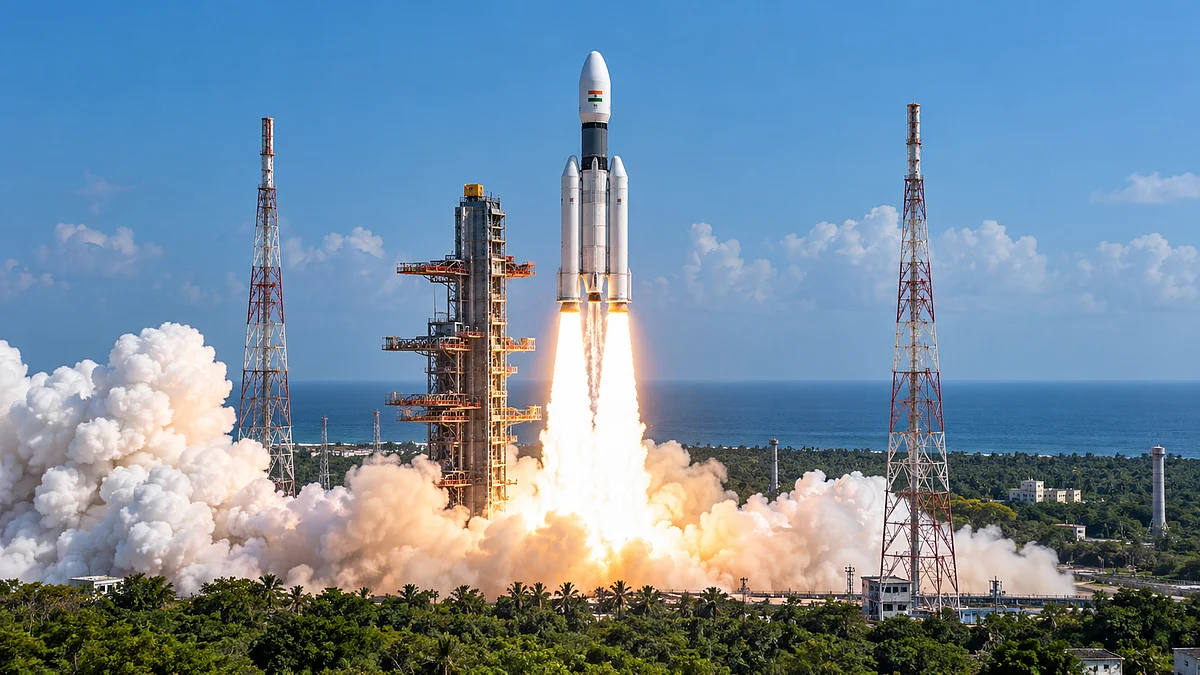
ISRO has drawn an ambitious schedule targeting seven rocket launches by March 2027, including the flagship Gaganyaan G1 uncrewed mission as its centerpiece. The schedule reflects India's commitment to accelerate space activity across human spaceflight, Earth observation, and navigation missions. This acceleration comes after ISRO successfully returned to flight operations following a seven-month gap, marking a turning point in the agency's 2026 campaign.
JAXA's H3 Rocket to Launch Mars Moon Explorer MMX on October 20
Japan's H3 rocket (flight 10) is scheduled to launch at 04:41 UTC on October 20, 2026 (early morning October 20 Japan time) with the Mars Satellite Explorer (MMX) probe, targeting Mars's moon Phobos for sample return. This mission represents Japan's most ambitious deep-space venture, exploring the Martian moon system over approximately five years. JAXA has activated a national observation campaign, with the rocket expected to be visible across Japan under clear skies. The launch comes as JAXA completes post-failure analysis from the December 2025 H3-8 mishap, restoring confidence in the vehicle's reliability for this high-stakes scientific mission.

India-Japan Lunar Polar Exploration (LUPEX) Targets Moon's Dark Side
India and Japan are advancing the Lunar Polar Exploration (LUPEX) mission to drill into the Moon's permanently shadowed regions near the south pole, searching for water ice and volatile materials. On October 1, 2026, Dr Prakash Chauhan, director of ISRO's National Remote Sensing Centre, detailed plans for a joint rover to penetrate the Moon's darkest areas—regions inaccessible to sunlight where water may accumulate. This collaboration leverages India's lander expertise (from Chandrayaan missions) with Japan's rover technology, exemplifying bilateral space cooperation. The mission builds on the August 2025 implementing agreement between ISRO and JAXA to study lunar volatiles in permanently shadowed regions.
India's Space Sector Expansion Accelerates with Private Startups and RDI Fund
India's private space sector is scaling rapidly, with government backing expanding beyond ISRO. Under the Research, Development, and Innovation (RDI) fund, the government has selected 22 companies, of which 7–8 are space-tech firms including Agnikul Cosmos, Dhruva Space, The ePlane Company, and GalaxEye. The sector includes 440 registered startups, with 113 receiving IN-SPACe authorisations for testing and launch support. As of September 27, 2026, India's venture-backed space startups continue attracting deep-tier institutional capital, signaling maturation in the ecosystem. This policy push complements ISRO's focus on core human spaceflight and lunar missions, creating a two-tier national space strategy.
Local view
Hindi-language media coverage emphasizes Gaganyaan's role as a symbol of Indian technological sovereignty. News18 Hindi (October 1, 2026) highlighted ISRO's "blockbuster roadmap" (धुआंधार रोडमैप) spanning Gaganyaan, Chandrayaan-4, and plans for a Bharatiya Antariksh Station (Indian Space Station) with its first module by 2028. Moneycontrol Hindi (September 27, 2026) reported on the broader roadmap, noting that ISRO is shifting resources to prioritize human spaceflight over other lunar missions in 2026–2027.
The Hindu's Space Wrap newsletter (September 30, 2026) noted that "buzz on space privatisation upstages ISRO's moment of glory," reflecting growing media attention to India's emerging private launch and satellite sectors competing alongside ISRO's ambitions.
Context & numbers
- Gaganyaan timeline: Uncrewed mission Q4 2026; crewed mission Q1 2027
- JAXA H3 MMX launch: October 20, 2026 (UTC), 04:41 JST (Japan Standard Time), 04:41 UTC
- Indian private space sector: 440 startups registered; 113 with IN-SPACe authorisations; 7–8 firms in government RDI fund
- ISRO launch cadence: 7 missions targeted by March 31, 2027
- India-Japan LUPEX: Rover to explore Moon's polar permanent shadow zones for water ice; agreement signed August 2025
On the radar
- JAXA H3-10/MMX launch window: October 20, 2026 (confirmed), with live observation possible across Japan under clear conditions
- Gaganyaan G1 weather window: December 2026; any delays could push into early 2027
- World Space Week 2026: October 4–10 theme "Rocket Revolution," highlighting global space cooperation and India's progress
- Chandrayaan missions: ISRO has confirmed no Chandrayaan launches in 2026; resources directed to Gaganyaan success
Last updated: October 4, 2026 · Data sourced from ISRO, JAXA, Hindi-language media, and international space analysts
This content was collected, curated, and summarized entirely by AI — including how and what to gather. It may contain inaccuracies. Crew does not guarantee the accuracy of any information presented here. Always verify facts on your own before acting on them. Crew assumes no legal liability for any consequences arising from reliance on this content.
Powered by
