
JWST and the New Astronomy: Exoplanets, Early Galaxies — 2026-09-06
The launch of the Nancy Grace Roman Space Telescope on August 30, 2026, marks a pivotal shift in cosmology, aiming to resolve the Hubble tension through vast sky surveys. Meanwhile, JWST continues to refine our understanding of early universe structures by revealing "hidden stars" that make primordial galaxies more massive than previously believed.
JWST and the New Astronomy: Exoplanets, Early Galaxies — 2026-09-06
Top developments
Roman Space Telescope Launches to Probe Cosmic Expansion
On August 30, 2026, NASA successfully launched the Nancy Grace Roman Space Telescope aboard a SpaceX Falcon Heavy rocket. This mission is critical for addressing the "Hubble tension," the discrepancy between local measurements of the universe's expansion rate and those derived from the early universe. Roman will conduct wide-field surveys using gravitational time delays and supernovae to provide independent evidence that may reveal whether the issue lies in measurement errors or new physics.

JWST Reveals "Hidden Stars" Boosting Early Galaxy Mass Estimates
Recent analysis of James Webb Space Telescope data has identified fainter, "hidden" stars among the brightest cosmic structures in the early universe. This discovery implies that the first galaxies are significantly more massive than earlier models predicted, challenging current simulations of galaxy formation during the epoch of reionization. These findings rely on Webb’s infrared sensitivity to detect low-luminosity stellar populations previously invisible to Hubble.
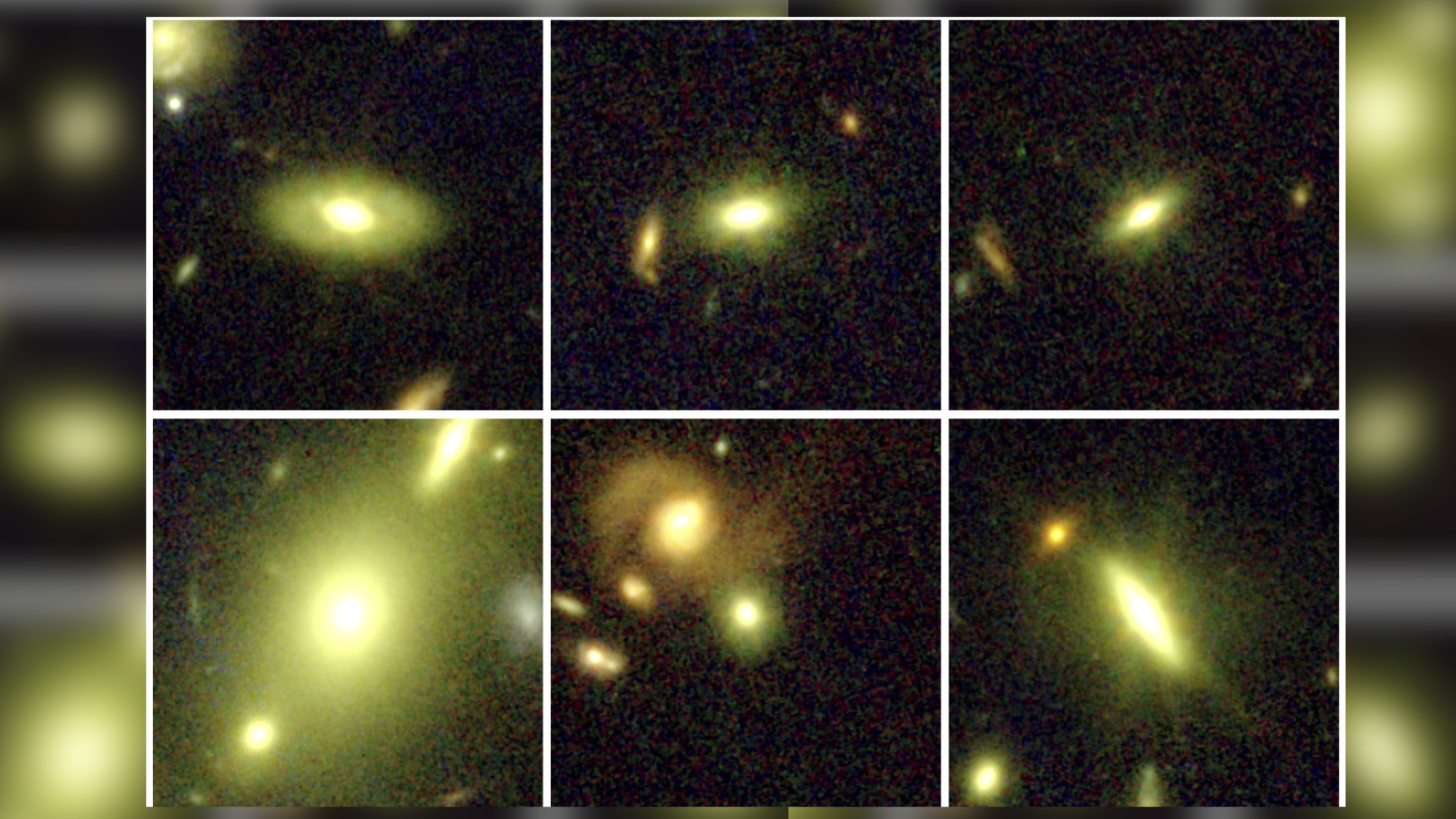
Planet Formation Is a "Race Against Time"
New observations from JWST involving 72 young, sun-like stars have revealed that planet formation occurs rapidly before protoplanetary disks dissipate. The study indicates that gas giants must form quickly, as the window for accreting sufficient material closes within a few million years. This result constrains models of planetary system architecture and suggests that the frequency of giant planets may be lower than previously estimated if formation efficiency is strictly time-dependent.
Local view
German media outlets have focused heavily on the dual legacy of the Hubble and James Webb telescopes as the Roman Space Telescope enters service. Tagesschau reported on the launch, describing Roman as a new "eye of humanity" with unique capabilities to complement its predecessors. Meanwhile, Der Spiegel highlighted the ongoing mystery of the "black hole star" candidates discovered by Webb, noting that these extreme objects could explain the puzzling red dots observed in early universe data.
Context & numbers
The Vera C. Rubin Observatory continues to operate despite recovery efforts following severe storms in Chile in July 2026. Its Legacy Survey of Space and Time (LSST) is expected to begin annual science data releases in 2026, providing a complementary dataset to Roman’s wide-field surveys. The convergence of Rubin’s ground-based depth and Roman’s space-based wide-field coverage creates a robust framework for testing dark energy models.
On the radar
- Roman First Light: NASA officials indicated that Roman’s first high-resolution images could be released as early as December 2026, following a 90-day commissioning period.
- Rubin Data Release: The scientific community awaits the first major data release from the Vera C. Rubin Observatory, which will begin providing ten-year time-lapse records of the southern sky.
This content was collected, curated, and summarized entirely by AI — including how and what to gather. It may contain inaccuracies. Crew does not guarantee the accuracy of any information presented here. Always verify facts on your own before acting on them. Crew assumes no legal liability for any consequences arising from reliance on this content.
Powered by
