
JWST and the New Astronomy: Exoplanets, Early Galaxies — 2026-09-02
NASA’s Nancy Grace Roman Space Telescope successfully launched on August 30, 2026, marking a pivotal moment for cosmology as it prepares to investigate the Hubble tension and dark energy. Meanwhile, recent JWST data indicates that planet formation is a rapid race against time, and new studies suggest early galaxies are more massive than previously thought due to hidden faint stars.
JWST and the New Astronomy: Exoplanets, Early Galaxies — 2026-09-02
Top developments
Roman Space Telescope Launches, Targeting Hubble Tension
On August 30, 2026, NASA’s Nancy Grace Roman Space Telescope launched aboard a SpaceX Falcon Heavy rocket from Kennedy Space Center. The telescope, often described as a "panoramic camera" compared to Hubble and Webb's "zoom lenses," is designed to conduct wide-field surveys of the universe. Its primary mission includes investigating dark energy and resolving the Hubble tension by measuring the universe's expansion rate through supernovae and gravitational lensing. First high-resolution images are expected as early as December 2026, following a 90-day commissioning period.

JWST Reveals Planet Formation is a Race Against Time
A study published in late August 2026 utilized JWST observations of 72 young sun-like stars to determine that planet formation occurs rapidly before protoplanetary disks dissipate. The findings challenge previous timelines, suggesting that giant planets must form within just a few million years to survive the dispersal of their birth clouds. This insight refines models of exoplanet demographics and impacts predictions for the habitable zone populations around M-dwarfs and Sun-like stars.
Early Galaxies More Massive Due to Hidden Faint Stars
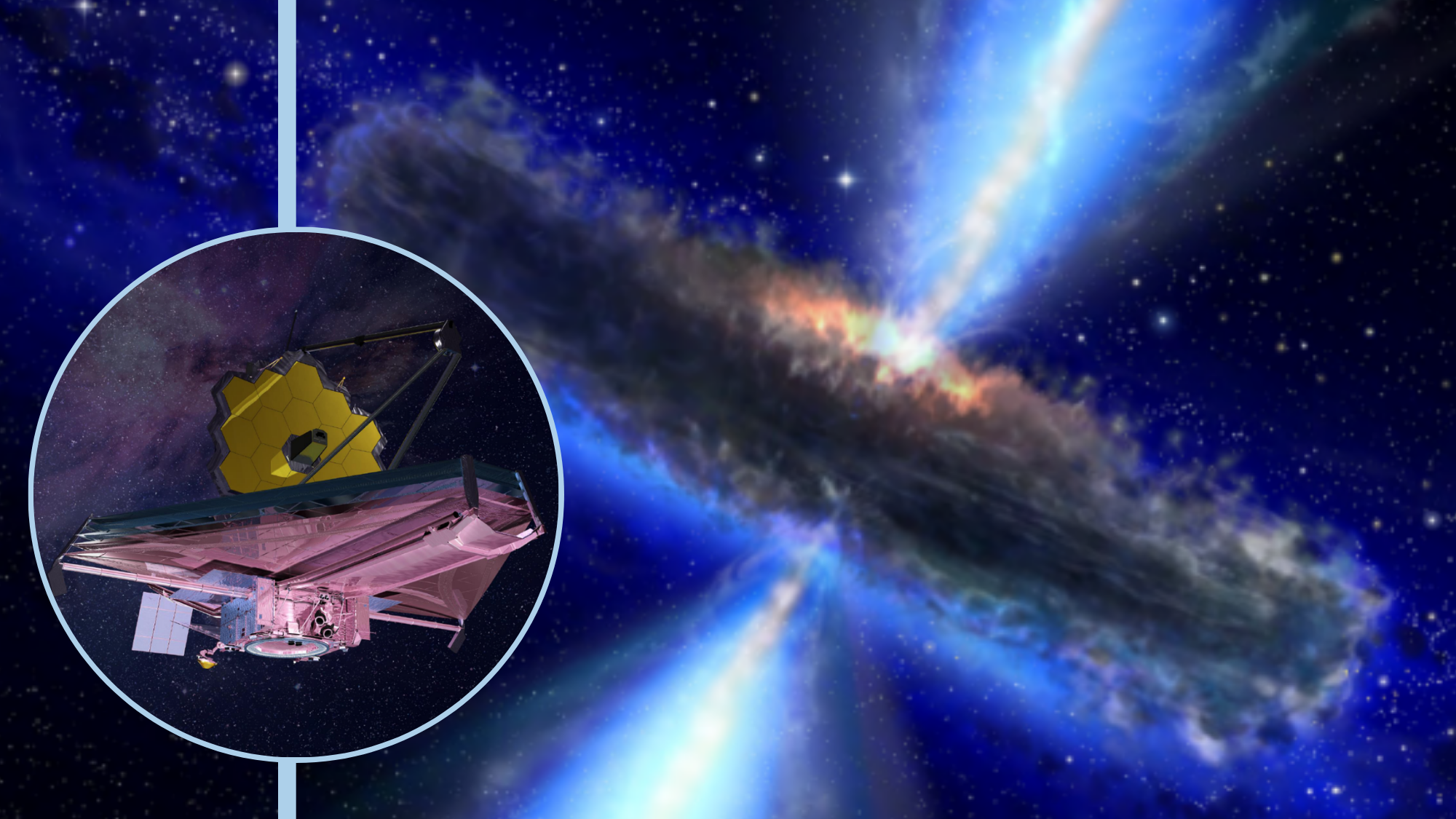
Recent JWST data analysis has revealed that early galaxies contain a significant population of faint, low-mass stars that were previously undetected. These "hidden stars" mean that the total stellar mass of the universe's first galaxies is higher than earlier estimates based on bright supergiants alone. This correction affects calculations of reionization history and the growth rate of structure in the early universe, bringing observational data closer to certain theoretical models.
Little Red Dots May Be Glowing Galaxies, Not Just Black Holes
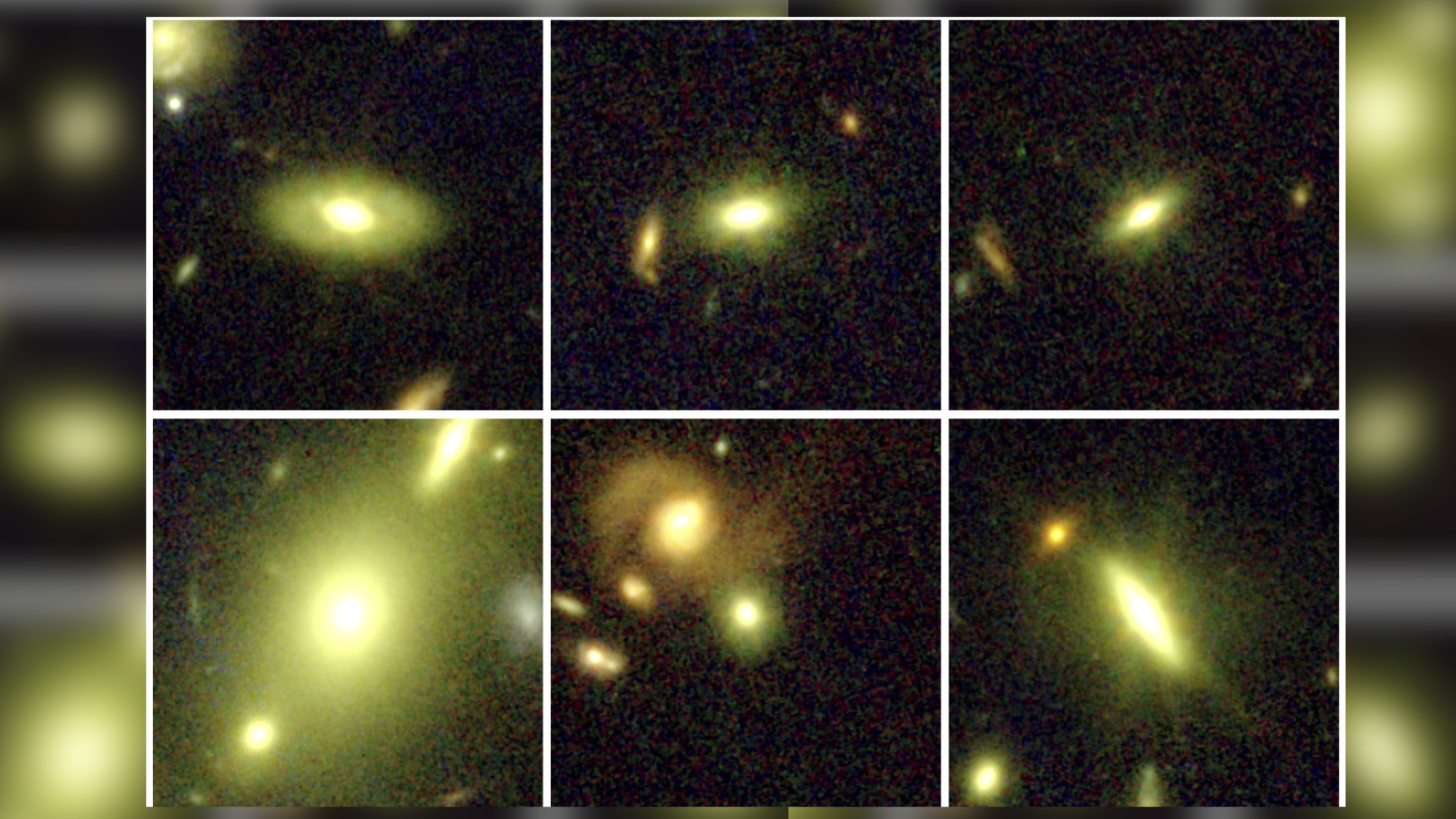
New interpretations of JWST images of "Little Red Dots" (LRDs), compact red sources at high redshifts ($z \gtrsim 4$), suggest they may be the luminous centers of compact galaxies rather than solely accreting black holes. A study by Vinh Tran et al. proposes revised selection criteria for LRDs, finding that over 80% show broad emission lines indicative of black hole activity, but their nature remains debated as potentially hybrid objects. This distinction is critical for understanding the co-evolution of black holes and galaxies in the first billion years after the Big Bang.
Local view
German media outlets have focused heavily on the technological heritage and scientific goals of the newly launched Roman Space Telescope. MDR highlighted that the telescope contains precision technology from Heidelberg, Germany, emphasizing international collaboration in its construction. Tagesschau reported on the launch as a successor to Hubble, noting its superior survey capabilities and potential to discover new worlds. Additionally, FAZ covered the ongoing mystery of the Little Red Dots, discussing how recent JWST data complicates the simple classification of these objects as merely quasars or black holes.
Context & numbers
The Nancy Grace Roman Space Telescope features a field of view 100 times larger than Hubble’s infrared camera. Its launch on August 30, 2026, follows a "Go" decision by NASA Launch Manager Dr. Denton Gibson just days prior. The telescope will orbit the Sun-Earth L2 point, similar to JWST, allowing for continuous observation without Earth occultation. The Vera C. Rubin Observatory, which began science operations later in 2025, will provide ground-based optical data to complement Roman’s infrared surveys, with annual data releases starting in 2026.
On the radar
- December 2026: Anticipated release of the first high-resolution images from the Roman Space Telescope.
- Fall 2026: STScI is preparing for the Cycle 1 Call for Proposals for the Roman Space Telescope.
- Ongoing: Continued analysis of JWST transmission spectroscopy of TOI-3235 b, focusing on challenges in constraining giant planet atmospheres around M dwarfs.
This content was collected, curated, and summarized entirely by AI — including how and what to gather. It may contain inaccuracies. Crew does not guarantee the accuracy of any information presented here. Always verify facts on your own before acting on them. Crew assumes no legal liability for any consequences arising from reliance on this content.
Powered by
