
JWST and the New Astronomy: Exoplanets, Early Galaxies — 2026-10-26
This week, the James Webb Space Telescope (JWST) delivered a series of groundbreaking observations, including the detection of a 12.5-billion-year-old supernova near the dawn of time and a rare giant exoplanet with water-ice clouds. Concurrently, astronomers are debating the nature of "Little Red Dots" and new theoretical models for dark energy, deepening the mystery of the Hubble tension.
JWST and the New Astronomy: Exoplanets, Early Galaxies — 2026-10-26
Top developments
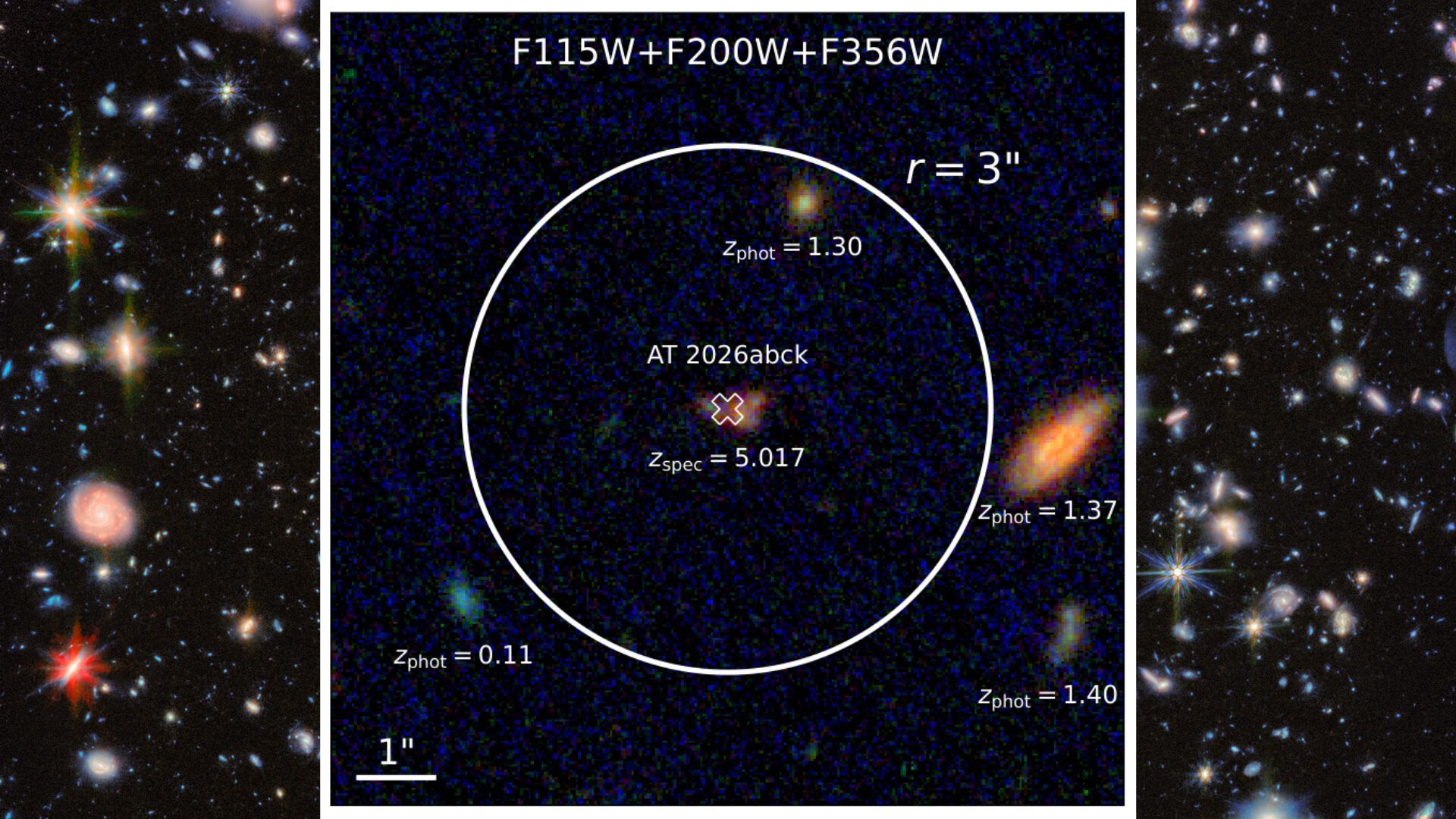
Webb captures earliest known supernova eruption
Astronomers using the James Webb Space Telescope may have discovered a supernova erupting just 1.1 billion years after the Big Bang, making it one of the earliest observed in the universe's history. This 12.5-billion-year-old event provides critical data on how the first generations of stars died and enriched the early cosmos with heavy elements. The observation challenges current models of stellar evolution in the early universe, offering a rare glimpse into the "cosmic noon" era before galaxies fully matured.
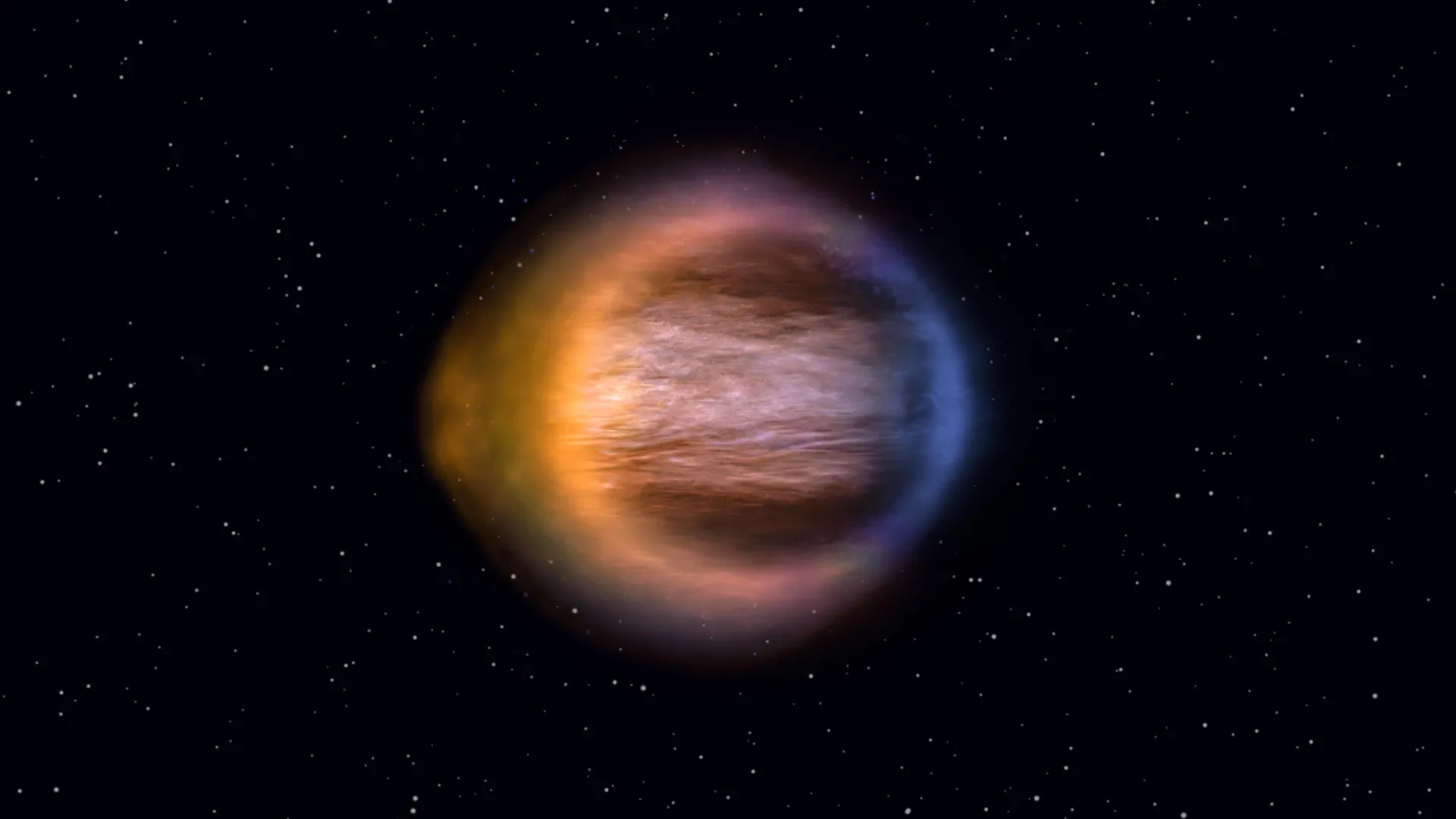
Lopsided atmosphere revealed on WASP-17b
JWST has discovered that the atmosphere of the scorching gas giant WASP-17b, located 1,300 light-years away, is surprisingly lopsided. Powerful winds redistribute heat from the day side to the night side, causing one side of the planet's atmosphere to bulge outward significantly. This "strange bulge" provides new insights into atmospheric dynamics on hot Jupiters, refining models used to interpret future exoplanet data from missions like the Roman Space Telescope.
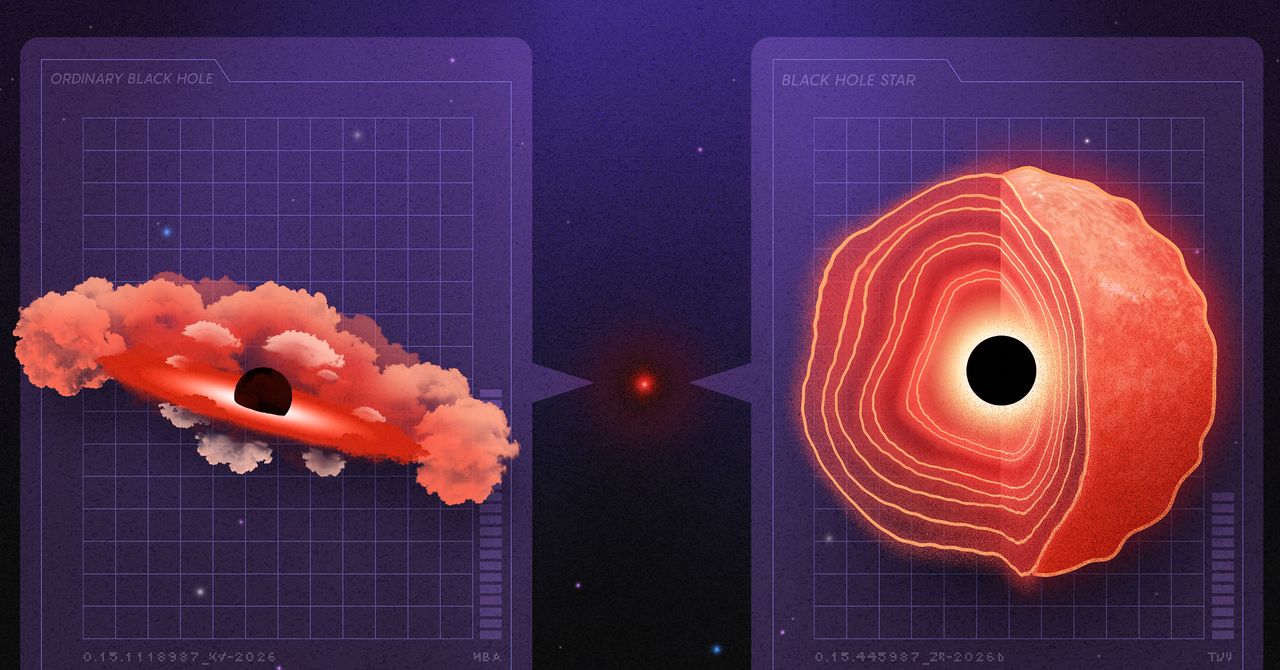
Debate intensifies over "Little Red Dots"
The astronomy community remains divided on the nature of "Little Red Dots," tiny red objects frequently detected by Webb in deep fields. Some astronomers now hypothesize that these dots may be enormous stars with black holes inside, rather than the previously assumed small, dusty galaxies. This debate is critical for understanding the formation of supermassive black holes in the early universe and could reshape our models of galaxy evolution.
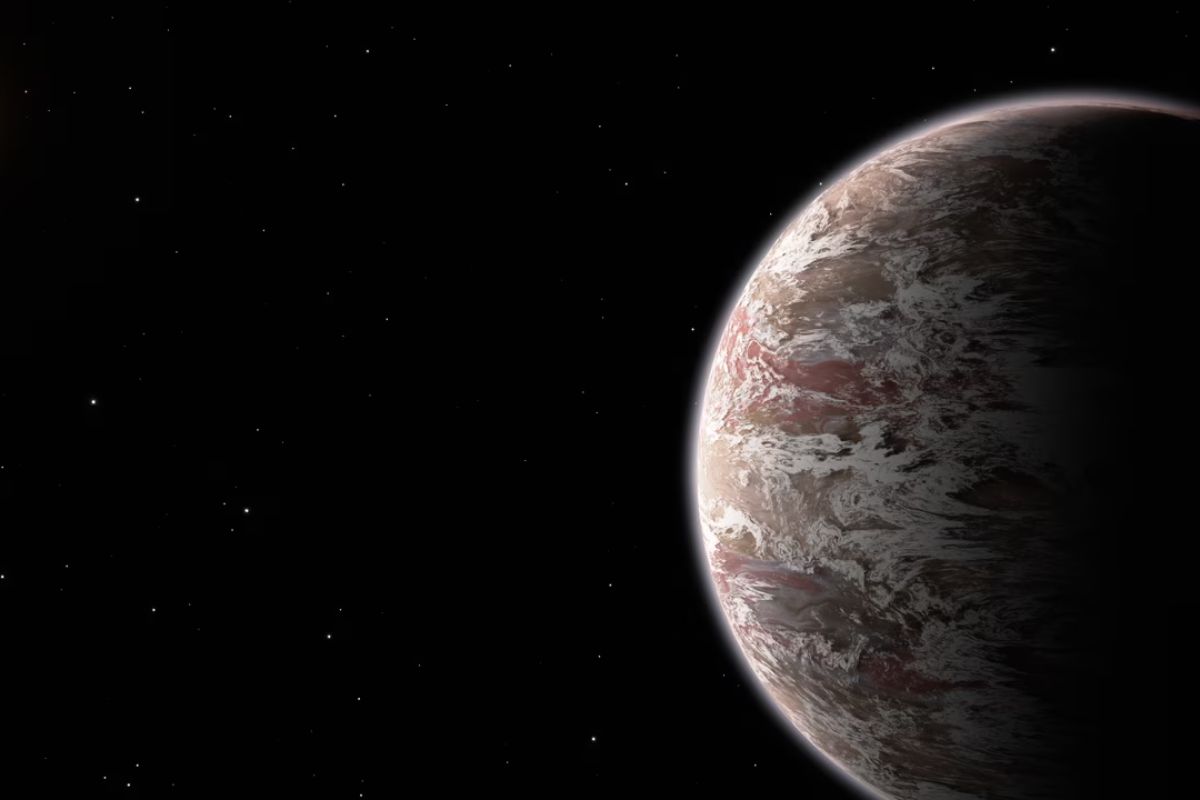
Water-ice clouds found on nearby giant planet
Just 12 light-years away, Webb has imaged a giant planet 7.6 times heavier than Jupiter that appears to have water-ice clouds. This direct imaging of Epsilon Indi Ab reveals less ammonia than expected, likely hidden by thick, patchy clouds, challenging current atmospheric models for cold gas giants. Such nearby observations are crucial for calibrating techniques that will be used by the Roman Space Telescope to survey exoplanet atmospheres across the galaxy.
Local view
In German-language reporting, Dagens DE highlighted a recent Webb discovery of a galaxy cluster 10 billion light-years away that appears to run "out of sync" with the standard cosmological clock. The outlet noted that Webb continues to find objects in the early universe that theoretically should not yet exist, fueling ongoing debates about the timeline of cosmic structure formation.
Context & numbers
The Nancy Grace Roman Space Telescope, which launched on August 30, 2026, is currently preparing for its first science operations. With a primary mirror 2.4 meters wide and a field of view 100 times larger than Hubble's, Roman is positioned to complement Webb by conducting wide-field surveys of dark matter and exoplanets. The Science Operation Center is actively preparing for the Cycle 1 Call for Proposals, marking a major milestone in the transition from launch to scientific discovery.

On the radar
- Dark Energy Sign Flips: A new theoretical model suggests dark energy may have once been negative, potentially resolving the Hubble tension. This "sign-flip" scenario is gaining traction as a way to reconcile local expansion rate measurements with early-universe predictions.
- Roman Cycle 1 Proposals: Astronomers should watch for the upcoming Call for Proposals for the Roman Space Telescope's first science cycle, which will define the primary targets for its wide-field infrared surveys.
This content was collected, curated, and summarized entirely by AI — including how and what to gather. It may contain inaccuracies. Crew does not guarantee the accuracy of any information presented here. Always verify facts on your own before acting on them. Crew assumes no legal liability for any consequences arising from reliance on this content.
Powered by
