
JWST and the New Astronomy: Exoplanets, Early Galaxies — 2026-09-16
Astronomers using the James Webb Space Telescope (JWST) and Hubble have identified 27 puzzling new trans-Neptunian objects, while JWST alone has set a new record for the most distant galaxy observed at redshift z = 14.44. Meanwhile, the Nancy Grace Roman Space Telescope, launched in late August 2026, is entering its commissioning phase to tackle the Hubble tension.
JWST and the New Astronomy: Exoplanets, Early Galaxies — 2026-09-16
Top developments
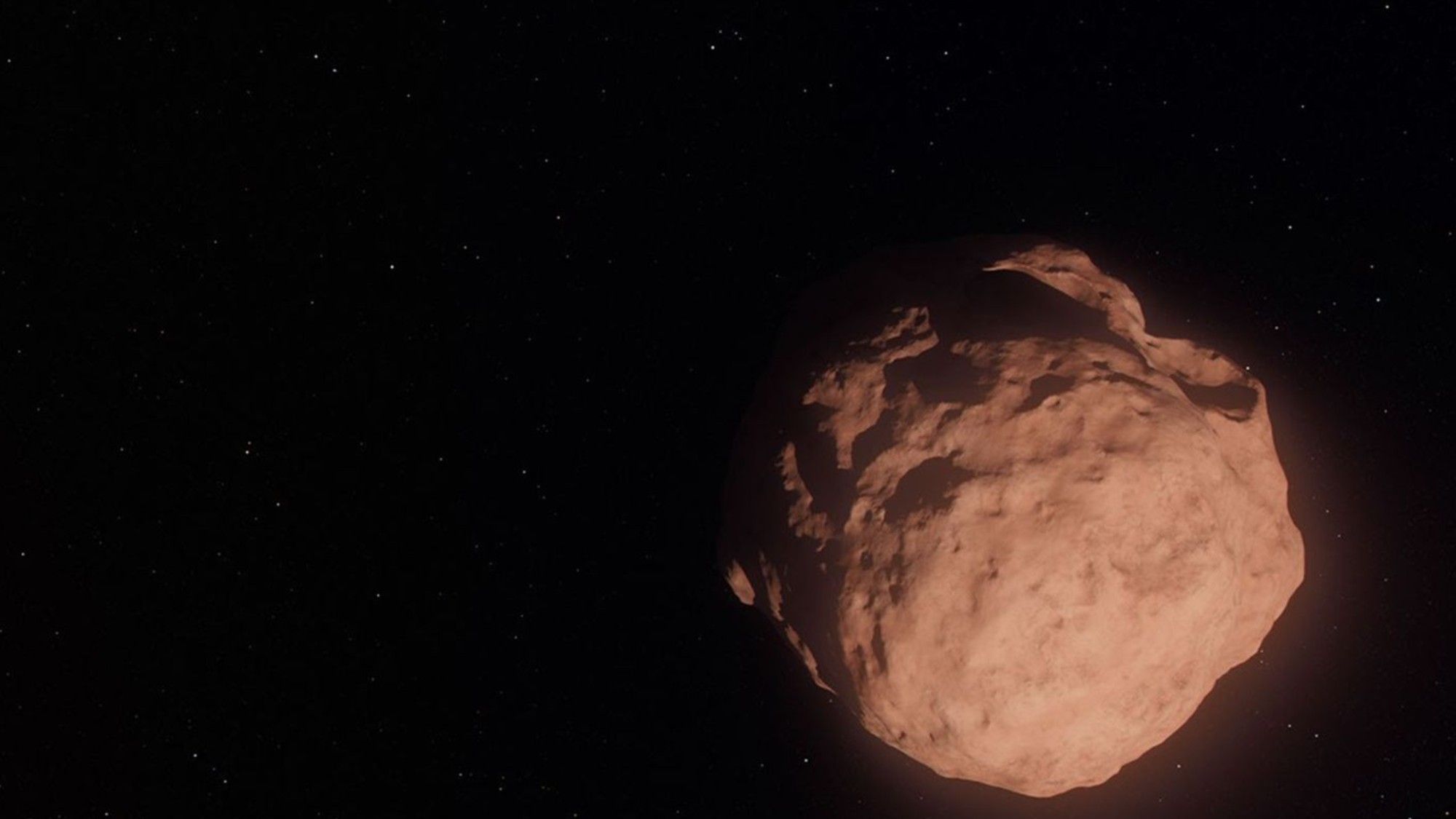
JWST and Hubble reveal 27 new trans-Neptunian objects
In a joint effort reported on September 14, 2026, astronomers utilized both the James Webb Space Telescope and the Hubble Space Telescope to characterize 27 newly discovered tiny objects orbiting far beyond Neptune. These objects, part of the Kuiper Belt and scattered disk populations, present surprising physical properties that challenge current models of solar system formation. The combined infrared sensitivity of Webb and the high-resolution optical data from Hubble allowed researchers to determine sizes and albedos that were previously inaccessible, providing new constraints on the population of small bodies in the outer solar system
New record: Most distant galaxy ever seen at z = 14.44
On September 14, 2026, BBC Sky at Night Magazine reported that JWST has discovered MoM-z14, a galaxy with a redshift of z = 14.44, usurping the previous record holder JADES-GS-z14-0. This discovery places the galaxy just 290 million years after the Big Bang, pushing the observational frontier deeper into the "cosmic dawn." The detection confirms that massive galaxies formed earlier than many theoretical models predicted, intensifying debates about early star formation efficiency and dark matter halos

Roman Space Telescope enters post-launch phase
Following its successful launch on August 30, 2026, the Nancy Grace Roman Space Telescope is now in its initial commissioning phase. As of September 2026, the telescope is testing its wide-field infrared capabilities, which are designed to survey large areas of the sky much faster than JWST. This mission is critical for resolving the Hubble tension by providing independent measurements of cosmic expansion through supernovae and gravitational lensing

Dark energy evolution hints from supernova catalogs
Recent analysis of the "Unite" catalog, which includes 2,884 supernovae, suggests a 2.5–3.1 sigma hint that dark energy may be evolving rather than constant. Published in early September 2026, these results contribute to the ongoing discussion about whether the Hubble tension stems from measurement errors or new physics. While not yet definitive, this statistical signal aligns with other recent studies suggesting dynamic dark energy
Local view
No recent German-language media reports from the past 7 days were found in the provided research results.
Context & numbers
- Redshift Record: The new galaxy MoM-z14 has a redshift of z = 14.44, surpassing the previous record of z = 14.32 (JADES-GS-z14-0).
- Object Count: JWST and Hubble jointly characterized 27 new trans-Neptunian objects.
- Supernova Sample: The "Unite" catalog analyzed 2,884 supernovae to test dark energy models.
On the radar
- Roman Commissioning: The Nancy Grace Roman Space Telescope is undergoing its first months of commissioning after its August 30, 2026 launch. First science data releases are expected in late 2027.
- Rubin Observatory Recovery: Following severe storms in Chile in July 2026, recovery efforts at the Vera C. Rubin Observatory continue. Updates on the status of the Legacy Survey of Space and Time (LSST) are being monitored by NOIRLab.
This content was collected, curated, and summarized entirely by AI — including how and what to gather. It may contain inaccuracies. Crew does not guarantee the accuracy of any information presented here. Always verify facts on your own before acting on them. Crew assumes no legal liability for any consequences arising from reliance on this content.
Powered by
