
JWST and the New Astronomy: Exoplanets, Early Galaxies — 2026-10-27
The James Webb Space Telescope (JWST) has delivered a series of groundbreaking observations this week, including the detection of a potential supernova from the early universe and the discovery of a massive planet with water-ice clouds. Simultaneously, new data on exoplanet atmospheres and dark matter distributions continues to challenge standard cosmological models, while the Roman Space Telescope progresses toward its 2027 science operations.
JWST and the New Astronomy: Exoplanets, Early Galaxies — 2026-10-27
Top developments
Webb Detects Potential Early Universe Supernova
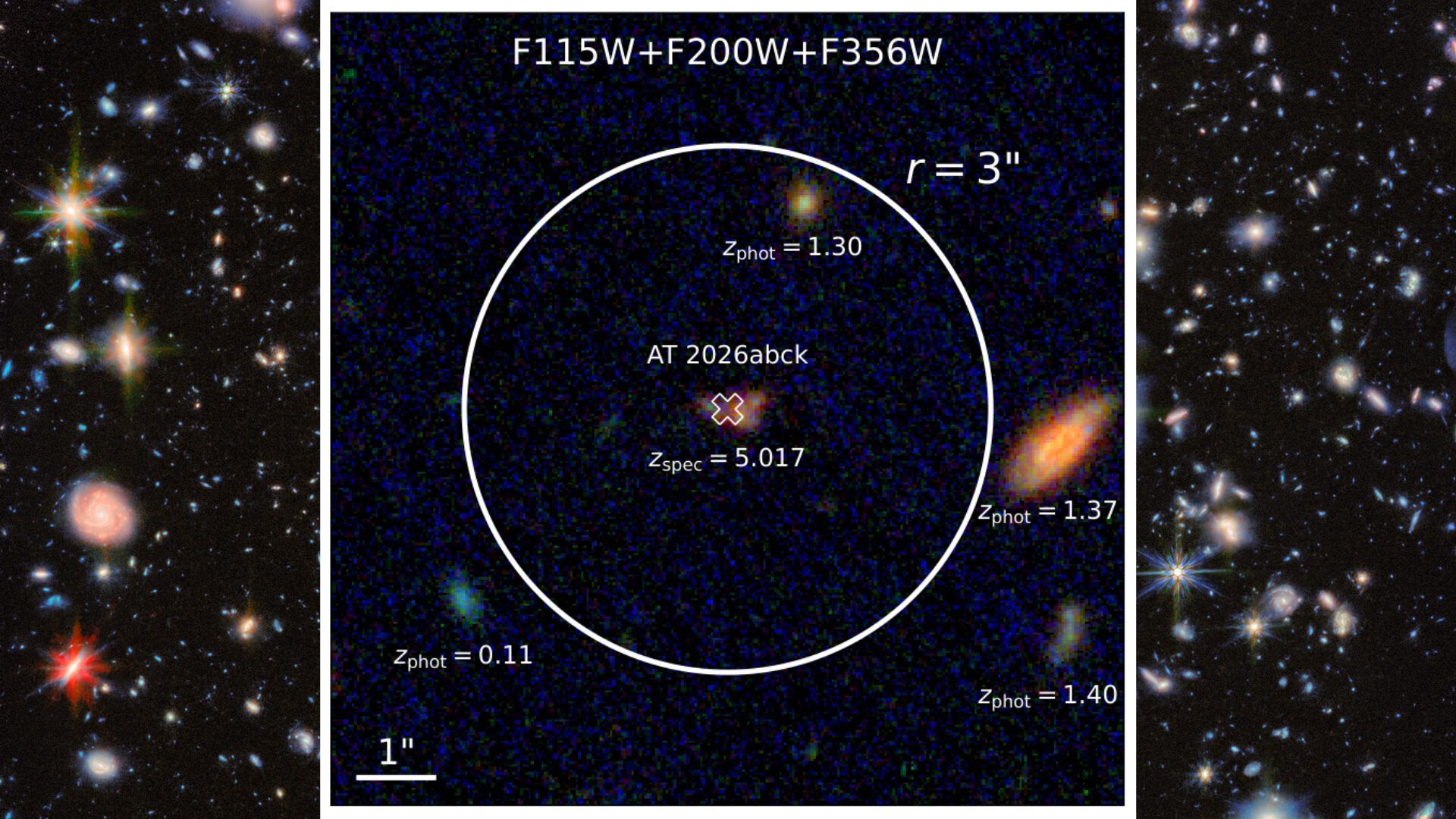
Astronomers using JWST may have captured a supernova erupting just 1.1 billion years after the Big Bang, offering a rare glimpse into the "cosmic dawn." This observation, highlighted by Live Science in late October, provides critical data on the life cycles of the first generation of stars. The event’s timing and spectral characteristics are being analyzed to determine if it challenges existing models of early stellar evolution.
Giant Planet with Water-Ice Clouds Imaged
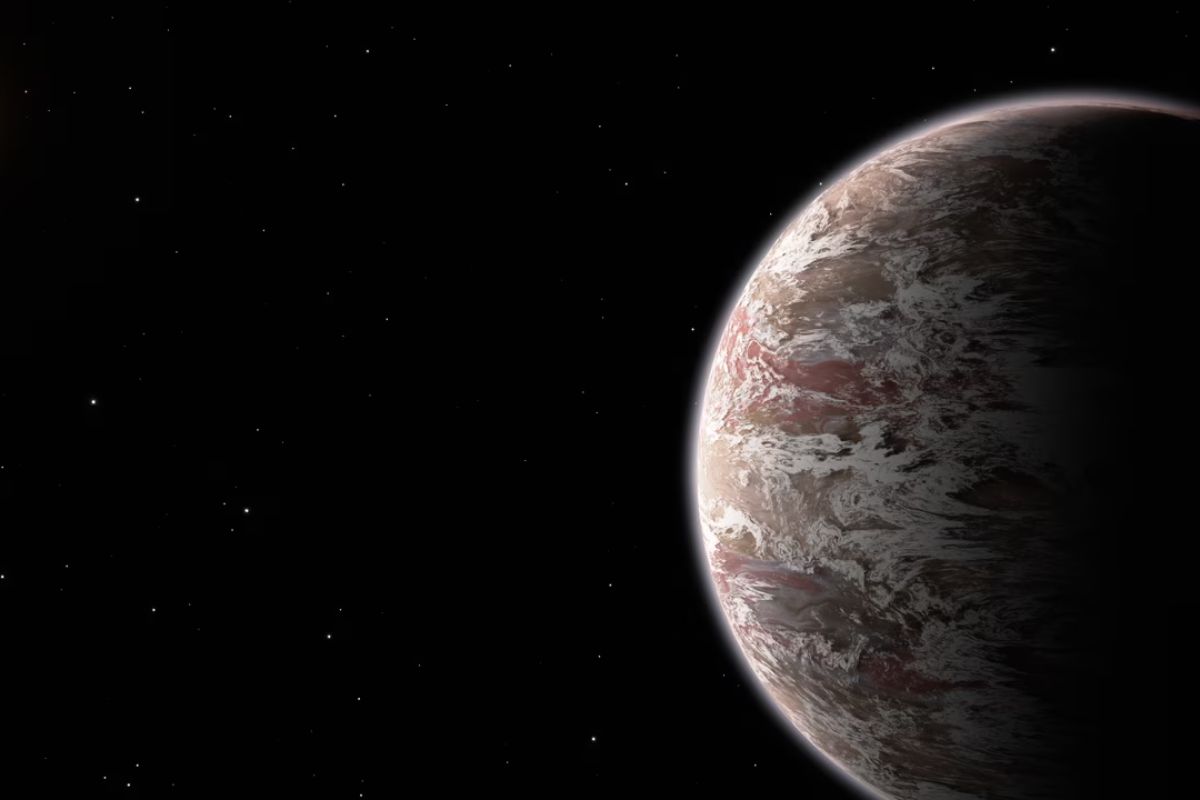
In a significant exoplanet discovery, JWST imaged a massive planet located just 12 light-years away, approximately 7.6 times heavier than Jupiter, which appears to possess water-ice clouds. Reported by Futura-Sciences on October 25, 2026, this finding expands the known diversity of planetary atmospheres and suggests that complex cloud chemistry may be more common in cold, giant worlds than previously thought.
Lava Planet Reveals Unexpected Atmosphere
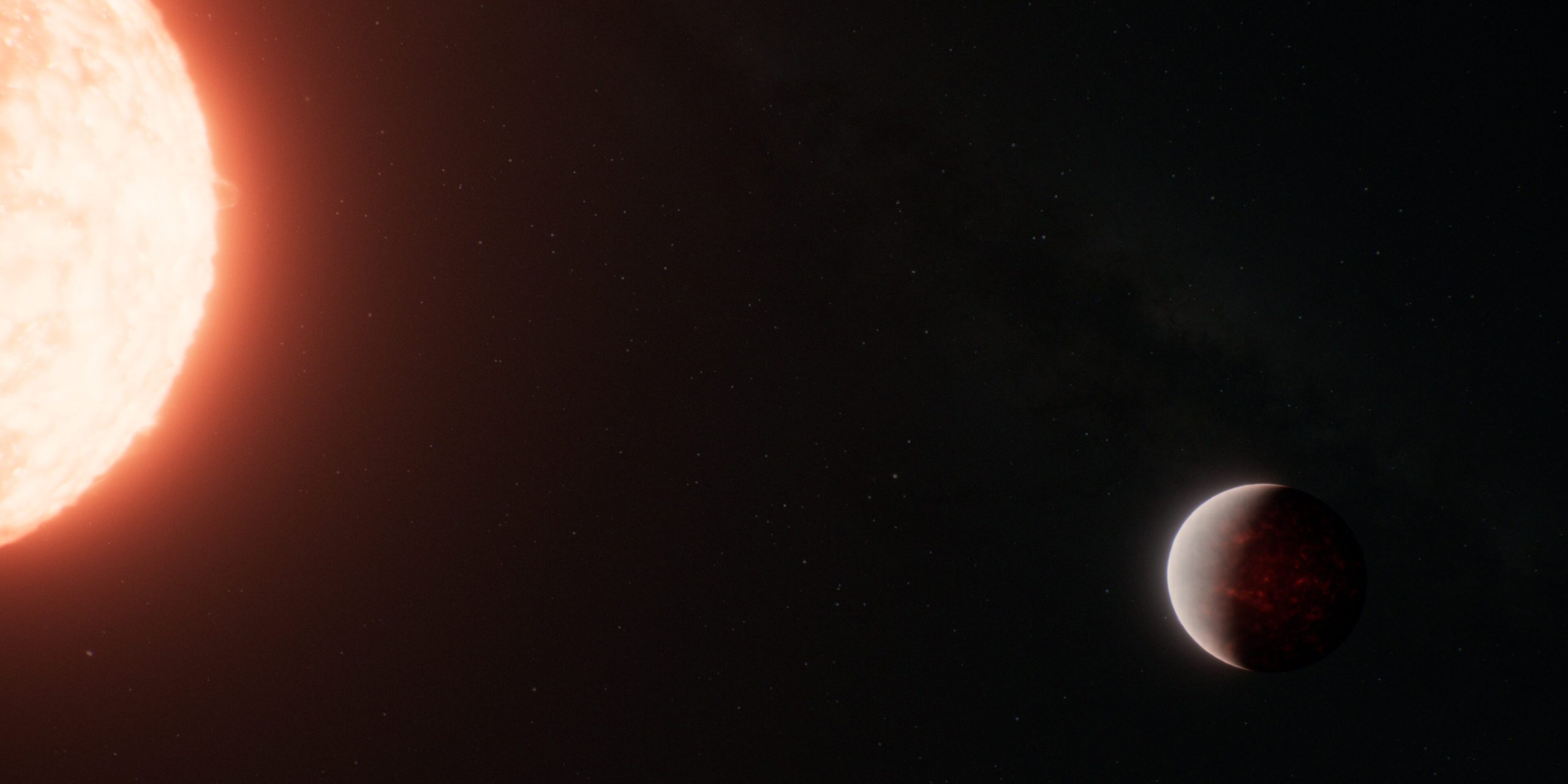
JWST observations of the scorching exoplanet TOI-561 b, located 280 light-years from Earth, indicate the presence of a substantial atmosphere despite extreme temperatures. German outlet ingenieur.de reported on October 26 that this "super-Earth" exhibits clouds made of rock and temperatures reaching 1,800 degrees Celsius. The discovery of a thick atmosphere on such a hot rocky planet defies previous expectations that stellar radiation would have stripped it away.
Dark Matter Distribution Challenges Cosmological Models
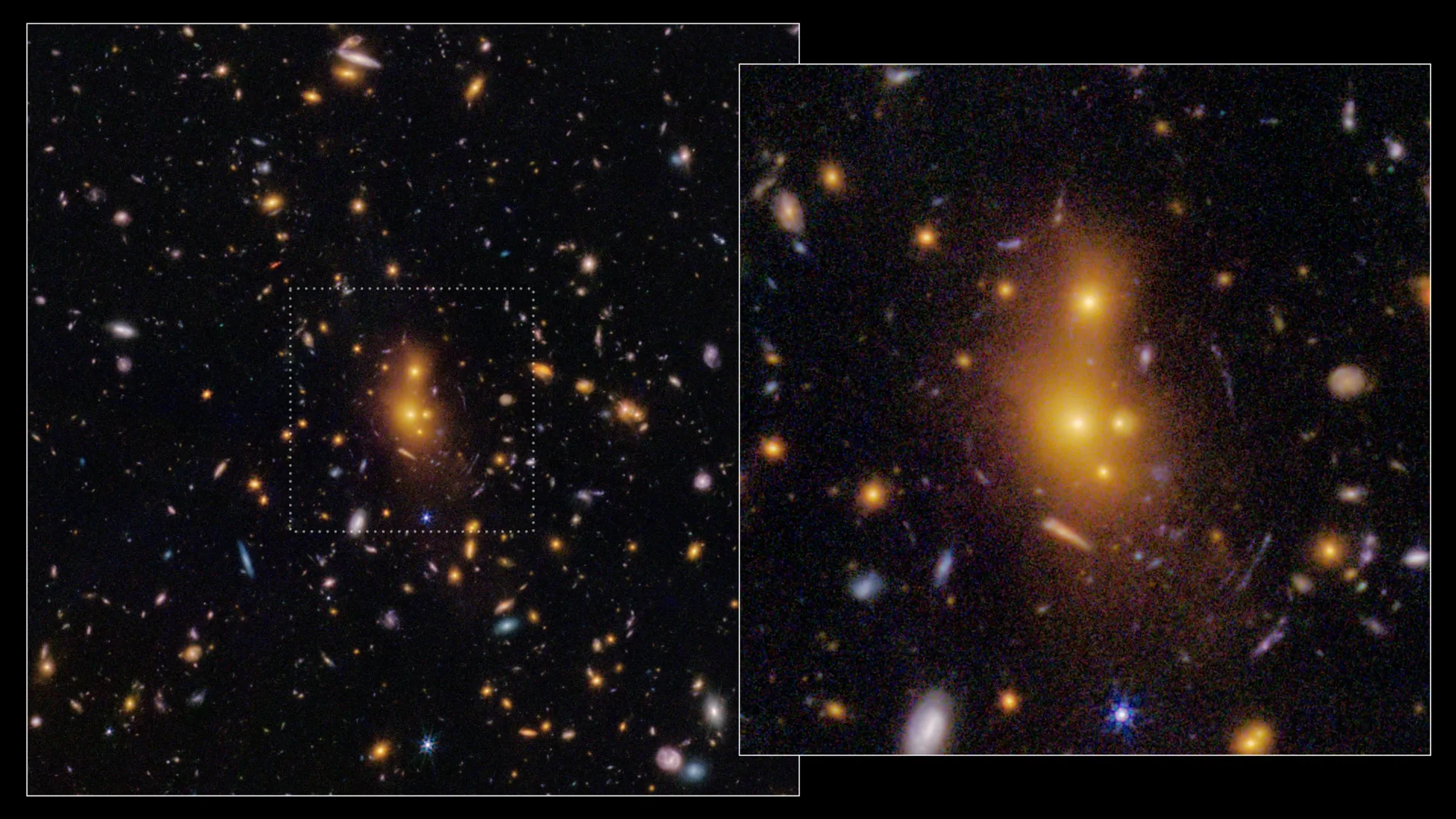
New JWST data has revealed an ancient galaxy cluster with an unexpectedly dense concentration of dark matter. This finding, also reported by ScienceDaily in mid-October, uncovered a surprising connection between scattered starlight and invisible dark matter, posing challenges to standard theories of structure formation. The results suggest that our understanding of how galaxies and dark matter interact in the early universe may need revision.
Local view
German science media, specifically ingenieur.de, focused on the counter-intuitive atmospheric findings of TOI-561 b, emphasizing the "astonishment" of astronomers at the planet's resilience. The coverage highlights the tension between theoretical predictions of atmospheric stripping on close-orbit planets and the empirical evidence provided by Webb’s infrared spectroscopy.
Context & numbers
The Vera C. Rubin Observatory, which began full survey operations in July 2026, is currently taking an image of the night sky every 40 seconds. It is projected to catalog more than five million asteroids and image approximately 17 billion stars over the next decade. Meanwhile, the Nancy Grace Roman Space Telescope, launched in August 2026, is expected to enter science operations by early 2027 following a 90-day commissioning period.
On the radar
- Roman Space Telescope Commissioning: The Roman Space Telescope is currently in its commissioning phase, with full science operations anticipated in early 2027.
- Rubin Observatory Data Releases: As Rubin continues its 10-year survey, the first major data releases are expected to provide unprecedented catalogs of supernovae and asteroids.
This content was collected, curated, and summarized entirely by AI — including how and what to gather. It may contain inaccuracies. Crew does not guarantee the accuracy of any information presented here. Always verify facts on your own before acting on them. Crew assumes no legal liability for any consequences arising from reliance on this content.
Powered by
