
JWST and the New Astronomy: Exoplanets, Early Galaxies — 2026-10-31
This week, the James Webb Space Telescope (JWST) delivered a series of groundbreaking observations, including the most distant ring galaxy ever found and a potential first exomoon. These findings, alongside new data on dark matter density and exotic atmospheric phenomena on lava planets, are reshaping models of early cosmic structure and planetary evolution.
JWST and the New Astronomy: Exoplanets, Early Galaxies — 2026-10-31
Top developments
Most Distant Ring Galaxy Discovered
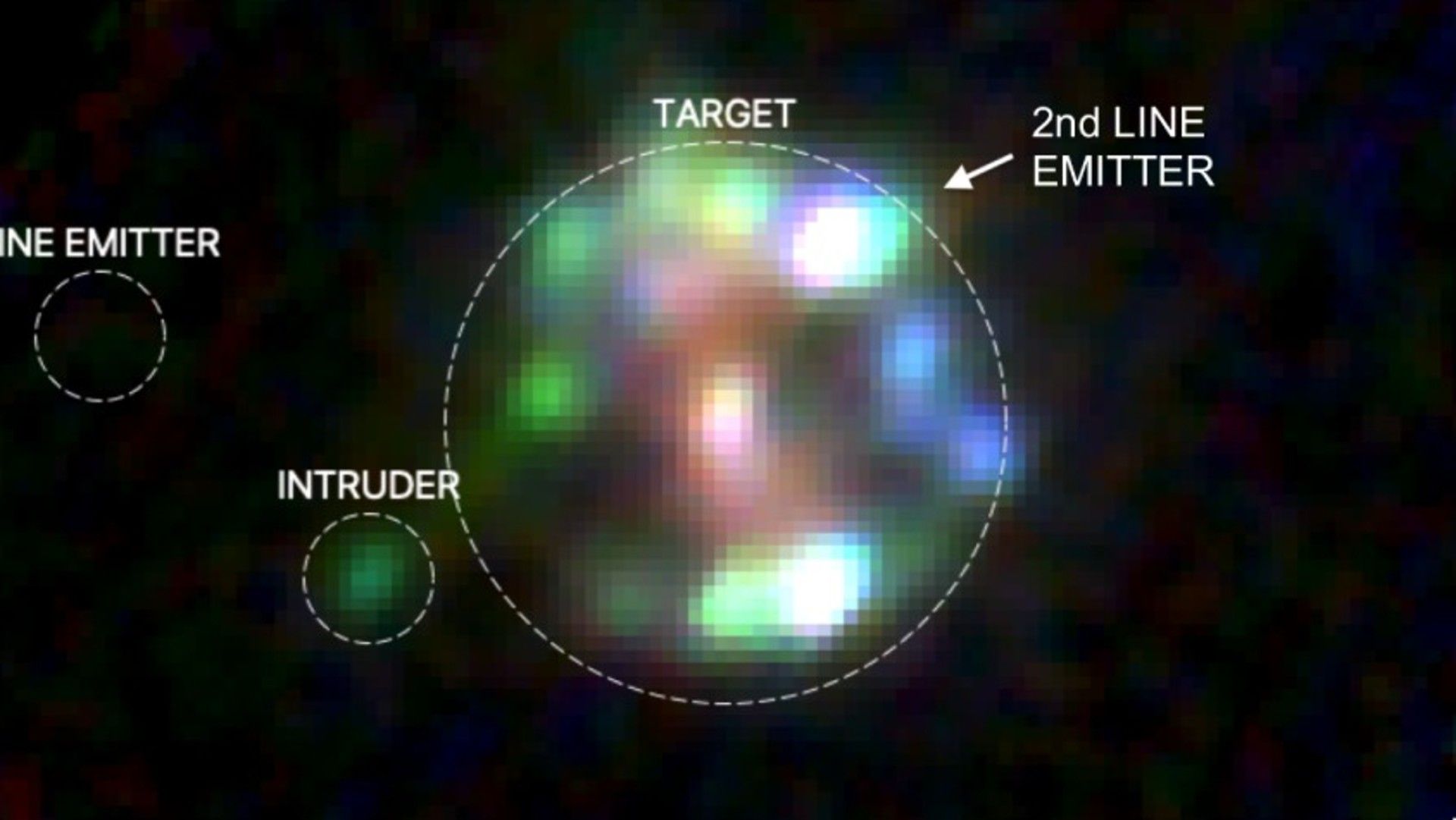
Astronomers using the James Webb Space Telescope have observed a galaxy with a ring of newborn stars as it appeared 2.1 billion years after the Big Bang. This is the most distant ring galaxy ever detected, suggesting that the early universe may have been more chaotic than previously thought due to ultra-rare collisions.
Evidence of a Potential Exomoon
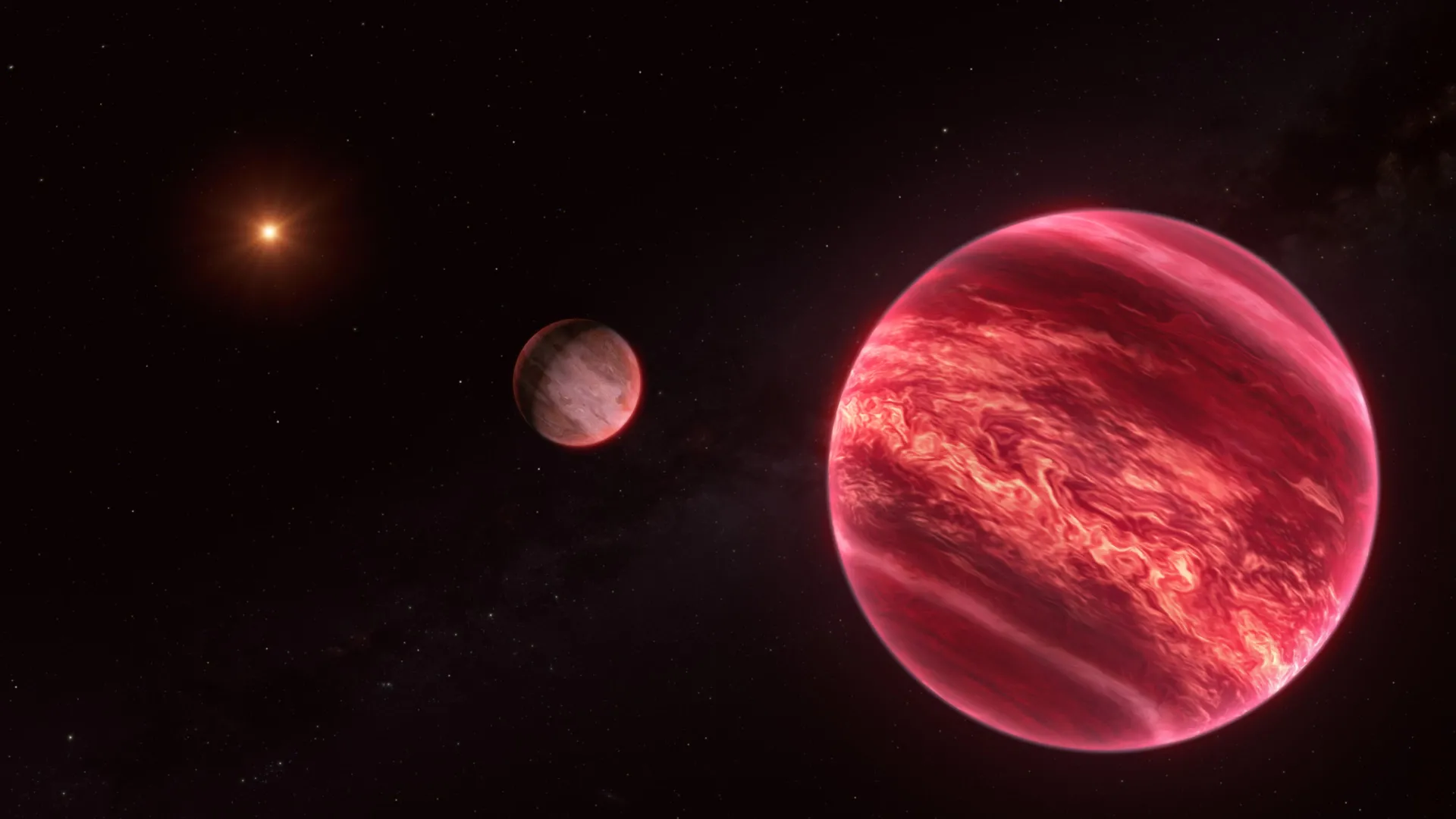
In a potentially historic discovery, astronomers have uncovered evidence of a moon beyond our Solar System. This object is at least as massive as Jupiter and orbits a brown dwarf, which itself circles a star. If confirmed, this would be the first moon ever detected outside our Solar System.
Lava Planet Shields Atmosphere with "Sunscreen"
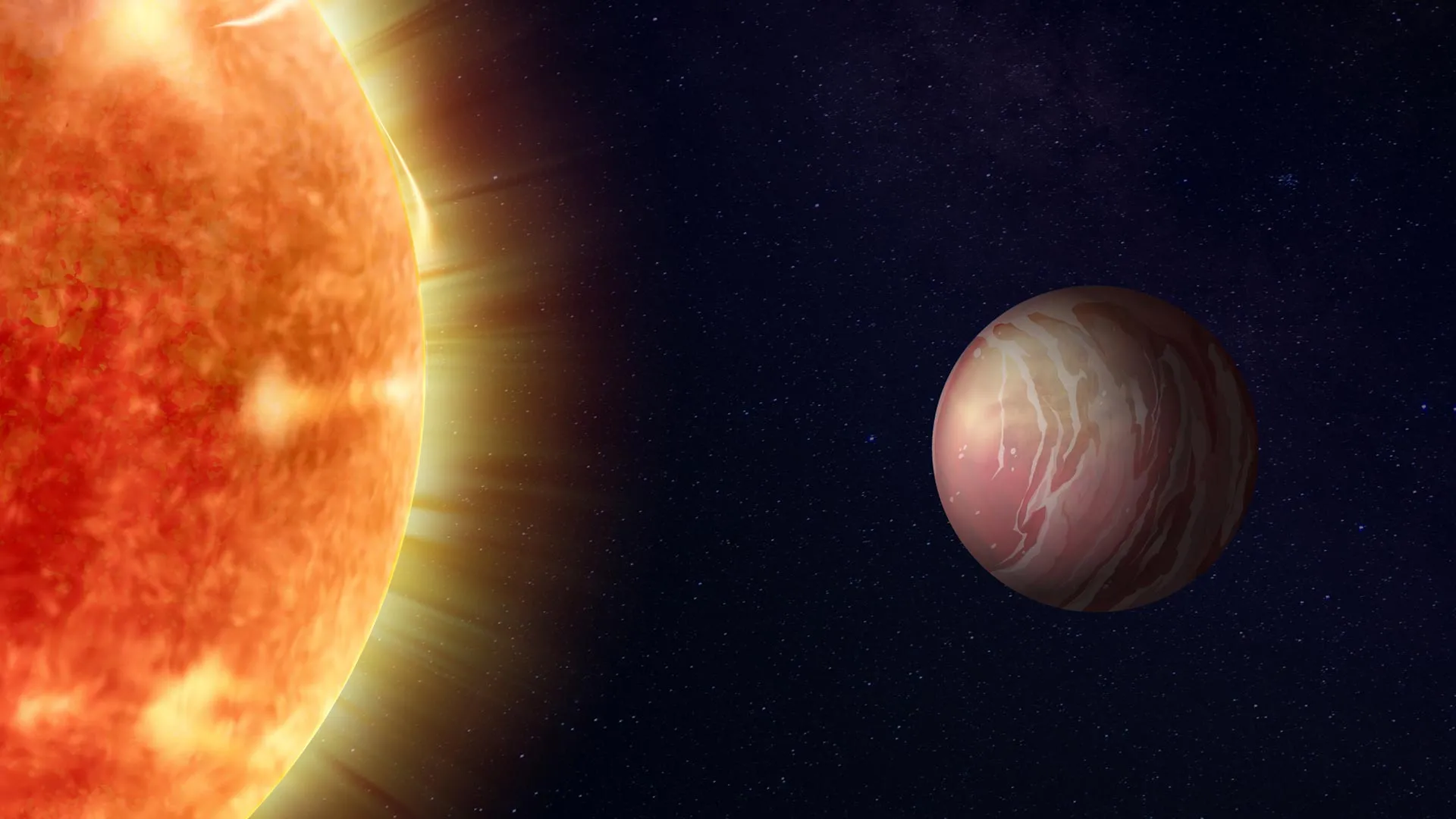
JWST observations of the scorching lava planet TOI-561 b, located 280 light-years away, reveal that it reflects about 75% of incoming starlight. Despite conditions that should have stripped its atmosphere billions of years ago, the planet maintains a thick atmosphere, likely shielded by exotic mineral clouds acting as a giant "sunscreen".
Dark Matter Density Challenges Cosmological Models
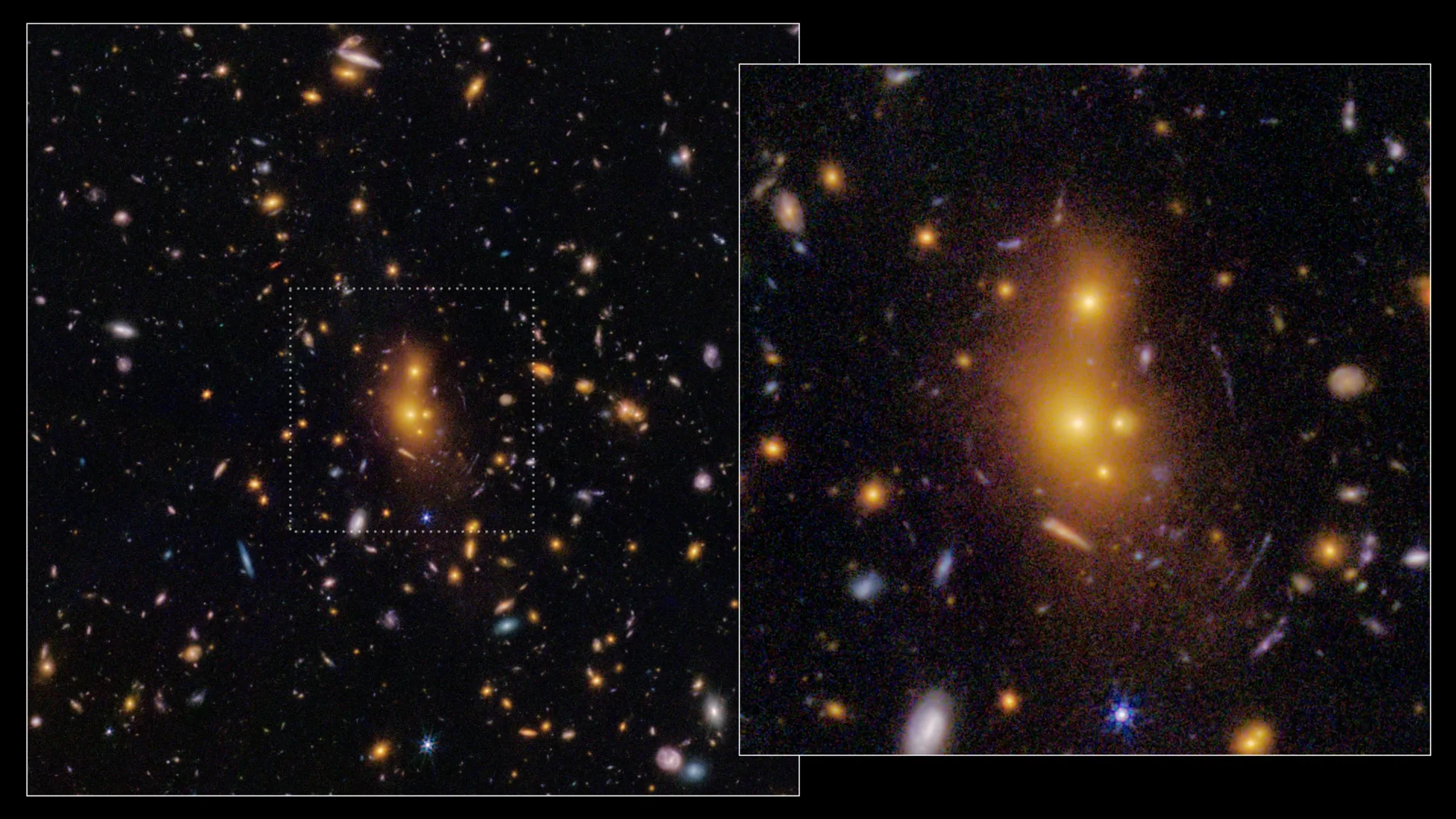
New JWST data reveals an ancient galaxy cluster with an unexpectedly dense concentration of dark matter. This discovery challenges existing theories about how the universe developed and uncovers a surprising connection between scattered starlight and invisible dark matter.
Local view
German media outlets such as tagesschau and scinexx are highlighting the discovery of a possible new dwarf planet, 2026 ED138, located beyond Pluto. tagesschau reports that if confirmed, this object would be the sixth known dwarf planet in our solar system. Meanwhile, scinexx focuses on Webb’s imaging of Arp 263, a galactic collision where one galaxy appears to have "vanished," leaving behind tidal tails and unusual gas movements that hint at a violent past encounter.

Context & numbers
Recent studies continue to probe the Hubble tension. A new preprint from late October 2026 suggests that adding JWST high-redshift galaxy observations to CMB+DESI+DES-Dovekie data shifts the holographic dark energy parameter $c$ from $1.270^{+0.146}_{-0.096}$ to $1.091\pm0.095$. This adjustment improves fits to high-redshift galaxy abundances compared to the standard $\Lambda$CDM model, highlighting the complementary role of JWST in probing dark energy models.
Additionally, mathematicians have proposed that the standard model of the universe may be inherently unstable, potentially challenging the need for dark energy entirely. Their calculations suggest Einstein’s equations might explain cosmic expansion without dark energy.
On the radar
- Roman Space Telescope: NASA’s Nancy Grace Roman Space Telescope launched on August 30, 2026. It is currently heading toward its final destination at Lagrange Point L2, where it will join JWST and ESA’s Euclid Telescope. The first full data release is being prepared for the scientific community.
- Vera Rubin Observatory: The observatory in Chile is progressing with its first light images and preparing for the 10-year LSST sky survey, which began in 2026. The first full data release from the first year is being prepared.
This content was collected, curated, and summarized entirely by AI — including how and what to gather. It may contain inaccuracies. Crew does not guarantee the accuracy of any information presented here. Always verify facts on your own before acting on them. Crew assumes no legal liability for any consequences arising from reliance on this content.
Powered by
