
Lunar Landers and the Moon Economy: CLPS, ispace, Firefly — 2026-10-22
NASA has finalized new timelines for its Artemis lunar lander program, targeting uncrewed tests for SpaceX and Blue Origin in 2027 ahead of a 2028 crewed landing. In the commercial sector, Firefly Aerospace completed a key design review for its MoonFall mission, while ispace secured a grant for lunar solar infrastructure concepts. Meanwhile, the first private lunar lander of 2026, Voyager Space’s Griffin, remains on track for a late-year launch.
Lunar Landers and the Moon Economy: CLPS, ispace, Firefly — 2026-10-22
Top developments
NASA Sets Artemis Lander Timelines for 2027–2028
NASA has outlined updated development milestones for its Human Landing System partners, SpaceX and Blue Origin. The agency targets uncrewed lander tests in the first half of 2027, with a crewed Artemis III mission scheduled for early 2028. This timeline places significant pressure on both companies to demonstrate orbital refueling and lunar descent capabilities within the next 12 months.
Firefly Aerospace Completes Preliminary Design Review for MoonFall
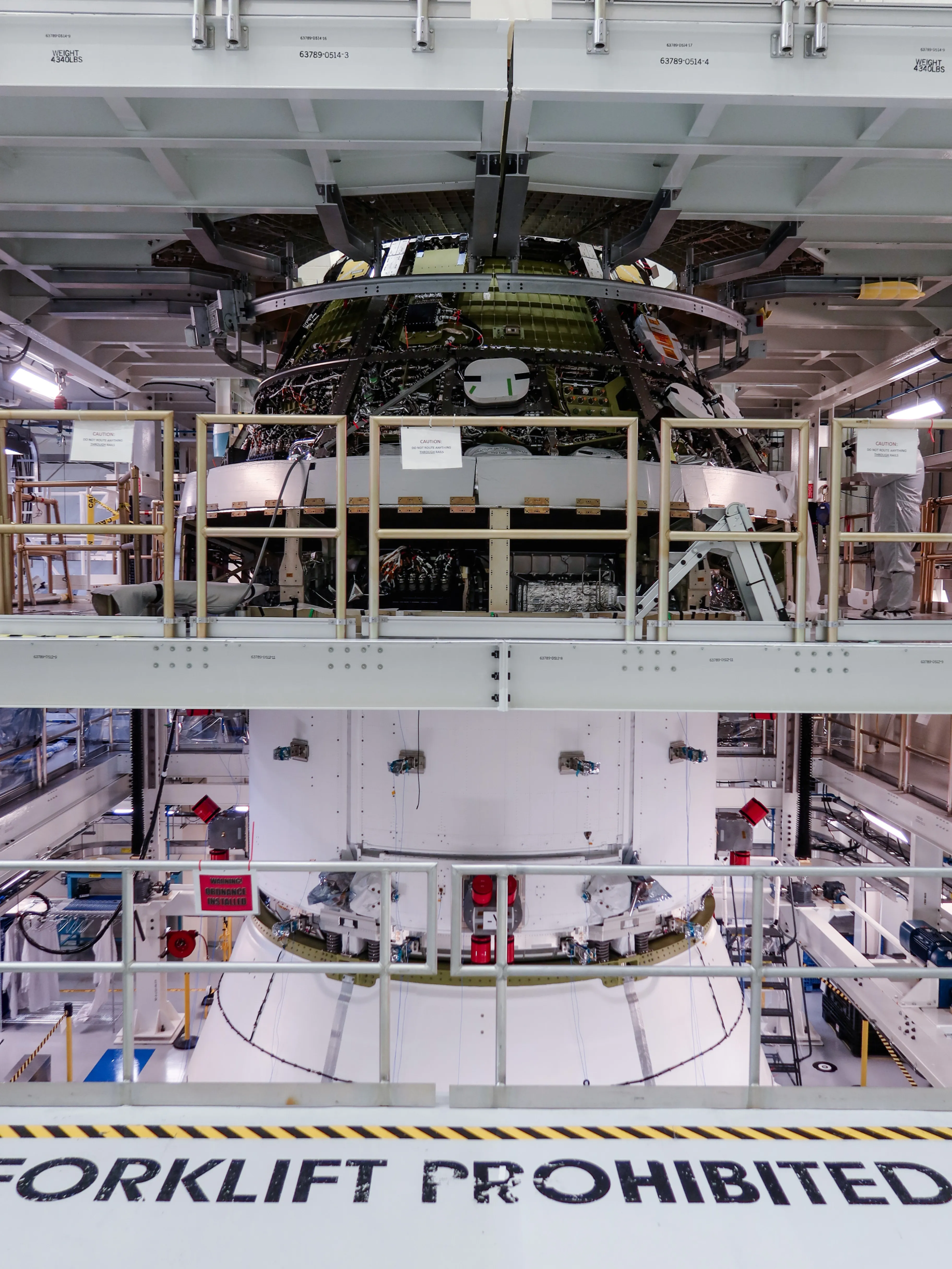
Firefly Aerospace announced on October 21 that its Elytra spacecraft has completed the Preliminary Design Review (PDR) for the NASA MoonFall mission. This milestone allows Firefly to move from design to final hardware production. The Elytra spacecraft is designed to deliver NASA JPL drones to the lunar south pole, supporting critical science missions in the region.
Voyager Space’s Griffin Lander Aims for Late-2026 Launch
Voyager Space’s Griffin lunar lander is scheduled to attempt a launch before the end of 2026, potentially becoming the first commercial lander to reach the Moon this year. The mission will lift off from Kennedy Space Center on a SpaceX Falcon Heavy rocket. If successful, this would mark a significant step for Astrobotic’s technology, which powers the Griffin lander.

Local view
ispace Selected for JAXA Solar Tower Concept Design
ispace has been selected by JAXA to conduct the conceptual design for a "lunar solar tower," a critical infrastructure element for future power generation on the Moon. This selection is part of Japan’s broader strategy to establish a permanent lunar presence. ispace continues to advance its own mission roadmap, with Mission 3 using the ULTRA lander model planned for 2028 and Mission 4 targeting the south pole in 2029.

Context & numbers
CLPS Program Status and 2026 Lander Gap
As of late October 2026, no private commercial lander has successfully landed on the Moon this year. The CLPS program tracker indicates that the next scheduled launches are Voyager Space’s Griffin (NET November 2026), followed by Blue Origin’s Blue Moon MK1 and Intuitive Machines’ IM-3 in early 2027. The program’s aggregate IDIQ ceiling is $2.6 billion across 14 vendors, with cumulative task orders exceeding $1.4 billion.
Artemis Lander Contract Values
Blue Origin’s contract for the Blue Moon Mark 1 lander was announced in May 2023 at $3.4 billion. This contract is central to NASA’s Artemis program, which relies on Blue Moon and SpaceX’s Starship HLS for crewed lunar access. The recent timeline updates confirm that both companies remain on track for their respective uncrewed test flights in 2027.
On the radar
- Starship Flight 15: SpaceX is targeting November 8, 2026, for Starship Flight 15, which will attempt the first dual catch of both the Super Heavy booster and the Ship. Success here is critical for the HLS program.
- European Rover on Blue Moon: Belgium’s Space Applications Services confirmed that the LUVMI-M rover will fly to the Moon in early 2029 aboard Blue Origin’s Blue Moon Mark 1, marking Europe’s first commercial rover mission.
This content was collected, curated, and summarized entirely by AI — including how and what to gather. It may contain inaccuracies. Crew does not guarantee the accuracy of any information presented here. Always verify facts on your own before acting on them. Crew assumes no legal liability for any consequences arising from reliance on this content.
Powered by
