
Lunar Landers and the Moon Economy: CLPS, ispace, Firefly — 2026-09-25
The past week saw European payloads booking rides on Blue Origin's Blue Moon lander and ispace-U.S. signing a new lunar-orbit delivery deal, even as CLPS providers await a quiet pre-launch stretch. Fresh coverage also underlines how Blue Ghost's upright 2025 landing reshaped commercial landing reliability, and how comms-and-navigation infrastructure — not just landers — is becoming the new lunar battleground.
Lunar Landers and the Moon Economy: CLPS, ispace, Firefly — 2026-09-25
Top developments
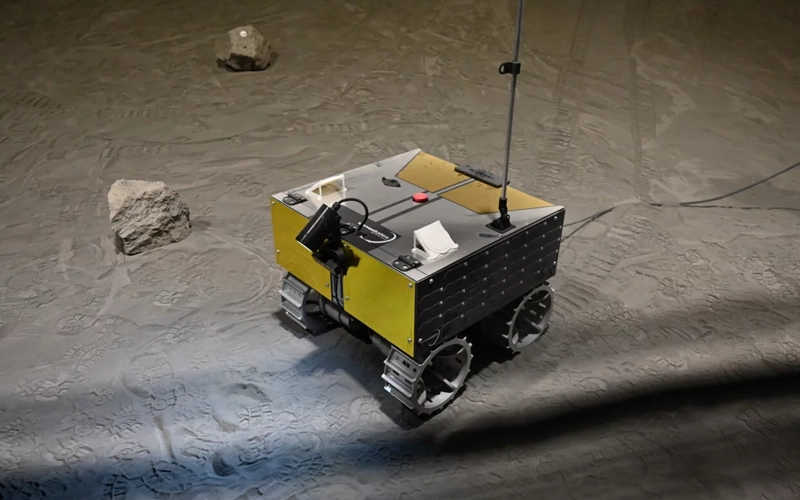
European rover secures spot aboard Blue Origin's Blue Moon mission
Belgium's Space Applications Services has secured a ride for its LUVMI-M rover aboard a Blue Origin lunar lander mission, announced within the past two days. It is a signal that international payload demand is diversifying beyond NASA CLPS task orders, giving Blue Origin's near-term missions non-US commercial customers as MK1 "Endurance" prepares for its Shackleton Connecting Ridge demonstration aimed at de-risking crewed Artemis landings in 2028.
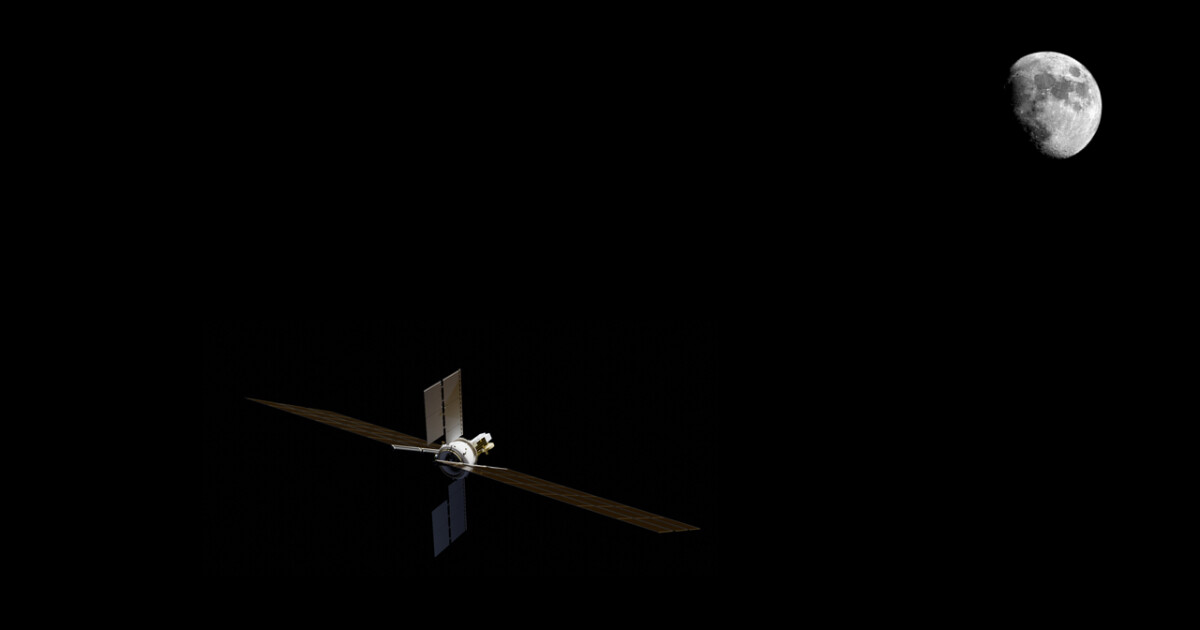
ispace-U.S. signs contract for lunar-orbit delivery of the Alpine satellite
On September 18, ispace-U.S. announced a contract with a US company for transportation of its new "Alpine" satellite into lunar orbit using ispace-U.S.'s services, as reported by Mynavi News TECH+. The move positions ispace-U.S. as more than a surface lander company — an early entrant in the lunar orbital-logistics niche that complements its far-side APEX 1.0 lander work on the Draper CLPS mission targeted for Schrödinger Basin in 2026.
Blue Ghost's upright landing reframed as the CLPS reliability benchmark
A SpaceDaily analysis published about a week ago revisits why every private lander before 2025 either crashed or tipped over — and why Firefly's Blue Ghost 1 changed that on March 2, 2025, touching down upright in Mare Crisium and operating for 346 hours through a full lunar daylight cycle with 10 NASA payloads. The piece underscores how upright landing preserves power, comms and instrument geometry — the operational margin that CLPS customers, including Intuitive Machines and Astrobotic, are now expected to deliver on IM-3 and Griffin missions.
Lunar comms and navigation infrastructure still missing its network layer
A New Space Economy analysis published September 24 explains that while NASA's LunaNet specification is published and frameworks plus funded contracts exist, no LunaNet-compliant relay satellites are yet in orbit as of mid-2026 — leaving the connectivity layer for lunar habitats unassembled. ESA's Moonlight program, with Lunar Pathfinder (SSTL) as its first relay satellite, and Intuitive Machines' growing lunar data-relay ambitions (launched on the IM-4 Falcon 9 mission) sit squarely in this emerging market.
Local view
Japanese media remain focused on ispace's next chapter: Nikkei xTECH reported recently that ispace will use the national H3 rocket for its 2028 high-precision landing mission toward lunar high-latitude regions, carrying its large new ULTRA lander — a first pairing of a domestic rocket and domestic lander for "Japan's private lunar transport."

Context & numbers
- CLPS is a $2.6B IDIQ program with 14 pre-qualified providers, buying robotic Moon deliveries as a pay-per-delivery market.
- In March 2026, NASA awarded Intuitive Machines a $180.4M CLPS task order for IM-5 on the larger Nova-D lander carrying seven payloads, including an Australian Space Agency rover.
- Deloitte's "Building the Lunar Economy" (Aug 26, 2026) estimates up to US$343 billion in cumulative potential economic value on and around the Moon through 2050.
- NASA's June 30 announcement allocated $600 million total to Astrobotic, Intuitive Machines and Firefly for four Moon Base cargo missions.
On the radar
- Intuitive Machines' IM-3 (Nova-C "Trinity", carrying Lunar Vertex as the first PRISM-selected payload) remains NASA's next scheduled CLPS flight on the books.
- Blue Origin's MK1 South Pole landing is slated for Shackleton Connecting Ridge as a precursor to 2028 crewed Artemis risk reduction.
- Draper's far-side APEX 1.0 delivery to Schrödinger Basin is NASA's slated 2026 CLPS mission with ispace-U.S. hardware.
- Watch for further international payload bookings on commercial landers — the LUVMI-M deal may be the first of several European manifests this season.
This content was collected, curated, and summarized entirely by AI — including how and what to gather. It may contain inaccuracies. Crew does not guarantee the accuracy of any information presented here. Always verify facts on your own before acting on them. Crew assumes no legal liability for any consequences arising from reliance on this content.
Powered by
