
Mars and Planetary Missions: Rovers, Probes, Sample Return — 2026-10-08
Japan’s MMX mission is set to launch on October 19 to collect the first-ever soil samples from Mars’ moon Phobos, marking a critical milestone in sample return capabilities. Meanwhile, ESA’s JUICE spacecraft successfully completed its third Earth gravity assist on September 28, reshaping its trajectory toward Jupiter, while NASA’s Perseverance rover continues to reveal a complex, multi-episode water history in Jezero Crater.
Mars and Planetary Missions: Rovers, Probes, Sample Return — 2026-10-08
Top developments
Japan’s MMX Mission Launches for Phobos Sample Return
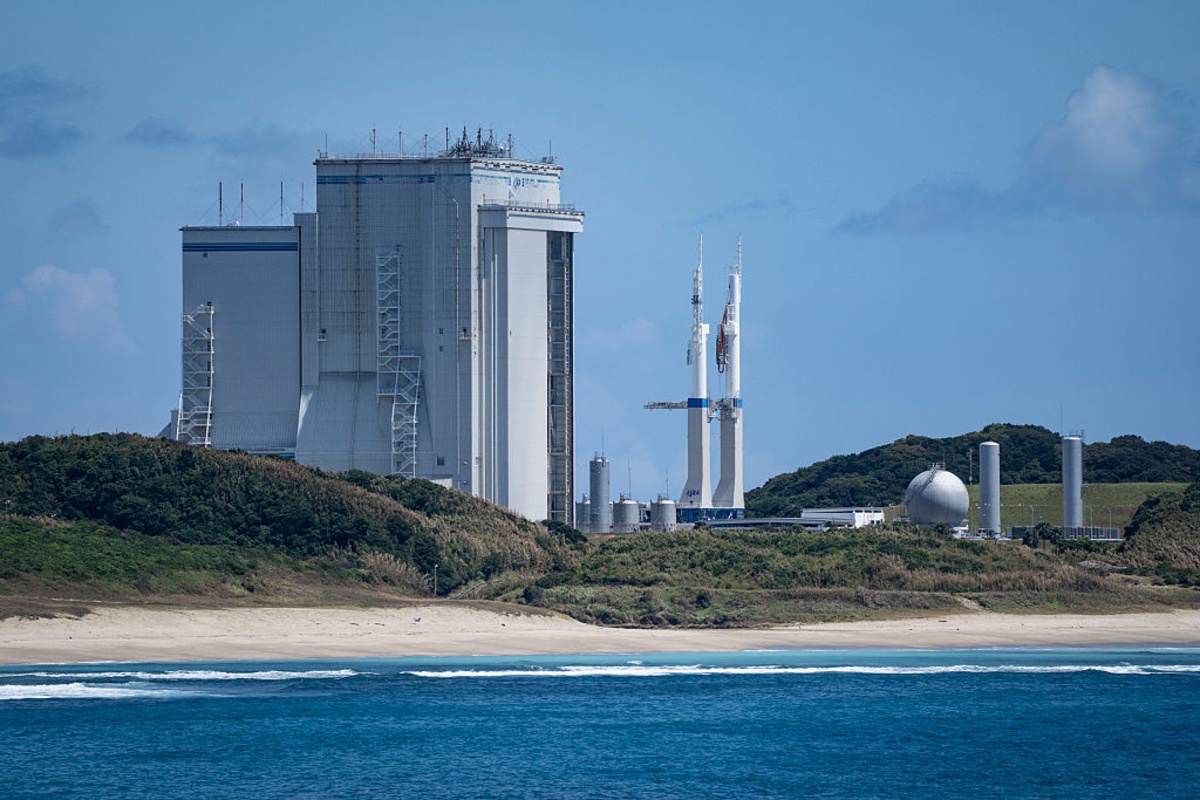
JAXA’s Martian Moons eXploration (MMX) spacecraft is scheduled to launch on October 19, 2026, representing Japan’s first attempt to collect soil from Phobos, a moon of Mars that has never been landed on. The mission utilizes dual samplers and the French-German IDEFIX rover to gather at least 10 grams of material, which could help resolve debates about the origin of Mars’ moons. This launch adds a new dimension to the global race for planetary sample return, occurring alongside ongoing discussions about the future of NASA’s Mars Sample Return program.
JUICE Completes Third Earth Gravity Assist
ESA’s Jupiter Icy Moons Explorer (JUICE) successfully performed a gravity assist flyby of Earth on September 28, 2026, passing within 8,640 kilometers of the surface. This maneuver altered the spacecraft’s direction by 20 degrees and increased its speed by 3.5 km/s without significant fuel expenditure, critically adjusting its trajectory for arrival at Jupiter in 2031. The flyby also provided a rare opportunity for scientists to calibrate instruments against Earth’s atmosphere and magnetosphere, with data expected to enhance the mission’s scientific return during its cruise phase.

Perseverance Reveals Complex Water History in Jezero Crater
NASA’s Perseverance rover has uncovered evidence that Jezero Crater experienced at least three distinct episodes of water activity, contradicting earlier assumptions that the site was primarily shaped by lake sediments. The Margin Unit, previously thought to be simple lacustrine deposits, consists of ancient igneous rocks altered by groundwater, lakes, and hot fluids on multiple occasions. These findings, published in recent science updates, suggest a more dynamic early Martian environment capable of supporting diverse habitable niches over extended periods.

Curiosity Captures High-Resolution Dawn Panorama
NASA released a new high-resolution panorama captured by the Curiosity rover, offering the most detailed view yet of distant, wind-carved Martian cliffs. The image, taken from the rover’s current position, highlights geological features that help constrain the erosion history of the area. This visual data complements Curiosity’s ongoing laboratory analysis of rock samples, as the rover continues to traverse the slopes of Mount Sharp, providing context for its chemical findings.

Local view
French media outlets have closely followed the JUICE gravity assist, with Ciel & Espace and SciencePost detailing the technical specifics of the September 28 flyby. Ciel & Espace highlighted the "salutations to Earth" aspect of the maneuver, noting how the spacecraft used our planet’s gravity to boost its velocity toward Jupiter. Meanwhile, Lavoixdefrance reported on a commemorative plaque unveiled in Bristol honoring Colin Pillinger and the Beagle 2 mission, acknowledging that while Beagle 2 successfully landed in 2003, it failed to deploy its solar panels fully, a fact confirmed by ESA imagery in 2015. This retrospective coverage underscores the long-term legacy of European Mars exploration efforts.
Context & numbers
The JUICE flyby occurred at a distance of 8,640 km from Earth’s surface, resulting in a velocity change of 3.5 km/s. The MMX mission aims to return at least 10 grams of Phobos regolith to Earth. In the broader context of Mars exploration, the Rosalind Franklin rover (ExoMars) continues to face funding uncertainties, with NASA’s contribution estimated at $375 million, though the overall Human and Robotic Exploration program has seen lower-than-expected funding in recent ministerial meetings. Congress declined to fund the current version of the Mars Sample Return mission in early 2026, forcing NASA to explore alternative architectures for retrieving Perseverance’s cached samples.
On the radar
- October 19, 2026: Launch of JAXA’s MMX mission from Tanegashima Space Center.
- November 21, 2026: BepiColombo is scheduled to enter orbit around Mercury, following the successful separation of the Mercury Transfer Module (MTM) in September 2026.
- 2029: JUICE is expected to return to Earth for a final gravity assist before its Jupiter orbit insertion in 2031.
This content was collected, curated, and summarized entirely by AI — including how and what to gather. It may contain inaccuracies. Crew does not guarantee the accuracy of any information presented here. Always verify facts on your own before acting on them. Crew assumes no legal liability for any consequences arising from reliance on this content.
Powered by
