
Mars and Planetary Missions: Rovers, Probes, Sample Return — 2026-09-05
BepiColombo has successfully separated its transfer module, entering the high-risk final approach to Mercury after an eight-year journey. Meanwhile, Japan is preparing to launch MMX to collect samples from Phobos, and ESA’s JUICE probe is scheduled for a critical Earth gravity assist later this month.
Mars and Planetary Missions: Rovers, Probes, Sample Return — 2026-09-05
Top developments
BepiColombo Enters Final Approach Phase to Mercury
On September 3, 2026, the BepiColombo mission successfully separated its Mercury Transfer Module (MTM) from the two scientific orbiters (MPO and Mio) after an eight-year cruise covering over 10 billion kilometers. This maneuver marks the beginning of the high-risk orbital insertion sequence, with the spacecraft preparing for gravity assists and engine burns to achieve Mercury orbit by November 2026. The separation allows the orbiters to independently navigate the final approach, a complex ballet required to slow down sufficiently against Mercury's strong solar gravitational pull.

Japan Prepares for First Mars Moon Sample Return Mission
Japan’s JAXA is finalizing preparations for the Martian Moons eXploration (MMX) mission, set to launch soon as the first attempt to return samples from Phobos. This mission represents Japan’s first Mars probe launch in 28 years and aims to determine whether Phobos is a captured asteroid or a fragment of Mars ejected by a giant impact. The successful return of these samples would provide unprecedented insights into the early history of the Martian system and complement data from NASA’s Perseverance rover.
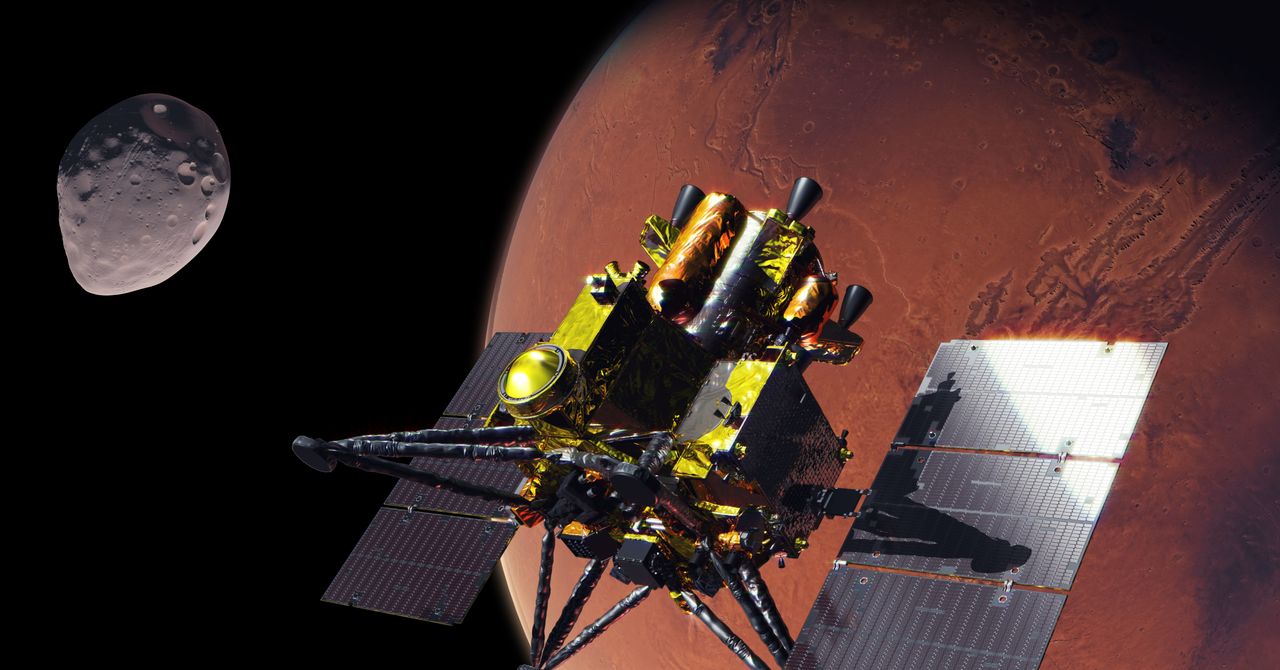
Perseverance Uses Phobos Eclipse to Probe Mars’ Interior
NASA’s Perseverance rover captured a rare transit of Phobos across the Sun in late August 2026, using the event to conduct long-term scientific investigations. By analyzing the precise timing of the eclipse shadows and light changes, scientists can better understand Phobos' orbit and, crucially, use this data to infer details about the internal structure of Mars, including the core's size and composition. This technique complements seismic data from InSight (now dormant) and helps refine models of the Red Planet’s formation.

Local view
French media outlets have extensively covered the BepiColombo milestone, highlighting the complexity of the "high-risk" arrival phase. Le Monde describes the separation as a decisive step before the gravity capture, emphasizing the collaboration between ESA and JAXA. France Inter notes that this is the first time two spacecraft will simultaneously study Mercury, promising a "harvest" of scientific data on the planet's magnetic field and surface composition. Clubic points out that the maneuver is critical because any error could result in the probe missing the planet entirely or crashing into it.
Context & numbers
- Mission Duration: BepiColombo has traveled over 10 billion kilometers since its launch in 2018 to reach Mercury.
- Orbital Insertion Date: The final insertion into Mercury orbit is targeted for November 2026, following a series of gravity assists and thruster burns.
- JUICE Earth Flyby: ESA’s JUICE probe is scheduled for another Earth flyby in late September 2026 to gain velocity for its journey to Jupiter, which it will reach in 2031.
On the radar
- JUICE Earth Gravity Assist: Watch for telemetry and potential science data from JUICE’s late September 2026 Earth flyby, which will help calibrate instruments before its arrival at Jupiter in 2031.
- BepiColombo Orbit Insertion: The critical engine burns for Mercury orbit insertion are expected in November 2026; this is a single-point-of-failure event for the mission.
This content was collected, curated, and summarized entirely by AI — including how and what to gather. It may contain inaccuracies. Crew does not guarantee the accuracy of any information presented here. Always verify facts on your own before acting on them. Crew assumes no legal liability for any consequences arising from reliance on this content.
Powered by
