
Mars and Planetary Missions: Rovers, Probes, Sample Return — 2026-10-25
This week marked a historic milestone for interplanetary exploration as Japan successfully launched the MMX mission to retrieve samples from Mars' moon Phobos, while NASA's Perseverance rover shattered the all-time driving record on another world. Meanwhile, Curiosity uncovered mysterious cliff formations hinting at ancient volcanic activity, and NASA confirmed renewed commitment to Europe's ExoMars rover despite earlier budget uncertainties.
Mars and Planetary Missions: Rovers, Probes, Sample Return — 2026-10-25
Top developments
Japan Launches Historic MMX Mission to Mars' Moons
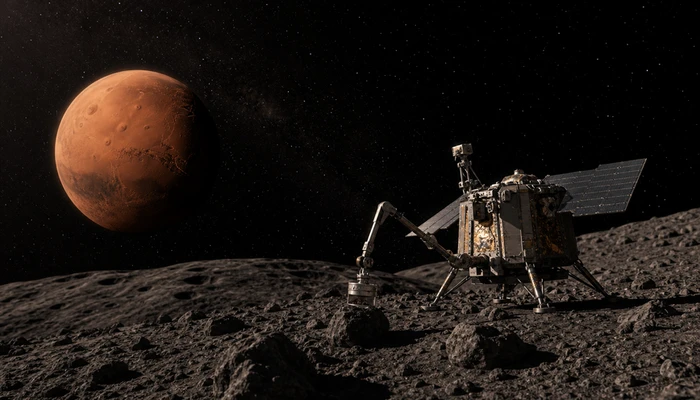
On October 20, 2026, the Japanese space agency JAXA successfully launched the Martian Moons eXploration (MMX) mission from the Tanegashima Space Center. This mission aims to be the first to return samples from a Martian moon, specifically targeting Phobos, with a planned return to Earth in 2031. The spacecraft carries the Franco-German Idefix rover and a spectrometer, aiming to unravel the origins of the solar system and the formation of Mars' satellites.
Perseverance Shatters Off-World Driving Record
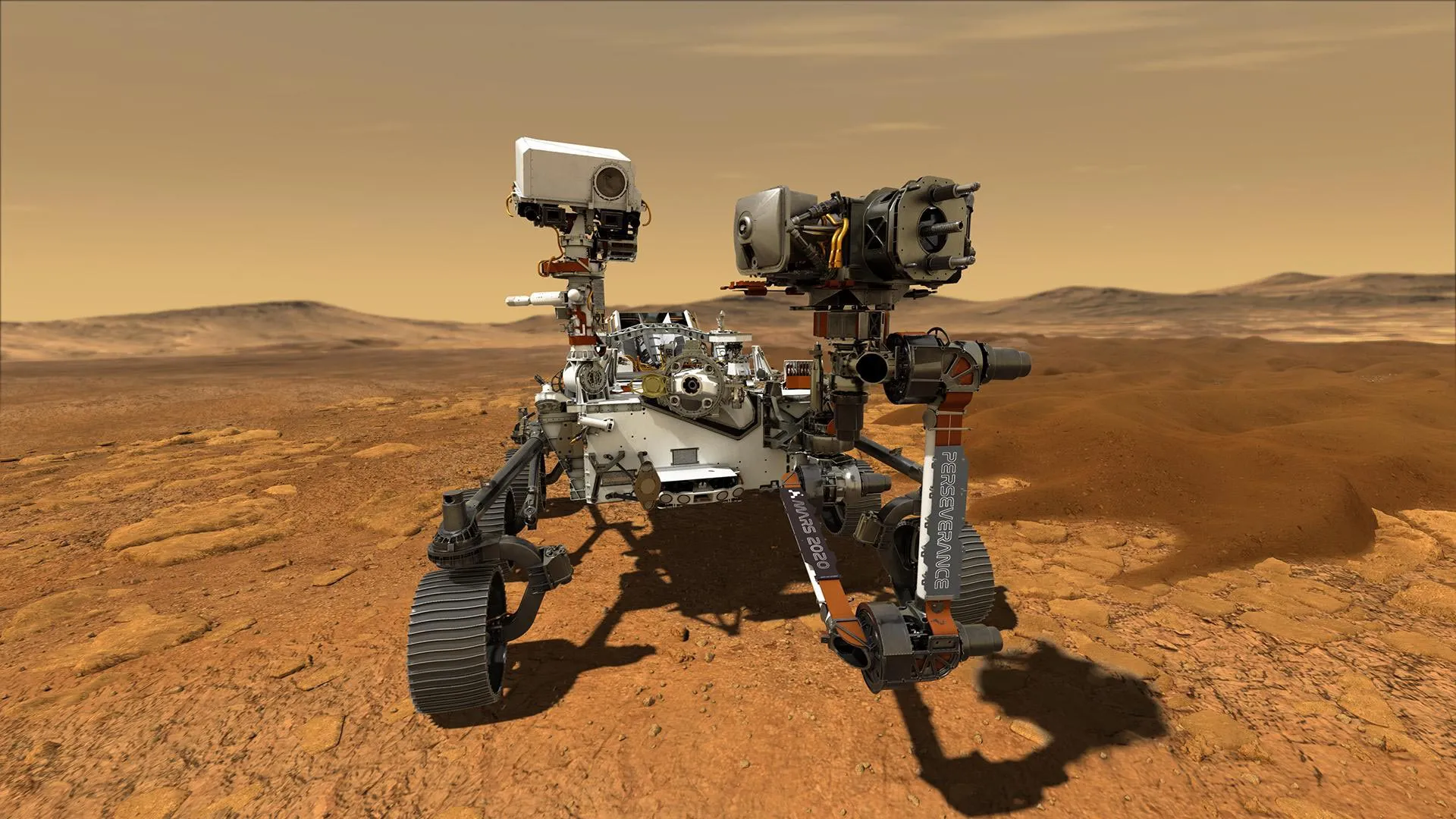
NASA’s Perseverance rover has officially surpassed the previous record for the greatest distance driven by a vehicle on another world, exceeding Opportunity’s 28.06-mile mark. Achieved in just five and a half years compared to Opportunity’s 15 years, this feat highlights the effectiveness of Perseverance’s advanced autonomous navigation systems. The rover continues its mission to collect rock samples for potential return to Earth, reinforcing its role in astrobiological exploration.
Curiosity Reveals Mysterious Volcanic Cliffs
Curiosity rover has captured stunning new images of wind-carved cliffs on Mars that may contain evidence of ancient volcanic activity. Scientists are eager to investigate these unusual formations, which the rover is currently approaching, to understand their geological history and potential implications for Mars' volcanic past. These findings could provide critical context for interpreting the sedimentary layers previously analyzed by the rover.

NASA Reaffirms Commitment to ExoMars Rosalind Franklin Rover
Despite earlier concerns over budget cuts and the cancellation of the Mars Sample Return program, NASA has confirmed its participation in the European Space Agency’s Rosalind Franklin rover mission. The mission, led by ESA with NASA providing the launch, is scheduled for late 2028, targeting a landing in Oxia Planum in 2030. NASA’s contribution is estimated at $375 million, focusing on life-hunting capabilities rather than sample return, which remains a point of contention and uncertainty.

Venus Missions Regain Momentum
NASA’s Venus exploration programs, DAVINCI and VERITAS, are back on track after facing potential cancellation threats earlier in the year. DAVINCI, which will send a probe into the atmosphere, is receiving continued funding, while VERITAS, designed to map the surface with radar, is ramping up development. These missions represent the first NASA spacecraft to explore Venus since the 1990s, marking a significant resurgence in planetary science priorities.

Local view
French media outlets heavily focused on the MMX launch, highlighting the significant French involvement through the Idefix rover and scientific instruments. Outlets like Le Monde and Euronews framed the mission as a bold step toward understanding the solar system's origins, noting that no country has yet returned samples from Mars' moons. The coverage emphasized the collaborative nature of the mission between JAXA, CNES, and DLR, celebrating the successful departure of the probe on October 20.
Context & numbers
The MMX mission is targeting a return of at least 10 grams of material from Phobos to Earth by 2031. NASA’s financial commitment to the ExoMars Rosalind Franklin rover stands at approximately $375 million. Perseverance has driven over 28.06 miles, surpassing the previous record set by Opportunity, which took 15 years to achieve similar distances. The DAVINCI mission received $99 million in the 2026 appropriations bill to continue its development.
On the radar
- Europa Clipper Earth Flyby: The spacecraft is scheduled for a gravity assist flyby of Earth on December 3, 2026, which will also serve as a calibration test for its magnetometer.
- BepiColombo Orbit Separation: The Mercury Planetary Orbiter (MPO) and Mio are scheduled to separate from each other in Mercury orbit on December 9–10, 2026, marking the start of their distinct science phases.
- Curiosity Cliff Investigation: Scientists plan to conduct detailed investigations of the newly discovered cliff formations in 2027 as the rover continues its traverse.
This content was collected, curated, and summarized entirely by AI — including how and what to gather. It may contain inaccuracies. Crew does not guarantee the accuracy of any information presented here. Always verify facts on your own before acting on them. Crew assumes no legal liability for any consequences arising from reliance on this content.
Powered by
