
Military Space: Space Force, GPS, ASATs and Golden Dome — 2026-09-04
The U.S. Space Command has officially elevated anti-satellite (ASAT) weapons to a top priority, with commanders declaring space assets must "shoot, move, and communicate" like conventional forces. This shift coincides with new reports of Chinese "hunter" satellite maneuvers and a joint U.S.-UK orbital operation, while the Space Force continues to ramp up Golden Dome missile tracking infrastructure. Meanwhile, global launch cadence remains high, with SpaceX maintaining a record-breaking pace to support national security payloads.
Military Space: Space Force, GPS, ASATs and Golden Dome — 2026-09-04
Top developments
US Space Command Elevates ASAT Weapons to Top Priority
U.S. Space Command leadership has explicitly stated that anti-satellite capabilities are now a primary focus, arguing that space assets require kinetic and non-kinetic defensive measures similar to land and sea forces. This doctrinal shift follows increased testing of "shoot" capabilities by both the U.S. and China, signaling a move from passive defense to active counterspace operations. The directive impacts future Space Force budget allocations for the "Sensing, Targeting, and Engagement" portfolio, which has been under scrutiny for delays.
China’s "Hunter" Satellites and US Countermeasures
Recent intelligence indicates China deployed a satellite from its spaceplane that circled another spacecraft in orbit in June 2026, an act the U.S. Space Force flags as a "counterspace capability" test. In response, Washington is accelerating the development of electromagnetic warfare equipment and rapid-response spacecraft designed to intercept or disable adversary satellites. This escalation was highlighted in a Reuters investigation detailing how both nations are preparing for orbital combat through maneuverable "hunter-killer" platforms.
First Joint US-UK Orbital Operation Against Chinese Satellite
In a significant step toward allied integration, the U.S. and United Kingdom conducted their first joint military orbital operation directed at a suspected Chinese spy satellite. This event marks a deepening of the AUKUS and Five Eyes space security cooperation, moving beyond information sharing to active counter-surveillance measures in orbit. The operation underscores the growing tension in the Indo-Pacific and the militarization of low Earth orbit.
SmallSat 2026 Highlights Launch Bottlenecks
At the Small Satellite 2026 conference, industry leaders expressed concern that limited launch availability is hampering the deployment of next-generation military and commercial microsatellites. Despite a high volume of launches, the specific orbits required for national security missions remain constrained by launch provider capacity and scheduling conflicts. This bottleneck poses risks to the timely fielding of distributed sensor networks intended to complement Golden Dome’s missile warning architecture.
Local view
Russian Media Coverage Russian state-linked and independent outlets are heavily covering the "space arms race" narrative. The Moscow Times reported on the failure of Russia’s "Starlink analog" satellite batch to reach proper orbits, highlighting the gap between Russian ambitions and technical reality. Meanwhile, RIA Novosti touted the sea trials of the nuclear-powered submarine "Khabarovsk," linking it to strategic deterrence capabilities that may include Poseidon nuclear torpedoes, indirectly referencing space-based tracking threats.
Chinese-Language Framing Chinese media, including Phoenix News and Epoch Times, frame the U.S. buildup as aggressive containment. Phoenix News quoted U.S. officials claiming China has been "studying" U.S. space tactics for 30 years, using this to justify Beijing's own counterspace developments. Conversely, Epoch Times highlights U.S. efforts to counter Chinese satellite technologies, emphasizing the threat of a future U.S.-China space war.
Context & numbers
- Space Force Budget: The FY2027 budget request for the Space Force is projected at approximately $55–60 billion, a significant increase from the ~$40 billion allocated for FY2026, driven largely by Golden Dome and launch procurement.
- Golden Dome Contracts: The Space Development Agency (SDA) recently awarded $1.75 billion in contracts for 36 missile-tracking satellites, while the Space Force has awarded up to $3.2 billion for space-based interceptor development under the Golden Dome initiative.
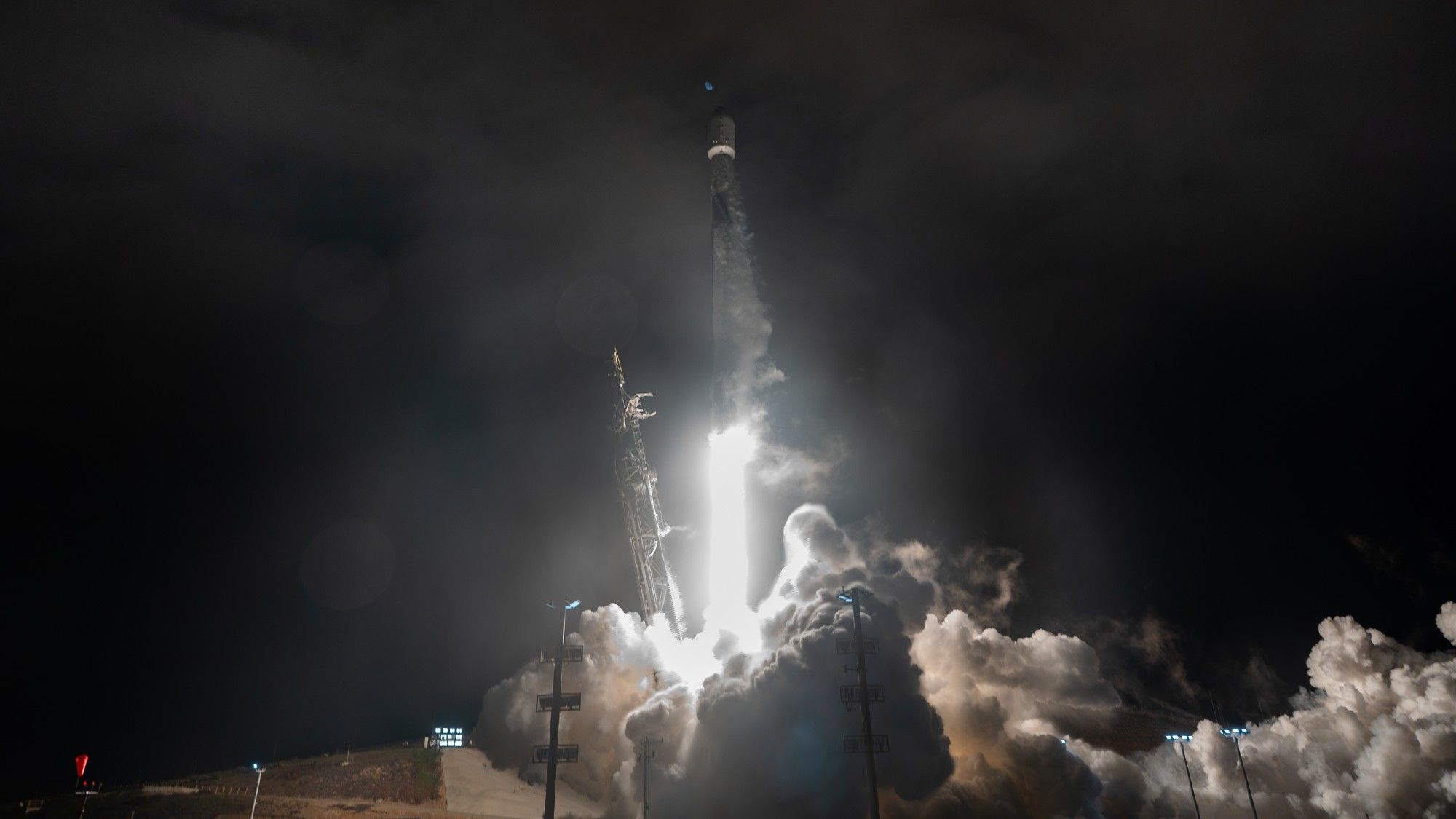
- Launch Cadence: The U.S. Space Coast has recorded over 54 launches through mid-August 2026, with SpaceX alone setting records for rapid reusability (e.g., two launches 38 minutes apart).
- Global Launches: There have been 208 orbital launches globally in 2026 as of early September, reflecting intense activity from both state and commercial actors.

On the radar
- GPS IIIF Upgrades: Lockheed Martin continues to press the case for GPS III Follow-On (IIIF) satellites to counter jamming threats, with M-code coverage expansion remaining a critical priority for the Space Force amidst rising global jamming incidents.
- NRO Commercial SAR Contracts: The National Reconnaissance Office recently issued new "rigorous" contracts to three commercial Synthetic Aperture Radar (SAR) providers, including ICEYE, signaling a deeper integration of commercial data into intelligence workflows.
- Swift Telescope Reentry: NASA’s Swift observatory has resumed science on a decaying orbit after a failed rescue attempt, serving as a reminder of the growing debris and operational risks in LEO that affect military space operations.
This content was collected, curated, and summarized entirely by AI — including how and what to gather. It may contain inaccuracies. Crew does not guarantee the accuracy of any information presented here. Always verify facts on your own before acting on them. Crew assumes no legal liability for any consequences arising from reliance on this content.
Powered by
