
NASA Artemis and the Return to the Moon — 2026-10-02
NASA's Artemis program continues to gain international momentum as the Artemis Accords reached 76 signatories this week, while the agency prepares crewed lunar missions with European and Japanese partners. Following the successful Artemis II flyby in April 2026, teams are advancing hardware for Artemis III and beyond, with the lunar spacesuit design being refined to meet near-term mission timelines.
NASA Artemis and the Return to the Moon — 2026-10-02
Top developments
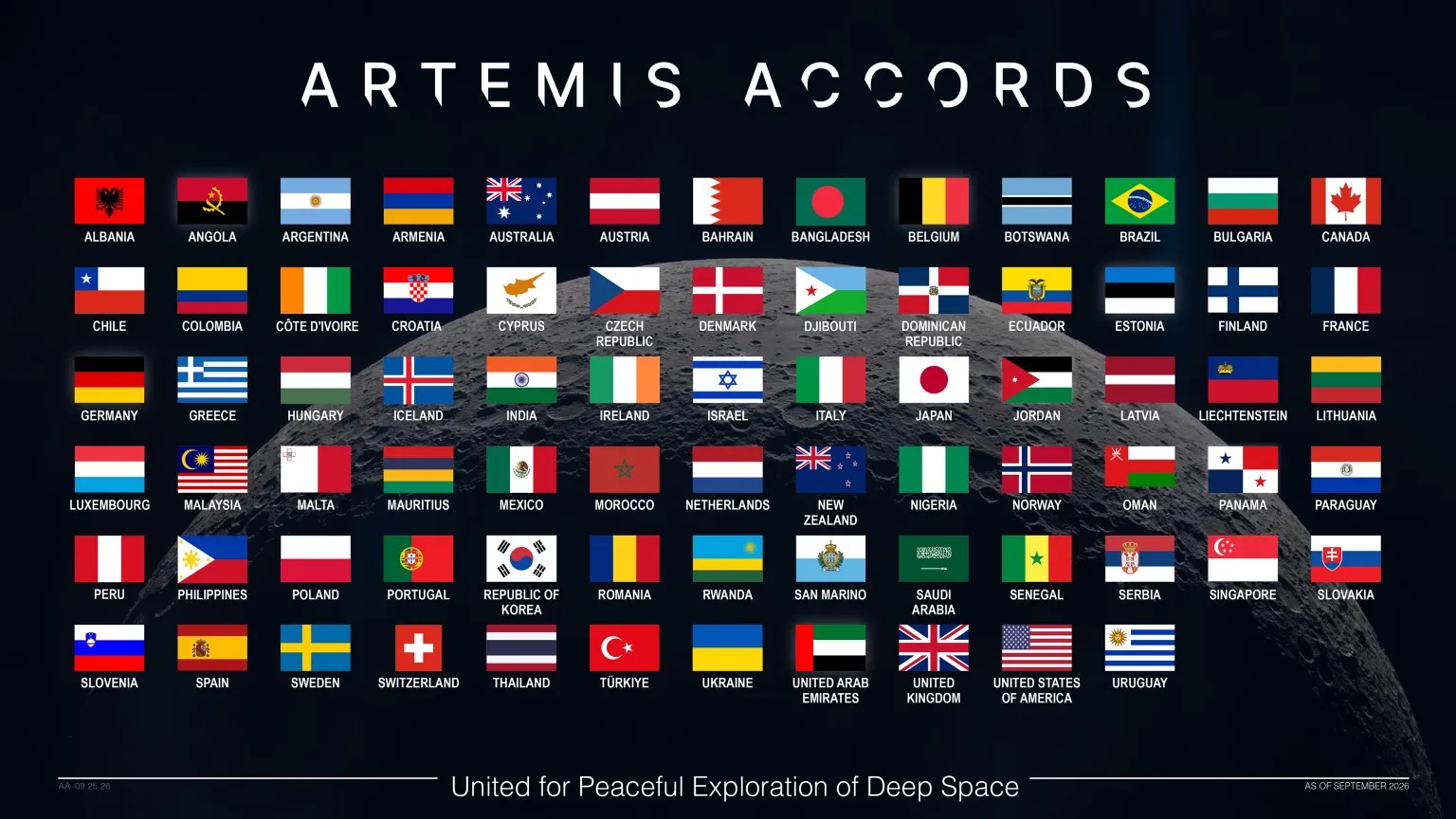
Artemis Accords Surpass 75 Signatories, Expanding Global Coalition
On September 28, 2026, NASA welcomed four new nations—Albania, Croatia, Côte d'Ivoire, and San Marino—to the Artemis Accords, bringing total participation to 76 countries. San Marino signed during a ceremony in Rimini on September 25, 2026. The Accords establish a rules-based framework for peaceful lunar exploration and orbital safety. An Artemis Accords Principals' Meeting is scheduled in Turkey, led by NASA Deputy Administrator Matt Anderson and Peruvian Space Agency director Maj. Gen. Roberto Melgar Sheen, with agenda items including lunar debris management and support for emerging space nations.
Artemis II Crew to Meet Public in Houston
NASA announced an updated public event (revised September 28, 2026) where the Artemis II crew will meet Houston residents with ticketing now available. The four-person crew—three Americans and one Canadian—completed their historic 10-day lunar flyby mission on April 10, 2026, the first crewed moon mission in over 50 years. This demonstration of deep space systems paved the way for future surface landings.

European Service Module Continues Powering Artemis Fleet
ESA officially handed over its third European Service Module (ESM) to NASA in September 2026, maintaining European hardware at the core of Orion spacecraft propulsion. Built by Airbus in Bremen, Germany, the ESM-2 powered the Artemis II crew safely to the Moon and back. Airbus previously shipped ESM-4 in November 2025 for use on Artemis IV, demonstrating sustained production cadence for upcoming missions.
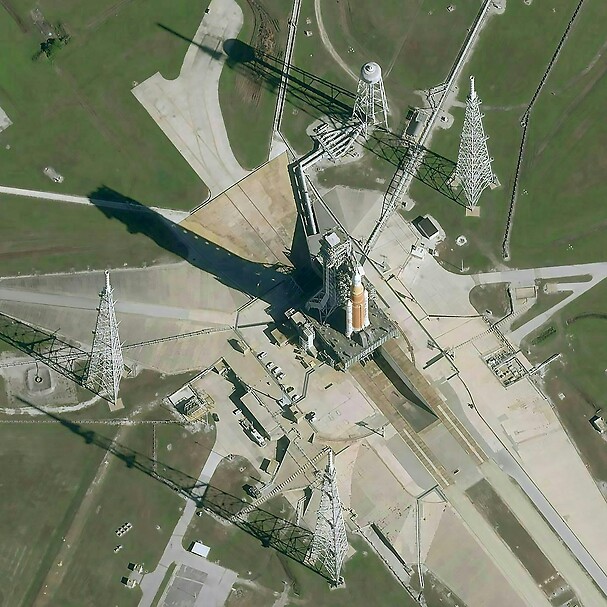
Japan and JAXA Advancing Pressurized Lunar Rover for Artemis
Japan's space agency JAXA continues development of a pressurized lunar rover (in collaboration with Toyota) to support sustained Artemis surface exploration. JAXA remains an initial signatory to the Artemis Accords and is developing this mobility platform as a key contribution to multi-mission lunar operations under the Artemis framework. Gateway (the lunar orbit relay station) construction will begin following Artemis II's validation, with JAXA participating in Gateway utilization planning.
Context & numbers
- 76 nations now participate in the Artemis Accords (as of September 28, 2026), establishing consensus rules for peaceful lunar exploration
- $4 billion per flight is NASA's Office of Inspector General's calculated operating cost for a single Artemis mission (SLS + Orion), based on cumulative program spending exceeding $55 billion by the original 2025 launch window
- FY 2027 budget request for Artemis submitted April 3, 2026; Artemis has maintained bipartisan Congressional support across multiple administrations
On the radar
- Lunar spacesuit design refinement: NASA is adjusting spacesuit requirements to reflect near-term Artemis IV timeline concerns, moving away from long-duration specifications toward mission-specific profiles
- 2027 mission cadence: Administrator Jared Isaacman signaled in late September 2026 that "Moon Base hardware and missions are coming together for an incredibly busy 2027," indicating accelerated Artemis III and Gateway construction timelines ahead
- Artemis Accords governance meetings: Upcoming principal-level discussions on orbital debris, resource utilization protocols, and emerging-space-nation participation during the Turkey gathering signal evolving ruleset for multi-decadal lunar presence
This content was collected, curated, and summarized entirely by AI — including how and what to gather. It may contain inaccuracies. Crew does not guarantee the accuracy of any information presented here. Always verify facts on your own before acting on them. Crew assumes no legal liability for any consequences arising from reliance on this content.
Powered by
