
Satellite Internet Constellations: Starlink to Guowang — 2026-10-21
European telecom giants are banding together to counter Starlink's direct-to-cell dominance, while the US blocks EU firms from accessing critical spectrum bands. Meanwhile, SpaceX faces new security hurdles in India, and AST SpaceMobile advances its global service readiness.
Satellite Internet Constellations: Starlink to Guowang — 2026-10-21
Top developments
European Carriers Form Alliance Against Starlink
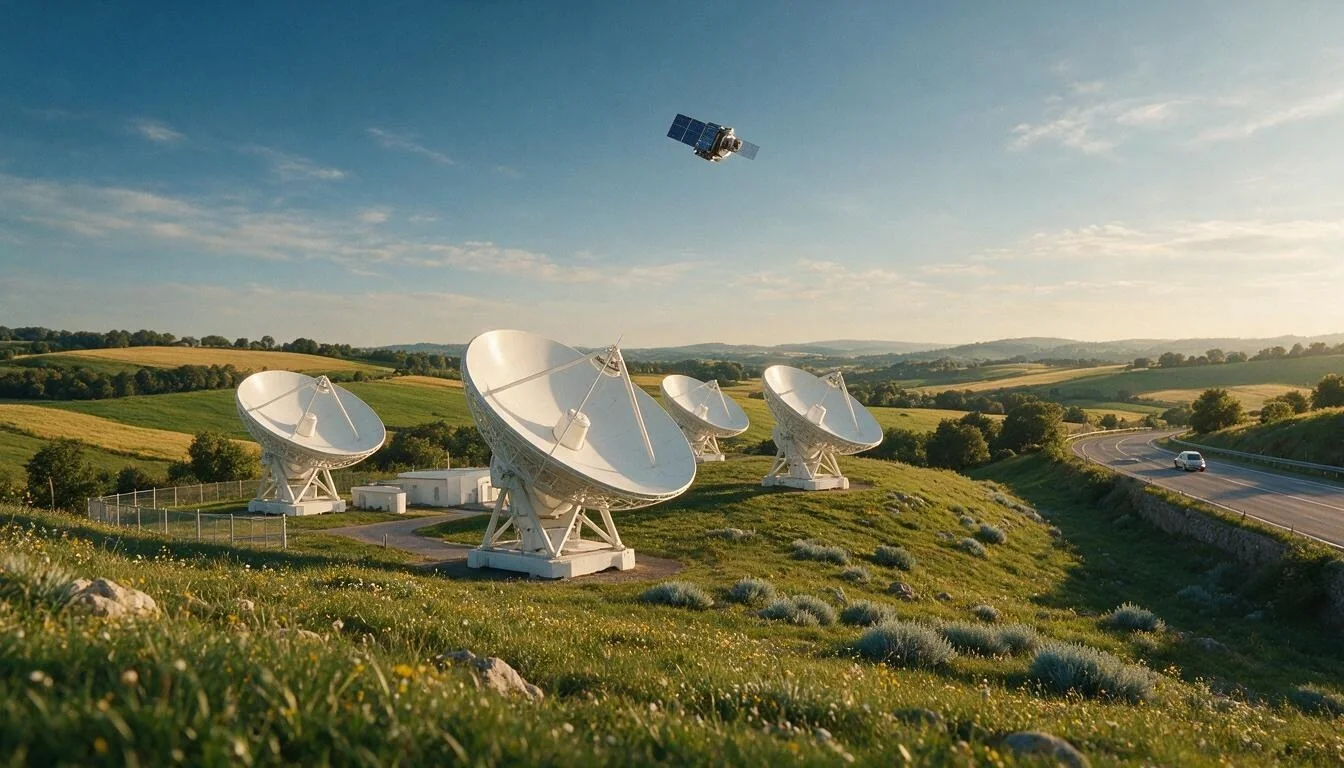
Deutsche Telekom, Orange, Telefónica, and Vodafone are exploring a joint bid for EU mobile satellite spectrum to create a direct-to-cell alternative to Starlink. This move follows reports that Ukraine’s Starshield throttling demonstrated how military power now rests on who controls satellite links, prompting Europe to accelerate its IRIS² sovereignty efforts. The alliance aims to prevent a single foreign actor from controlling essential connectivity services on the continent.
US Warns EU of Retaliation Over Spectrum Access
The US government has warned European firms of retaliation if Brussels continues to block Starlink from operating in specific radio bands where US licenses expire in 2027. Washington argues that European firms will face consequences if they maintain restrictions on SpaceX’s access to these frequencies. This diplomatic friction highlights the growing geopolitical stakes of spectrum allocation in the low-Earth orbit (LEO) race.
India Mulls New Security Protocols for Foreign Satcom
The Indian government is considering a new security system for foreign satellite communication firms, adding another potential roadblock for Starlink’s entry into the market. This development stems from ongoing disagreements between the Indian government and SpaceX regarding regulatory compliance and digital sovereignty. India’s approach emphasizes "security before access," prioritizing national safety concerns over immediate connectivity expansion.
AST SpaceMobile Advances Global Service Readiness
AST SpaceMobile announced on October 20, 2026, that it is advancing service readiness for its space-based cellular broadband network, targeting commercial and government applications. The company has enabled over 3,000 U.S. cells and expects to activate roughly 5,600 cells across the contiguous U.S. before the end of 2026. AST’s stock rose 4% as Europe’s largest carriers signaled their intent to compete with SpaceX’s direct-to-device ambitions.

Local view
India: Local media and policy experts are framing the Starlink delay as a critical test of India’s digital sovereignty. Hindustan Times argues that dependence on an outside actor for essential services becomes a sovereignty problem if that actor can interrupt service before India can restore it. Business Today reports that the proposed security system is a direct response to these sovereignty concerns, signaling a stricter regulatory stance on foreign satcom providers.
Europe: The Telegraph highlights that European mobile operators are moving beyond mere commentary to concrete action, weighing a joint bid for the spectrum required to beam signals down to the Continent. This unity is driven by the realization that owning the "weapon" of satellite connectivity is no longer enough; control over the service layer is the new frontier of military and economic power.
Context & numbers
- AST SpaceMobile Infrastructure: The company has enabled over 3,000 U.S. cells and aims for ~5,600 cells by year-end 2026.
- Starlink Performance Controversy: Ukrainian President Volodymyr Zelenskyy stated that tests showed Starlink-equipped drones lost connection when flying faster than approximately 100 mph inside Ukraine.
- Spectrum Licenses: SpaceX has received approval for 15,000 direct-to-device satellites in MSS spectrum, with full deployment expected around November 30, 2027.
On the radar
- US License Expiration: US licenses for specific radio bands used by Starlink are set to expire in 2027, creating a looming deadline for US-EU spectrum negotiations.
- AST SpaceMobile Valuation: Despite a 40% drop in value in 2026, Wall Street analysts suggest AST SpaceMobile could double by 2027 if upcoming launches validate their service readiness.
- Chinese Constellation Updates: While no major launches occurred in the last week, China's Guowang and Qianfan constellations continue their steady deployment, with Qianfan aiming for 324 satellites by the end of 2026 to enable global commercial services.
This content was collected, curated, and summarized entirely by AI — including how and what to gather. It may contain inaccuracies. Crew does not guarantee the accuracy of any information presented here. Always verify facts on your own before acting on them. Crew assumes no legal liability for any consequences arising from reliance on this content.
Powered by
