
Satellite Internet Constellations: Starlink to Guowang — 2026-09-02
Starlink has officially launched commercial services in the UAE following a 10-year license approval, marking a significant Middle East expansion. Meanwhile, SpaceX continued its rapid deployment cadence with a Falcon 9 launch on September 2, pushing the constellation past 11,000 satellites, while China’s Qianfan constellation reported progress toward its 324-satellite target for 2026.
Satellite Internet Constellations: Starlink to Guowang — 2026-09-02
Top developments
Starlink Launches Commercial Service in the UAE
On August 31, Starlink officially launched its satellite internet service in the United Arab Emirates, becoming available to consumers after receiving regulatory approval. The service is currently operating at capacity, with users required to pay a deposit to join a waiting list, signaling strong initial demand against the local telecom duopoly of Etisalat and du. This launch follows the UAE government's granting of a 10-year general space services licence to SpaceX, allowing the company to establish and manage public satellite communications infrastructure in the country.

SpaceX Pushes Past 11,000 Starlink Satellites
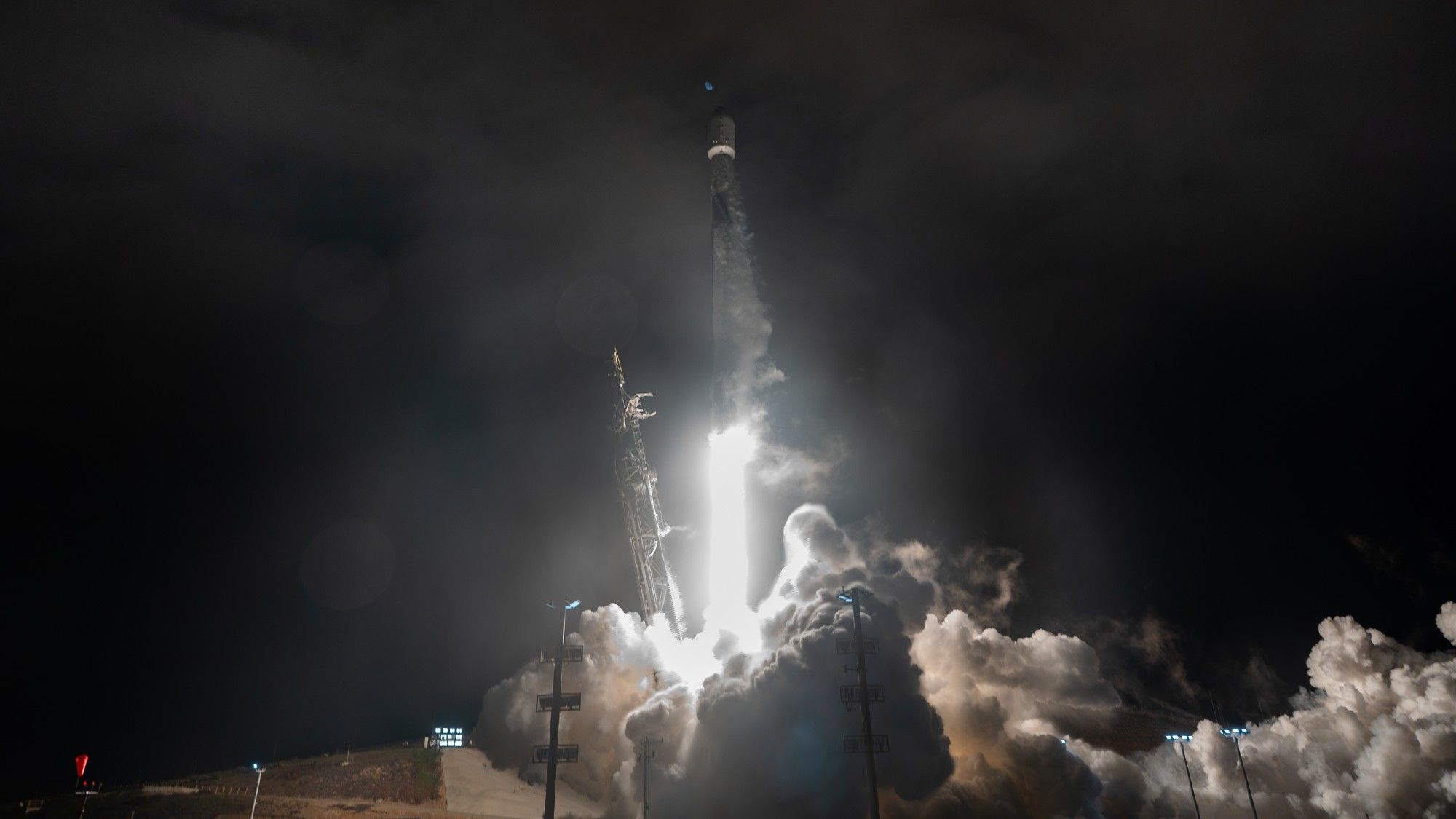
SpaceX launched 27 Starlink satellites from California on September 2, 2026, utilizing a Falcon 9 rocket on its 35th flight for that specific first stage. This launch contributes to the constellation's recent milestone of surpassing 11,000 satellites in orbit, achieved earlier in August with the completion of SpaceX's 100th launch of 2026. The rapid accumulation of assets reinforces SpaceX's dominant position in Low Earth Orbit (LEO) internet services, holding approximately 90.4% of all LEO internet satellites according to recent industry analysis.
Qianfan Constellation Targets 324 Satellites for 2026
Shanghai-based SSST (Shanghai Spacecom Satellite Technology), operator of the Qianfan (Thousand Sails) constellation, announced plans to have 324 satellites in orbit by the end of 2026. Recent reports highlight that the constellation achieved a technical breakthrough in June 2026 with the successful launch of its first direct-to-phone test satellite, which successfully connected to unmodified commercial 5G smartphones. This move positions Qianfan as a key competitor in the direct-to-cell market, aiming to provide global coverage independent of ground station dependencies.
Elveo Mobile Enters Direct-to-Device Market with Unique Spectrum
Following the merger of Lynk Global and Omnispace in August 2026, the newly rebranded entity "Elveo Mobile" has entered the direct-to-device (D2D) satellite race with a distinct strategic advantage: ownership of 60 MHz of globally coordinated ITU S-band spectrum. Unlike SpaceX and AST SpaceMobile, which rely on terrestrial carrier spectrum or different bands, Elveo can offer D2D services without borrowing spectrum rights from mobile network operators. The company has secured contracts with 56 Mobile Network Operators (MNOs) across more than 60 countries, aiming to expand beyond basic messaging to broader connectivity services.

Local view
The National (UAE): Local media coverage focuses heavily on the competitive dynamics between the new Starlink service and the incumbent telecom providers, Etisalat and du. Analysts cited in The National suggest that while Starlink offers an alternative, its current capacity constraints and waiting lists may limit its immediate impact on the broader consumer market compared to fiber-based alternatives.
Top Africa News: In Africa, reporting highlights Starlink's "direct-to-phone" model as a pivotal shift for connecting hard-to-reach users without the cost of satellite dishes. The outlet notes that this approach allows mobile operators to extend satellite connectivity to existing smartphones, potentially bypassing the hardware barrier that has historically slowed LEO adoption in the region.
Context & numbers
- Starlink Constellation Size: >11,000 satellites in orbit as of late August 2026.
- Starlink Subscribers: Approximately 10.3 million subscribers globally.
- Amazon Leo (Kuiper): ~390+ satellites deployed; committed $10 billion to a 3,236-satellite constellation.
- OneWeb (Eutelsat): ~654 satellites in orbit; generated ~$250 million in LEO revenue for the 12 months ending June 2025.
- Qianfan Target: 324 satellites planned for 2026.
On the radar
- US Mobile Integration: US Mobile CEO confirmed plans to offer both Starlink Mobile and AST SpaceMobile services later this year, targeting a Q4 launch for AST SpaceMobile integration.
- AST SpaceMobile Testing: AST SpaceMobile received FCC authorization for non-commercial direct-to-device testing using up to 100 handsets, a step toward commercial viability.
- Russia's Rassvet Failure: Reports indicate Russia's second batch of Rassvet satellites failed to reach intended operational altitudes, highlighting struggles in their sovereign constellation efforts.
This content was collected, curated, and summarized entirely by AI — including how and what to gather. It may contain inaccuracies. Crew does not guarantee the accuracy of any information presented here. Always verify facts on your own before acting on them. Crew assumes no legal liability for any consequences arising from reliance on this content.
Powered by
