
Satellite Internet Constellations: Starlink to Guowang — 2026-10-01
China's Qianfan and Guowang constellations accelerated launches this week, with Qianfan reaching 256 satellites and Guowang deploying 26 satellites in rapid succession. Meanwhile, AT&T, T-Mobile and Verizon launched a joint venture to close coverage gaps via satellite, while AST SpaceMobile advanced production toward BlueBird 50 and Starlink expanded direct-to-cell service to Kazakhstan. Iran publicly warned that Starlink threatens state control of internet infrastructure.
Satellite Internet Constellations: Starlink to Guowang — 2026-10-01
Top developments
Qianfan Constellation Reaches 256 Satellites in Two-Day Sprint
Shanghai-based vertically-integrated startup Yuanxin Satellite (上海垣信卫星科技) launched 18 satellites across September 15–16, pushing the Qianfan (千帆) constellation to 256 operational satellites. The launches used Zhuque-2 improved variant and Gravity-1 rockets, marking the first time private operators have shouldered core tasks in China's national-level low-orbit broadband constellation initiative. By end-of-year 2026, Qianfan is projected to complete 324 satellites and begin offering commercial global satellite internet service.

Guowang (China Star Network) Launches 26 Satellites in One Week
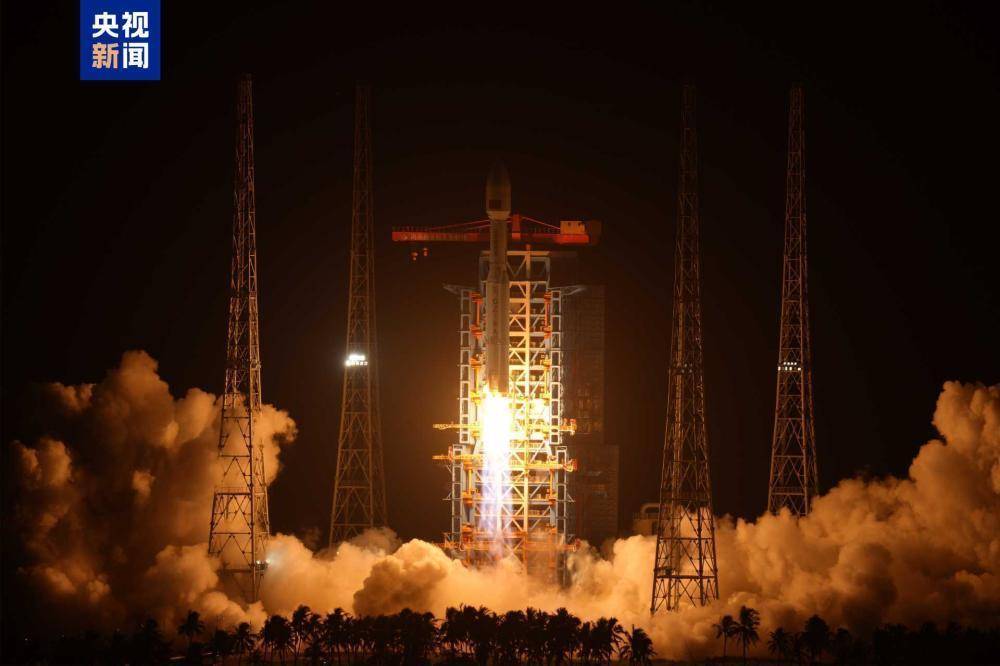
On September 23, 2026, China deployed 26 satellites for the state-backed Guowang constellation via Long March 8A rocket from Hainan Commercial Aerospace Launch Site. This marked the second major launch in one week, following an earlier batch on September 18. The dual-constellation strategy reflects Beijing's push for self-reliant, 6G-ready space infrastructure with 5G-Advanced inter-satellite and ground fusion capabilities.
US Carriers Launch Joint Venture for Satellite-Enabled Gap Coverage
AT&T, T-Mobile and Verizon announced a joint venture to integrate satellite connectivity and close dead zones where traditional service is limited. Paul Roth named interim CEO. The move signals carrier acceptance of hybrid satellite-terrestrial networks—a strategic pivot away from earlier resistance to SpaceX's direct-to-cell model.
AST SpaceMobile Advances Production to BlueBird 50, Ships More Satellites for Deployment
AST SpaceMobile announced BlueBirds 14–16 are en route to Cape Canaveral as production crossed BlueBird 50, with BlueBird 11 already deployed in orbit. The company's constellation now numbers 13 operational satellites—much larger than competing direct-to-cell platforms.
Starlink Direct-to-Cell Reaches Kazakhstan; Iran Warns of Internet Sovereignty Loss
Starlink Mobile launched in Kazakhstan on September 28, 2026, via partnership with carrier Beeline Kazakhstan—the first deployment of direct-to-cell satellite technology in Central Asia. Meanwhile, Iran's Deputy Communications Minister Mohammad Hafez Hakami warned that Starlink's spread could deliver the "final nail in the coffin" of Iran's ability to control cyberspace, potentially leaving authorities unable to shut down communications in future crises.

Local view
Chinese state and commercial media emphasize Qianfan's transition from pilot to operational scale. 21经济 (21 Finance) reported September 24 that the private-operator involvement in core constellation supply chains marks a decisive shift, with both Guowang and Qianfan now viewed as dual-track national infrastructure competing to close the "final mile" of global coverage by year-end.
什么值得买 (What's Worth Buying) framed the dual-launch blitz as proof that commercial aerospace has entered "delivery mode" rather than prototype demonstration, citing supply-chain integration across rocket, satellite and terminal vendors.
Context & numbers
Starlink constellation: Over 9,900 satellites deployed; 10.3M subscribers globally; $11.4B FY25 revenue. Direct-to-cell service now live in Kazakhstan and 60+ compatible phone models.
OneWeb (Eutelsat): 648 satellites in polar orbit; B2B-only model generating ~$250M LEO revenue for 12 months ending June 2025.
Amazon Project Kuiper: 3,236-satellite target; $10 billion committed; no official consumer launch date announced, though partial service expected by 2027.
Qianfan: 256 satellites deployed as of September 16; 324-satellite target by end-of-year 2026 for global commercial operation.
Guowang: State-backed constellation deploying rapidly; recent launches (September 18, 23) indicate acceleration toward same 2026-end operational date.
Starlink pricing: T-Satellite direct-to-cell service $10/month (or bundled free); standard broadband $55/month in served markets.
On the radar
-
FCC spectrum clearance (September 29, 2026): FCC approved 25% downlink capacity increase for satellite internet services, benefiting Starlink's terrestrial competition against ISPs.
-
Ukraine sanctions push: US News reported Ukraine urging Washington to sanction entities supporting Russia's satellite rival (likely referencing Gazprom-linked initiatives), signaling geopolitical tensions shaping constellation licensing.
-
UN sovereignty proposal: Brookings noted a controversial UN proposal restricting satellite broadband access, with implications for US tech policy sovereignty.
-
SWISS and Lufthansa rollout: SWISS flew first gate-to-gate Starlink-equipped A320neo; Lufthansa Group expanding across fleet. VietJet selected Starlink for 120 aircraft despite coverage gaps over China and India due to landing restrictions.
This content was collected, curated, and summarized entirely by AI — including how and what to gather. It may contain inaccuracies. Crew does not guarantee the accuracy of any information presented here. Always verify facts on your own before acting on them. Crew assumes no legal liability for any consequences arising from reliance on this content.
Powered by
