
Sky Events and Amateur Astronomy: Eclipses, Meteors, Aurora — 2026-09-18
This week features a minor G1 geomagnetic storm caused by a coronal hole high-speed stream, offering aurora visibility across northern U.S. states despite a spotless sun. Meanwhile, amateur astronomers are tracking eight visible comets and observing Venus at its peak brightness, while the September equinox marks the transition to longer nights ideal for deep-sky observation.
Sky Events and Amateur Astronomy: Eclipses, Meteors, Aurora — 2026-09-18
Top developments
G1 Geomagnetic Storm Brings Aurora to Northern U.S.
A minor G1 geomagnetic storm was forecast for September 16–17, 2026, driven by fast solar wind from a coronal hole (CH HSS) and a glancing blow from a Coronal Mass Ejection (CME). The SpaceWeatherLive 3-day forecast predicted a maximum Kp index of 4.67 (G1 level) during the early hours of September 17, with auroras potentially visible in northern U.S. states. This event is notable because it occurred during a period of low solar activity, demonstrating how coronal holes can still generate significant space weather effects.
Spotless Sun Despite Aurora Activity
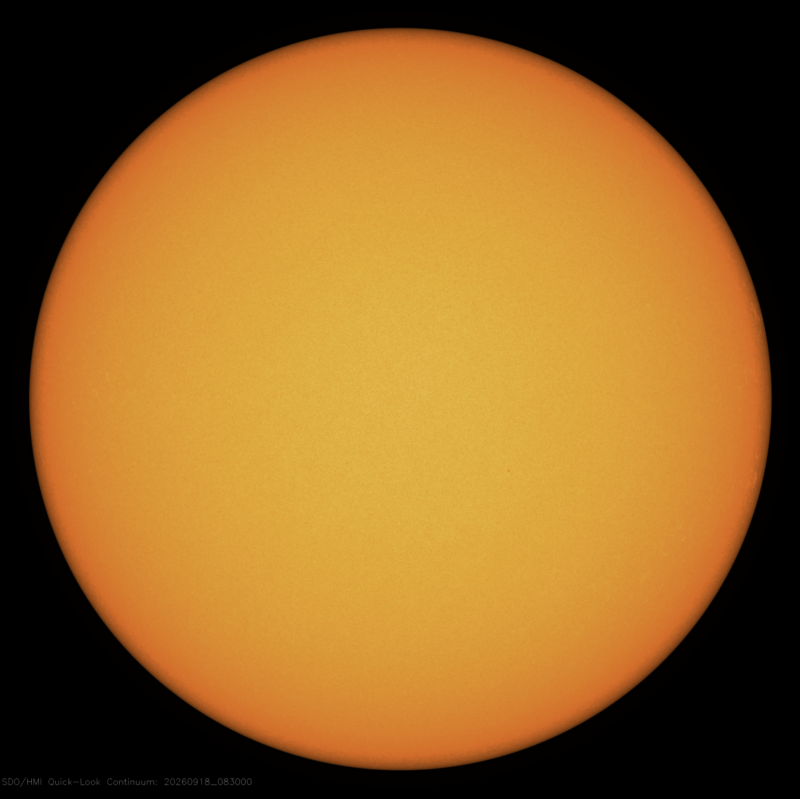
In a paradoxical display of solar dynamics, Earth-viewed solar imagery on September 16 showed a nearly spotless sun with only one numbered active region (AR4528), which was rotating out of view. This lack of sunspots contrasts with the geomagnetic storm activity, as the storm was driven by a coronal hole rather than an active region flare. The near-spotless condition suggests that while major flares were unlikely, the high-speed solar wind streams from coronal holes remained the primary driver of auroral activity this week.
Amateur Astronomers Discover Long-Period Comet
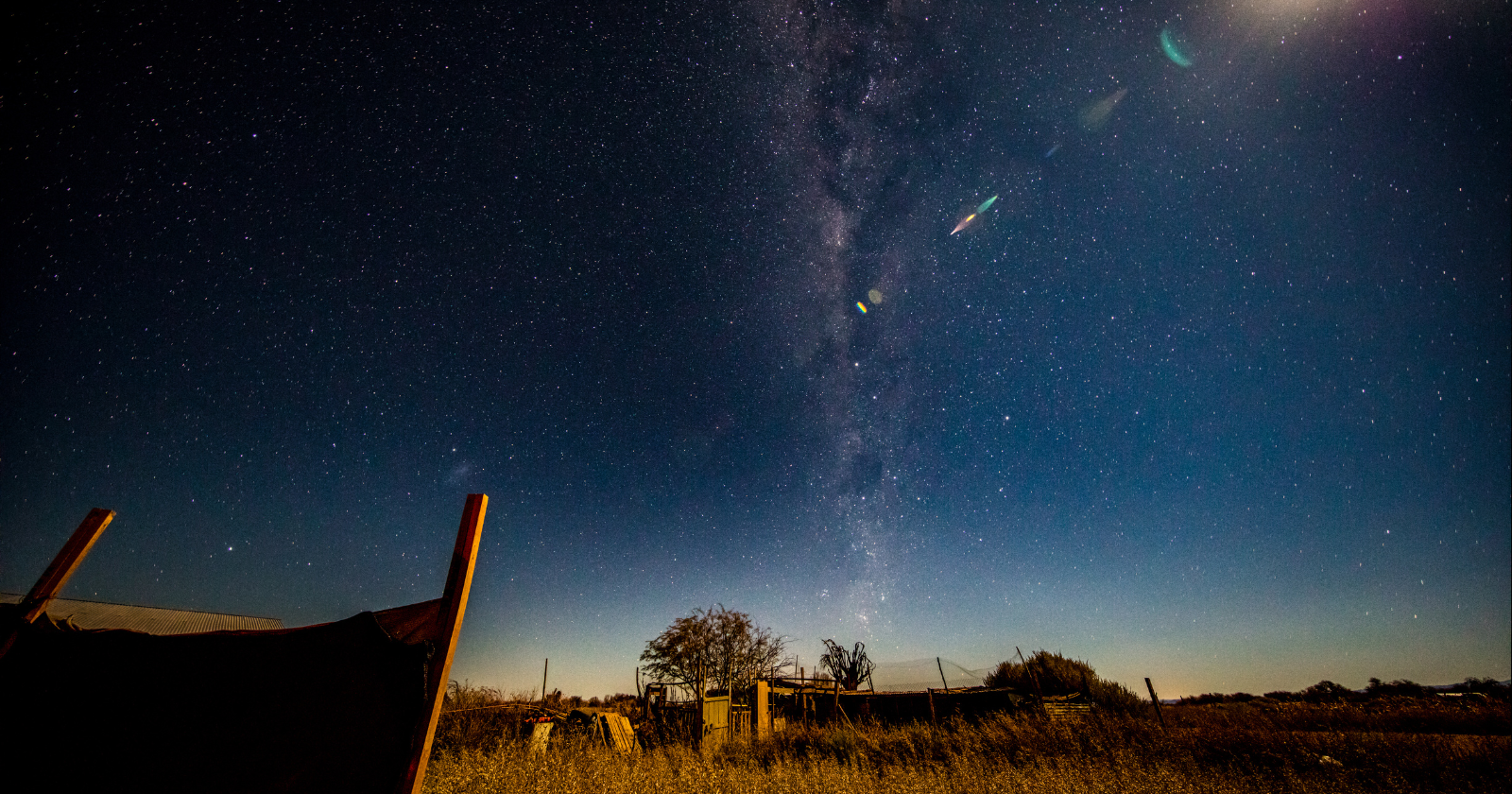
Four amateur astronomers using a telescope in Chile's Atacama Desert discovered a comet on January 13, 2026, which was reported widely this week. The comet, which had not been seen by anyone alive due to its ~1,900-year orbital period, was spotted 81 days before its closest approach to the Sun. This discovery highlights the continued importance of citizen science in identifying long-period comets that professional surveys might miss during their pre-perihelion approach.
Venus at Peak Brightness and Zodiacal Light
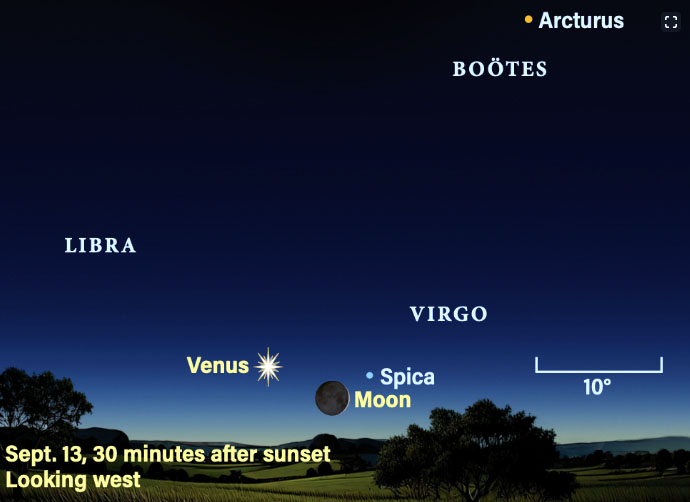
Venus reached its greatest illuminated extent this week, shining at magnitude –4.8 low in the western sky after sunset. This period also offered optimal conditions for viewing zodiacal light, the faint glow caused by sunlight scattering off interplanetary dust, particularly visible in the dark skies following the new moon. The combination of bright Venus and zodiacal light provided a striking visual contrast for observers looking for non-planetary phenomena.
Local view
Japan: Japanese media highlighted upcoming autumn events, noting that the Orionid meteor shower will peak around October 21–22, with the best viewing times from midnight to dawn. The National Astronomical Observatory of Japan (NAOJ) also emphasized the total lunar eclipse scheduled for March 2026 as a key future event, while current coverage focused on the transition to autumn constellations.
Korea: Korean outlets reported on the "Sky This Week" guide for September 11–18, emphasizing Saturn’s moons and the Moon-Venus conjunction. The coverage noted that dark-sky sights took center stage this week, with Venus "mingling" with the Moon providing a primary target for local astrophotographers.
Context & numbers
- Solar Activity: The sun showed only one numbered active region (AR4528) on September 16, indicating a near-spotless state.
- Geomagnetic Storm: The peak Kp index for the week was forecast at 4.67, corresponding to a G1 (Minor) storm scale.
- Visible Comets: Eight comets were observable in September 2026, with 10P/Tempel being the brightest at magnitude 8.4, visible in binoculars. The remaining seven required telescopes ranging from 12.5 to 24 inches.
- Venus Magnitude: Venus shone at magnitude –4.8 during its greatest illuminated extent this week.
On the radar
- Harvest Moon: The full moon (Harvest Moon) will rise around September 26–27, marking the end of the dark-sky window that favored zodiacal light observation this week.
- Orionid Meteor Shower: Preparations should begin for the Orionids, which peak in late October, with Japanese sources specifying October 21–22 as the optimal window.
- Neptune Opposition: Neptune is at its best for the year this month, offering prime viewing opportunities for telescope owners as it reaches opposition.
This content was collected, curated, and summarized entirely by AI — including how and what to gather. It may contain inaccuracies. Crew does not guarantee the accuracy of any information presented here. Always verify facts on your own before acting on them. Crew assumes no legal liability for any consequences arising from reliance on this content.
Powered by
