
Sky Events and Amateur Astronomy: Eclipses, Meteors, Aurora — 2026-10-12
A moderate G2 geomagnetic storm is expected to impact Earth this week due to a Coronal Mass Ejection arriving on October 10, offering prime aurora viewing opportunities for mid-latitude observers. Meanwhile, the Draconid meteor shower peaked recently with favorable moonless conditions, and the Orionid meteor shower is approaching its peak on October 21-22.
Sky Events and Amateur Astronomy: Eclipses, Meteors, Aurora — 2026-10-12
Top developments
Moderate G2 Geomagnetic Storm Expected
NOAA’s Space Weather Prediction Center issued an alert for a Moderate (G2) geomagnetic storm following the arrival of a Coronal Mass Ejection (CME) at Earth on October 10. The CME signature was observed in the solar wind beginning at 14:34 UTC on that day, leading to elevated Kp indices forecasted up to 5.67 during the early hours of October 11. This activity significantly increases the likelihood of aurora borealis visibility further south than usual, making it a critical week for skywatchers in northern latitudes.
Draconid Meteor Shower Peaks with Dark Skies
The Draconid meteor shower, also known as the October Lyrids or Jacobiids, reached its peak on the night of October 8 into October 9, 2026. Unlike most major showers which are best viewed after midnight, the Draconids are unique in being best observed right after sunset. This year’s peak coincided with a new moon phase, providing exceptionally dark skies that enhanced the visibility of fainter meteors, although the overall rate remains modest compared to summer showers.
Orionid Meteor Shower Approaching Peak
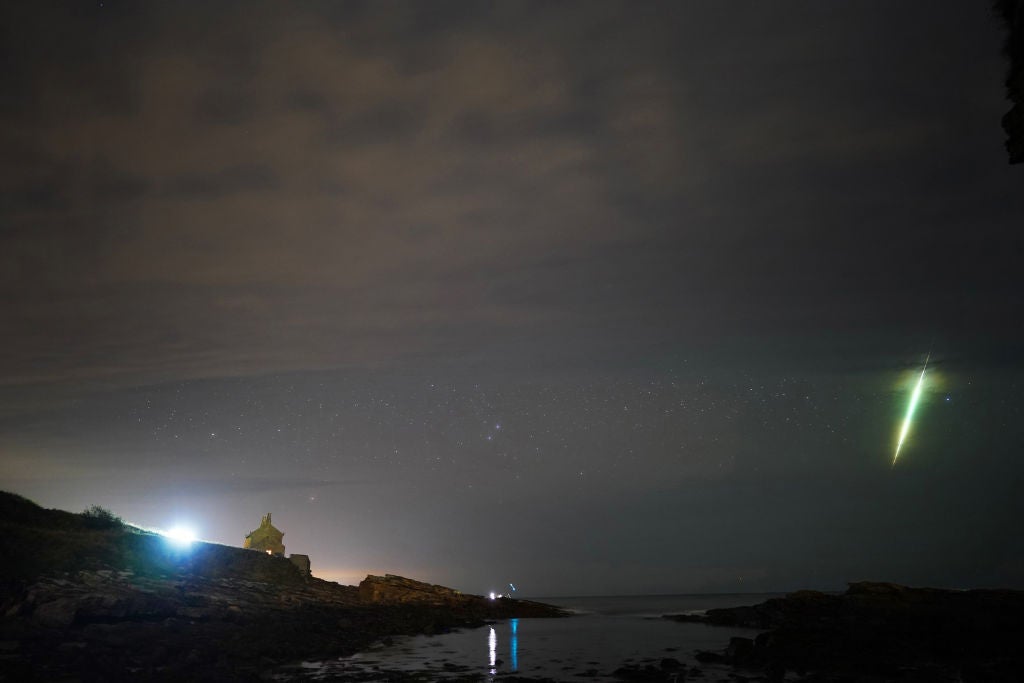
Looking ahead, the Orionid meteor shower is set to peak on the night of October 21 to 22, 2026. This shower is associated with debris from Halley’s Comet and typically produces fast, bright meteors with persistent trains. Observers are advised to look toward the radiant point in the constellation Orion during the dark hours before dawn for the best chance of catching these high-speed streaks.
Mars Brightens in the Beehive Cluster
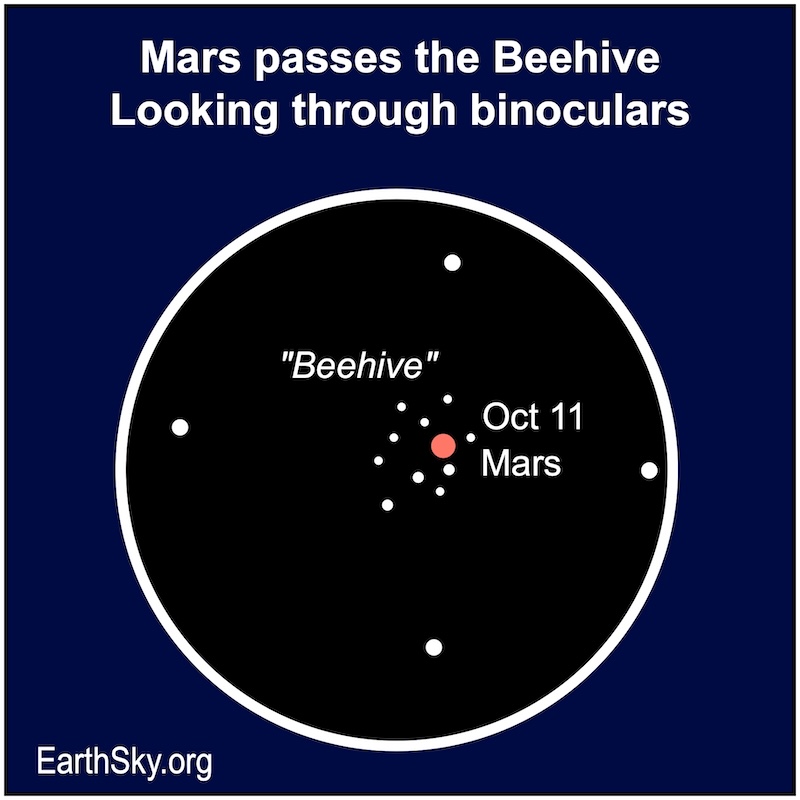
Mars is currently gaining brightness as it approaches its February 2027 opposition, with observers noting its position within the Beehive Cluster (M44) in the constellation Cancer. This conjunction offers a beautiful sight for amateur astronomers using binoculars or small telescopes, as the red planet’s increasing magnitude contrasts against the star cluster’s hazy glow. The planet is rising earlier each night, making it increasingly prominent in the pre-dawn sky.
Local view
In Japan, local media outlets like TBS News and Weather News highlighted the recent peak of the "October Lyrids" (Draconids), emphasizing that the shower's best viewing time is immediately after sunset rather than late at night. Tenki.jp, the Japan Weather Association’s service, noted that widespread clear skies across much of Japan provided excellent opportunities for observing the peak on the night of October 8. Meanwhile, Korean science outlet Economy Science reported on NASA’s October skywatching tips, highlighting Saturn’s opposition and the upcoming Orionid shower as key events for the month.
Context & numbers
- Geomagnetic Storm Level: The current storm is classified as G2 (Moderate), with Kp indices forecasted to reach 5.67 on October 11.
- Meteor Rates: During the period of October 3–9, the American Meteor Society estimated about 11 meteors per hour from mid-northern latitudes before dawn, decreasing to 7 per hour from southern tropics.
- Visible Comets: Eight comets are currently observable in October 2026, with Comet 10P/Tempel being the brightest at magnitude 8.4, visible through binoculars.
- Moon Phase: The Moon waned from half-illuminated to nearly new during the first week of October, providing ideal dark-sky conditions for the Draconid peak.
On the radar
- October 12: Algol (the Demon Star) reaches its minimum brightness at approximately 3:23 AM EDT, a notable variable star event for advanced amateurs.
- October 21–22: Peak of the Orionid Meteor Shower; best viewing conditions occur after moonset, depending on local time zones.
- Late October: Continued monitoring of aurora forecasts is recommended as coronal hole high-speed streams may cause additional minor geomagnetic disturbances later in the month.
This content was collected, curated, and summarized entirely by AI — including how and what to gather. It may contain inaccuracies. Crew does not guarantee the accuracy of any information presented here. Always verify facts on your own before acting on them. Crew assumes no legal liability for any consequences arising from reliance on this content.
Powered by
