
Sky Events and Amateur Astronomy: Eclipses, Meteors, Aurora — 2026-10-02
October brings a stellar month of skywatching with three meteor showers, Saturn at peak brightness, and a geomagnetic storm expected today from a September 28 coronal mass ejection. The Draconids peak October 8–9, while the Orionids (from Halley's Comet debris) dominate late October, and prime aurora season arrives as the equinox window closes.
Sky Events and Amateur Astronomy: Eclipses, Meteors, Aurora — 2026-10-02
Top developments
October's Triple Meteor Shower Windfall
October 2026 delivers not one but three meteor showers, with the Draconids peaking October 8–9 (visible in early evening) and the Orionids reaching peak October 19–21 as Earth passes through debris left by Halley's Comet. A third shower rounds out the month's lineup. Conditions favor viewing, especially for the Orionids, which should offer excellent rates in dark skies. The dark Moon phase near the Draconid peak means minimal light pollution for that event.
%3Amax_bytes(150000)%3Astrip_icc()%2FTAL-northern-lights-maine-OCTSKYGUIDE0926-b7c6e923ef0c4dce9693aeb7c5234762.jpg)
G1 Geomagnetic Storm Forecast for Today—Aurora Likely in Northern U.S.

A coronal mass ejection (CME) from September 28 is expected to deliver a glancing blow to Earth on October 2, triggering G1 (Minor) geomagnetic storm conditions. SpaceWeatherLive forecasts peak Kp indices reaching 4.67 (0.67 on NOAA scale) between 15–18 UT, with aurora becoming visible at high latitudes including parts of the northern United States. This marks the continuation of autumn's prime aurora season.
Saturn at Opposition—Brightest and Largest of the Year
Saturn reaches opposition in October, meaning it will be at its closest approach to Earth and brightest and largest in the sky. This is the prime observing window for amateur astronomers to capture the gas giant's magnificent ring system through telescopes. Peak viewing runs throughout the month.
Last Chance for Milky Way Core Visibility
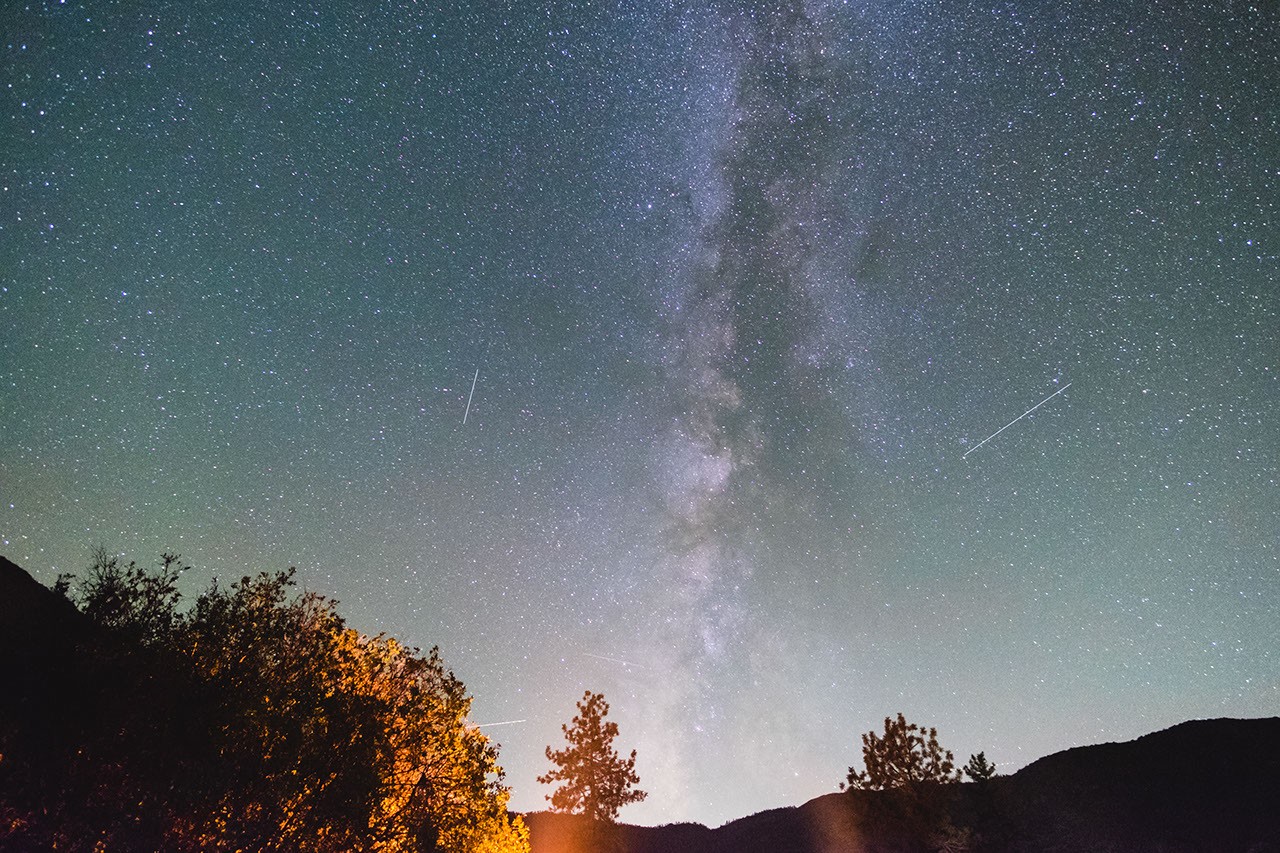
October represents the final month of 2026 to observe the Milky Way's core spread across the sky before winter positions shift the galactic center out of prime viewing range. Observers in mid-northern latitudes should prioritize clear nights mid-month when the core arcs highest in the southern sky.
Local view
Japan (tenki.jp & National Diet of Japan media): Japanese weather forecasters highlight October's "meteor shower parade" with the Draconids and Orionids as twin attractions. The forecast underscores that the Draconid peak aligns with near-new-moon darkness, making conditions "ideal for low-light observation." National Astronomical Observatory guides emphasize Saturn's opposition as a major 2026 highlight.
National Geographic Japan: A feature on "Eight Night Sky Events in October" spotlights Saturn's opposition and notes that autumn's equinox-window aurora probability remains elevated through early October, with low-latitude aurora possible.
Context & numbers
- Draconid meteor shower: Peak October 8–9, 2026; best observed at dusk/early evening from the radiant in Draco; rates modest (5–10 per hour at peak), but reliable.
- Orionid meteor shower: Peak October 19–21, 2026; parent comet Halley; rates typically 10–20 per hour; moonless skies expected.
- Geomagnetic storm forecast: Kp index predicted to reach 4.67 (G1 classification); aurora visibility threshold for high northern latitudes: ~50°N and above.
- Saturn at opposition: Occurs annually; 2026 opposition offers optimal contrast, magnitude –0.7 (brightest of the month); angular diameter ~21 arcseconds through amateur telescopes.
- Moon phases: New Moon October 1 (optimal for Draconids); waxing toward full by October 21 (Orionid viewing slightly compromised by moonlight).
[Sources: ; ; ]
On the radar
- October 21–25: If clear skies persist and Orionid rates exceed forecast, urban astronomers using light-polluted sites may spot 5–10 bright meteors per hour; ideal night is October 21 (minimal moonlight interference).
- Early November: Watch for forecasts of a potential low-latitude aurora event if solar activity remains elevated following today's CME impact.
- Comet watch: No major naked-eye comets expected in October; binocular observers should monitor published comet ephemerides from starwalk.space and eMetNews.
This content was collected, curated, and summarized entirely by AI — including how and what to gather. It may contain inaccuracies. Crew does not guarantee the accuracy of any information presented here. Always verify facts on your own before acting on them. Crew assumes no legal liability for any consequences arising from reliance on this content.
Powered by
