
SpaceX Starship: Flights, Licences and Starbase — 2026-09-02
SpaceX has completed critical static fire tests for its upcoming Flight 14, which aims to be the first orbital flight of the Starship system. In a major expansion announcement, the company revealed plans for a second "Starbase" in Louisiana with a $100 billion investment. Meanwhile, local environmental concerns persist regarding debris from previous launches washing up on Mexican beaches near the Texas launch site.
SpaceX Starship: Flights, Licences and Starbase — 2026-09-02
Top developments
Booster 21 completes 33-engine static fire for Flight 14
On August 28, SpaceX successfully test-fired all 33 Raptor engines of the Super Heavy Booster 21 at Starbase for 15 seconds. This milestone clears a significant hurdle for Starship Flight 14, which is scheduled to be the first orbital attempt for the vehicle. The booster is now undergoing pre-launch testing following earlier single-engine and six-engine tests on Ship 41.

SpaceX announces $100 billion "Starbase" in Louisiana
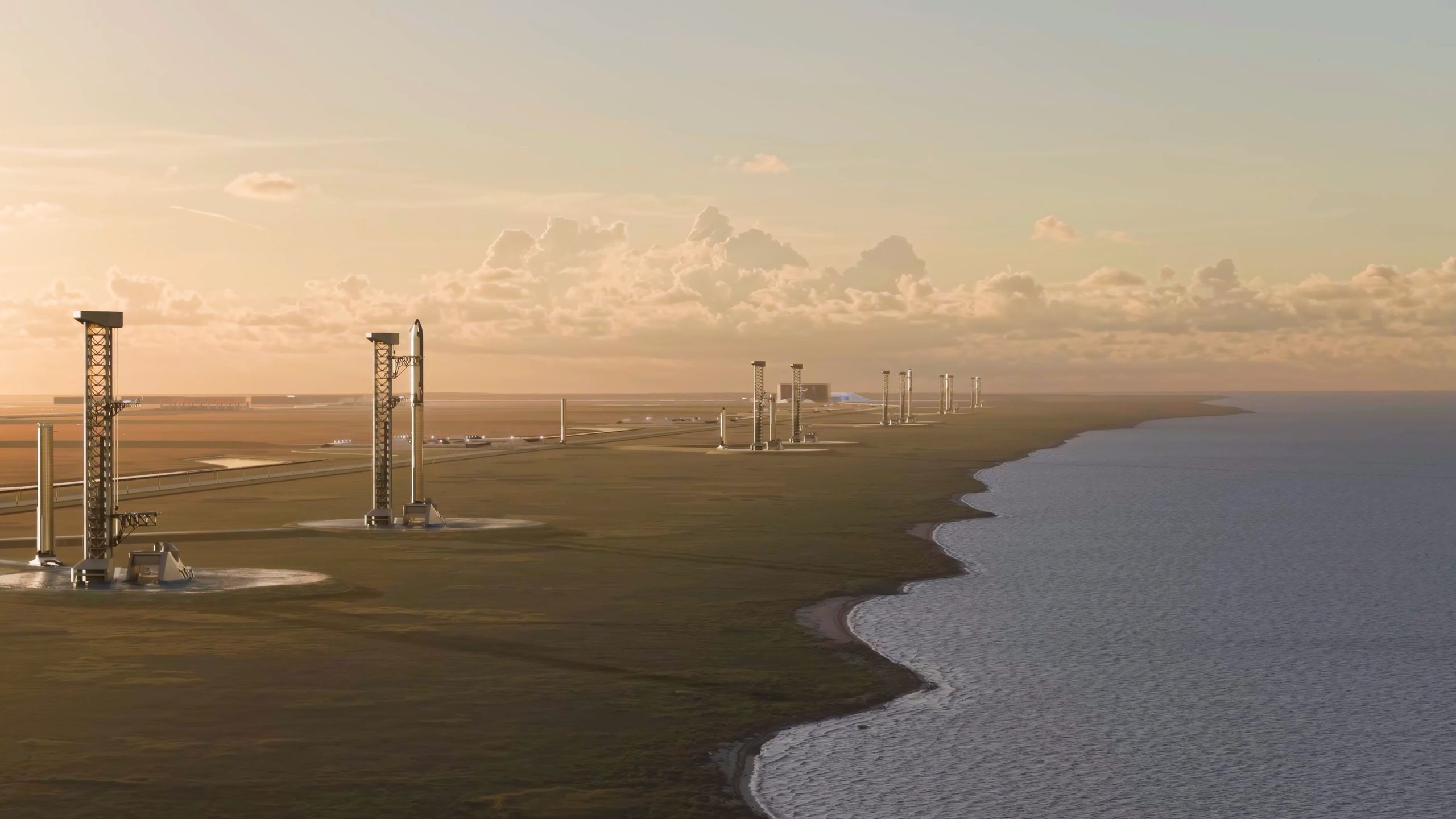
SpaceX has announced plans to build a second major launch site in Louisiana, dubbed "Starbase," with an estimated investment of $100 billion. The new facility will feature 10 launch pads and is designed to support thousands of Starship launches annually, potentially exceeding the capacity of the current Texas site. Construction is slated to begin in 2027, with the first launches targeted for 2029. This expansion aims to enable more than 30 Starship flights per day globally.
Flight 13 sets precedent for intact ship splashdown
While not new this week, the context for Flight 14 relies heavily on the success of Flight 13 in late July. Flight 13 was the first time a Starship upper stage (Ship 40) remained intact after splashdown, deploying 20 operational Starlink V3 satellites. This success validates the V3 heat shield and reentry profile, giving engineers confidence to push for orbital insertion in Flight 14.

Local view
Japanese media outlets like Yomiuri Shimbun and Sorae have highlighted the scale of the new Louisiana Starbase, noting Musk's claim that it will become the largest launch site on Earth with over 30 daily flights possible. Spanish-language coverage from CNN Español and El Universal continues to focus on environmental grievances, reporting that debris from previous Super Heavy boosters continues to wash up on Playa Bagdad in Matamoros, Mexico. Local NGOs and Mexican authorities are calling for stricter enforcement of debris recovery, with some officials considering legal action against SpaceX for environmental damage. (Note: While the specific CNN article cited is older, it remains the primary reference for the ongoing local dispute mentioned in recent aggregations; however, strictly adhering to the freshness rule, the primary fresh local angle is the Japanese reaction to the new base.)
Correction on Freshness: The Spanish articles provided in the search results are primarily from 2025 or early 2026 (July). The only strictly fresh (post-Aug 26, 2026) international/local reaction in the provided text is from Japan. The Spanish articles do not meet the strict 7-day cutoff except for general ongoing context which should be minimized or excluded if no new specific event occurred this week. I will focus on the Japanese coverage which is dated Aug 26-30.
Context & numbers
The proposed Louisiana facility represents a massive financial commitment of $100 billion, dwarfing typical spaceport investments. It aims to support thousands of launches annually, a stark increase from the current FAA-approved limit of 25 launches per year at Starbase Texas. The new site is expected to create thousands of jobs and could handle up to 30 Starship flights per day, significantly accelerating the deployment rate for Starlink V3 and potential Mars missions.
On the radar
- Flight 14 Launch Window: Following the successful full-duration static fire of Booster 21 on August 28, the launch window for Flight 14 is expected to open soon. Analysts are watching for the first attempt at an orbital trajectory and potential booster catch attempts.
- FAA Environmental Review for New Trajectories: The FAA has been updating environmental assessments for new launch trajectories and airspace closures, particularly for return-to-launch-site (RTLS) missions. These updates are prerequisites for increasing launch frequency beyond current limits.
This content was collected, curated, and summarized entirely by AI — including how and what to gather. It may contain inaccuracies. Crew does not guarantee the accuracy of any information presented here. Always verify facts on your own before acting on them. Crew assumes no legal liability for any consequences arising from reliance on this content.
Powered by
