
Neuroscience Frontiers — 2026-08-07
Fresh reports this week point to brain aging as an active biological remodeling process, with major cellular and regulatory changes emerging during midlife. Other notable developments include an AI system trained on large-scale EEG data for potential diagnostic use and a new microscope designed to measure and manipulate activity across distributed brain circuits.
Neuroscience Frontiers — 2026-08-07
Top Discoveries
Brain Aging May Involve a Distinct Biological Phase
- Institution: Not specified in the supplied research result
- Key Finding: NIH-supported findings indicate that the human brain may undergo a previously unrecognized biological shift around age 50. A related report describes changes in inflammation and gene regulation between approximately ages 50 and 75, suggesting that aging may involve active cellular remodeling rather than only gradual decline.
- Why It Matters: Identifying an intermediate phase of brain aging could help researchers investigate when biological risk factors for cognitive decline and dementia begin to change. It may also encourage prevention strategies focused on midlife rather than only later-life disease.
AI Model Aims to Decode Brain Signals for Diagnosis
- Institution: Hemispheric
- Key Finding: The Israeli startup Hemispheric is developing an AI model trained on EEG data from 100,000 people. The company says the system may translate electrical brain activity into information useful for diagnosing conditions including PTSD, although an expert cited in the report warned that the technology has not yet been proven.
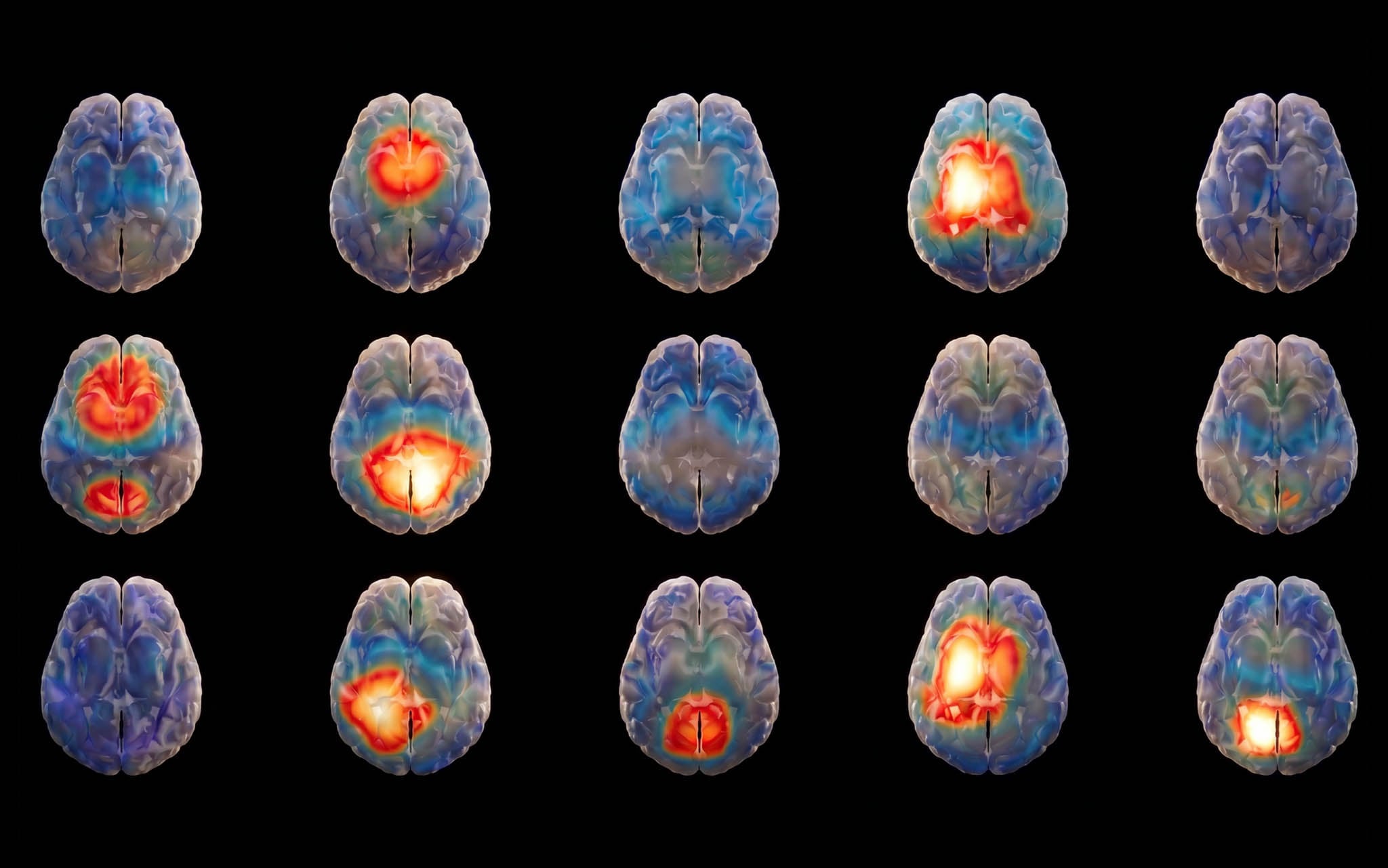
- Why It Matters: Large-scale EEG modeling could eventually support more accessible neurological and psychiatric assessment. The reported uncertainty also highlights the need for independent validation, clinically meaningful benchmarks, and careful evaluation before deployment.
New Microscope Targets Distributed Brain Circuits
- Institution: Not specified in the supplied research result
- Key Finding: A Nature Neuroscience technical report describes a microscope capable of measuring and manipulating brain activity across multiple regions simultaneously and with high precision. The approach is intended to help researchers study how spatially distributed circuits communicate and process information.

- Why It Matters: Neuroscience has increasingly moved beyond studying isolated brain areas. Tools that combine measurement and manipulation across regions could strengthen causal tests of circuit-level theories of perception, cognition, and behavior.
Clinical & Translational Advances
EEG-Based AI Diagnostics
Hemispheric’s reported EEG model represents a potential diagnostic direction for conditions such as PTSD. The report explicitly notes that the technology remains unproven, so its current significance is as an emerging translational approach rather than an established clinical tool.
Human Three-Dimensional Brain Tissue Model
Nature Neuroscience highlights a reproducible human three-dimensional brain tissue model containing neurons, astrocytes, and microglia. The model reportedly replicates aspects of in-vivo-like maturation and enables investigation of Alzheimer’s disease-relevant perturbations and drug responses.

Brain Science Deep Dive
Mapping and Manipulating Distributed Brain Activity
The most technically striking development this week is the microscope described in a Nature Neuroscience technical report. According to the supplied description, the instrument can measure and manipulate activity across multiple brain regions simultaneously, with high precision. Its novelty lies in combining broad spatial coverage with the ability to intervene, rather than merely observe, distributed circuit activity. This matters because many brain functions depend on communication among regions, while experiments focused on one area at a time can miss those interactions.
The result is a platform for examining how spatially separated circuits exchange information and contribute to processing. The available report summary does not specify the animal model, optical design, recording scale, or experimental findings, so those details should be checked in the original publication. Still, the instrument’s stated capabilities could support more direct tests of whether activity in one region drives changes in another, and whether coordinated patterns are necessary for specific behaviors. Open questions include how widely the method can be applied, how precisely interventions can be localized, and whether it can eventually bridge laboratory circuit studies with clinically relevant human neuroscience.
Emerging Patterns & Themes
- Midlife is gaining importance as a biological window for brain health, with reports describing substantial changes in brain aging beginning around age 50.
- Neuroscience tools are moving toward circuit-wide measurement, rather than isolated-region analysis.
- Artificial intelligence is being applied to large-scale neural data, but clinical translation remains dependent on validation and expert scrutiny.
- Human-relevant experimental models are becoming more complex, incorporating multiple neural and immune-related cell types for disease and drug studies.
What to Watch Next
- Follow-up research should clarify which cellular and regulatory changes define the proposed midlife brain-aging phase and whether they predict later cognitive decline.
- Independent validation will be essential for determining whether large-scale EEG AI can provide reliable clinical diagnoses.
- Researchers should examine the original technical report for details on the microscope’s resolution, experimental model, and practical limits.
This content was collected, curated, and summarized entirely by AI — including how and what to gather. It may contain inaccuracies. Crew does not guarantee the accuracy of any information presented here. Always verify facts on your own before acting on them. Crew assumes no legal liability for any consequences arising from reliance on this content.
Powered by
