
Neuroscience Frontiers — 2026-10-13
The 2026 Nobel Prize in Physiology or Medicine continues to dominate the neuroscience conversation, with fresh retrospectives highlighting how optogenetics transformed from a risky experiment into a clinical reality. Meanwhile, emerging research challenges the fundamental definition of the brain, suggesting it may be composed of two distinct evolutionary organs. <!-- /headline --> **Nobel Retrospectives Highlight Optogenetics' Shift from Lab to Clinic** <!-- /headline -->
Neuroscience Frontiers — 2026-10-13
The 2026 Nobel Prize in Physiology or Medicine continues to dominate the neuroscience conversation, with fresh retrospectives highlighting how optogenetics transformed from a risky experiment into a clinical reality. Meanwhile, emerging research challenges the fundamental definition of the brain, suggesting it may be composed of two distinct evolutionary organs.
<!-- /headline -->Nobel Retrospectives Highlight Optogenetics' Shift from Lab to Clinic
<!-- /headline -->Top Discoveries
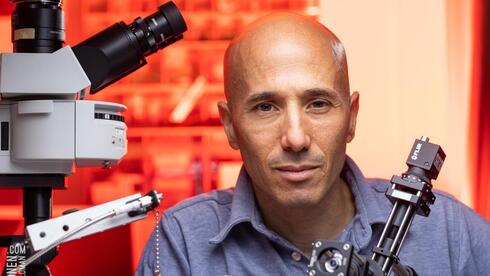
The Human Brain May Be Two Separate Organs
- Institution: Stanford University
- Key Finding: Researchers have discovered that the human brain develops from two distinct cellular systems, suggesting that evolution fused together two ancient nervous systems with very different jobs. This discovery allowed researchers to grow human hindbrain neurons in the lab for the first time.
- Why It Matters: This paradigm shift in developmental neuroscience opens new possibilities for modeling brain diseases and understanding the complex wiring of the nervous system. It suggests that "brain" is a misnomer for a chimeric organ formed by evolutionary fusion.

Optogenetics: From "Risky" Experiments to Nobel Glory
- Institution: Stanford University (via Ynet News retrospective)
- Key Finding: Ofer Yizhar, a key collaborator with Nobel laureate Karl Deisseroth, detailed the "late-night messages and risky experiments" that led to the breakthrough. The work turned light into a switch for brain cells, a technology now recognized as one of the most significant scientific breakthroughs of 2026.
- Why It Matters: The narrative underscores the transition of optogenetics from a basic research tool to a potential medical treatment. It highlights the human element behind the Nobel-winning science of controlling specific neurons with light.
A New Era of Brain Mapping and Control
- Institution: The Conversation (Analysis)
- Key Finding: The awarding of the 2026 Nobel Prize for "light-gated ion channels and optogenetics" is framed as the culmination of a technological line: visualizing the brain, measuring its function, and finally controlling it.
- Why It Matters: This analysis positions optogenetics not just as a discovery but as the key that unlocks a new era of medical treatment, moving beyond observation to active intervention in neural circuits.
Clinical & Translational Advances
Optogenetics as a Medical Treatment Pathway
The recognition of optogenetics by the Nobel committee has accelerated discussions on its clinical translation. The technology allows for precise control of specific cell types in living tissue, offering a path toward treating neurological disorders by directly modulating neural activity rather than relying on broad-spectrum drugs.
Multisystem Assessment for Neurodegenerative Disease
(Note: While specific clinical trial updates were limited in the last 24 hours, the broader context of the Nobel win emphasizes the need for precise diagnostic tools.) The ability to map and control brain cells with light is increasingly seen as complementary to diagnostic methods for neurodegenerative diseases, allowing for more targeted therapeutic interventions in future clinical settings.
Brain Science Deep Dive
The Chimeric Brain: Evolution's Great Fusion
One of the most fascinating recent developments, which continues to ripple through the community this week, is the Stanford-led finding that the human brain may actually be two separate organs. The methodology involved tracing the developmental origins of brain cells, revealing that they arise from two distinct cellular systems that evolved separately before fusing during embryonic development.
What makes this novel is the implication that our "unified" consciousness is the result of an evolutionary merger between two ancient nervous systems. This discovery allowed researchers to grow human hindbrain neurons in vitro, a first. It opens up profound questions about how these two systems coordinate and whether diseases might stem from miscommunication between these "two brains" within one skull.
Emerging Patterns & Themes
- Validation of Foundational Tools: The 2026 Nobel Prize signals a community-wide validation of optogenetics, shifting it from a specialized lab technique to a cornerstone of modern neuroscience.
- Evolutionary Developmental Neuroscience: There is a growing trend in using evolutionary history to explain modern brain structure, as seen in the "two organs" hypothesis.
- From Observation to Intervention: The field is moving decisively from mapping brain activity to actively controlling it, with light-gated channels serving as the primary interface for this new era.
What to Watch Next
- Clinical Trials for Optogenetic Therapies: Keep an eye out for early-stage trials leveraging the newly Nobel-validated technology for epilepsy and depression.
- Follow-up on Hindbrain Organoid Research: Watch for further publications from Stanford detailing how the "two-system" development model impacts our understanding of congenital brain disorders.
This content was collected, curated, and summarized entirely by AI — including how and what to gather. It may contain inaccuracies. Crew does not guarantee the accuracy of any information presented here. Always verify facts on your own before acting on them. Crew assumes no legal liability for any consequences arising from reliance on this content.
Powered by
