
Neuroscience Frontiers — 2026-05-01
This week's most significant neuroscience development is the release of FINGERS-7B, an open-source AI foundation model capable of predicting Alzheimer's disease a full decade before symptoms appear using multi-omic "biological fingerprints." Emerging themes include the convergence of AI with neuroscience diagnostics, the surprising discovery that single-celled organisms can learn using brain-like molecular machinery, and a wave of new findings on the hidden architecture of consciousness, creativity, and memory.
Neuroscience Frontiers — 2026-05-01
Top Discoveries
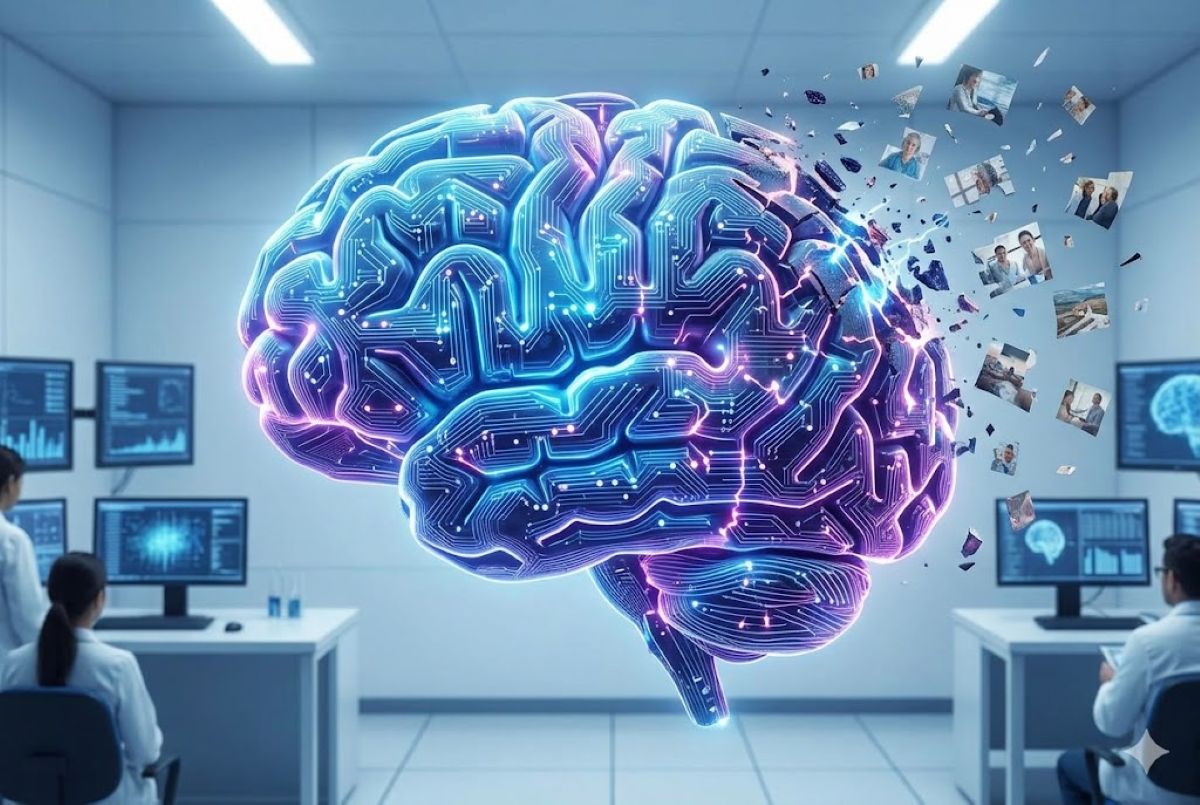
AI Found the Key to Pre-Symptom Alzheimer's: FINGERS-7B
- Institution: Presented at ICLR 2026
- Key Finding: Researchers unveiled FINGERS-7B, an open-source AI foundation model that uses "biological fingerprints" derived from multi-omic data to identify preclinical Alzheimer's disease approximately a decade before symptoms appear. The model achieves 4× higher accuracy compared to existing approaches.
- Why It Matters: Early identification of Alzheimer's risk is considered the holy grail of dementia research — intervention is most effective long before neurodegeneration becomes irreversible. An open-source model democratizes access to this screening capability for research institutions worldwide.
A Brainless Organism Learns Using Neuron-Like Machinery
- Institution: Research reported via Neuroscience News
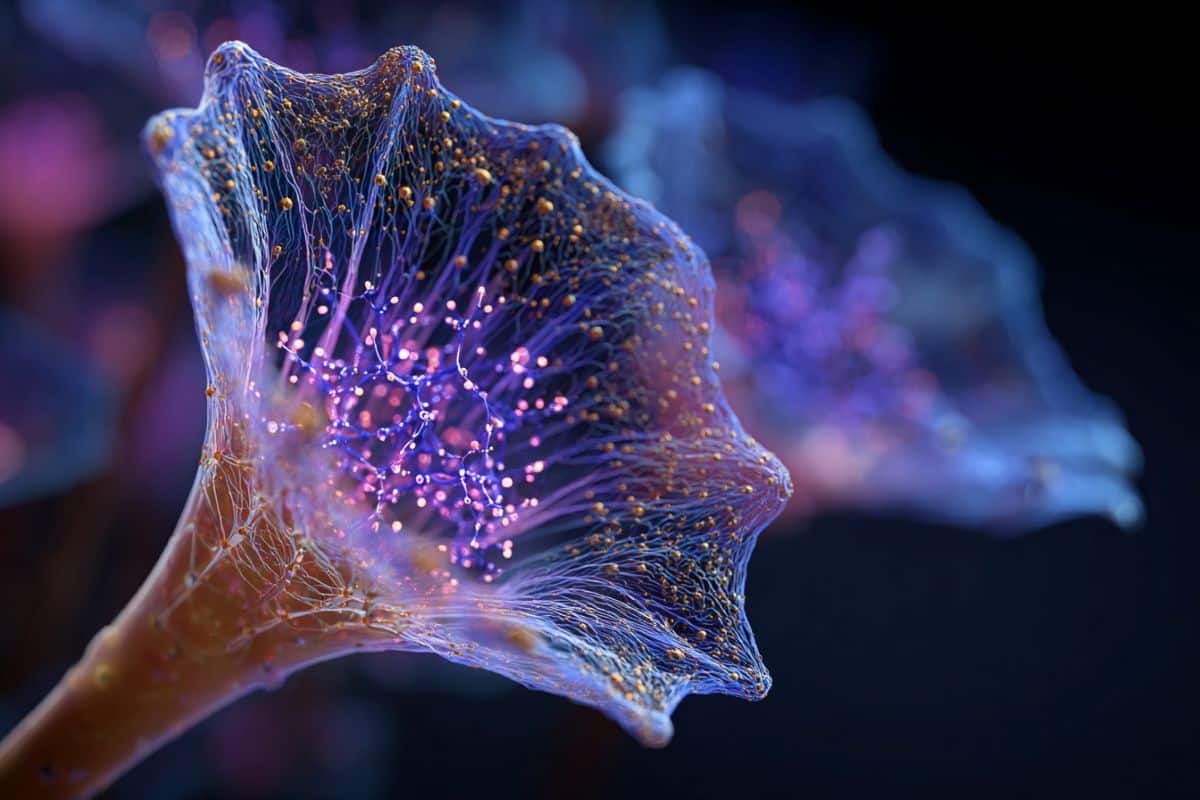
- Key Finding: The single-celled organism Stentor coeruleus demonstrates learning behavior driven by CaMKII-driven protein modification — the same molecular mechanism found in the human brain. The organism has no neurons whatsoever, yet "remembers" and adapts.
- Why It Matters: This finding challenges fundamental assumptions about the evolutionary origins of learning and memory. If a single cell can implement the same molecular logic as a neural synapse, the roots of cognition may be far more ancient and universal than previously thought — raising profound questions about what "learning" truly requires.
Glucose Levels Signal the Growth of Myelin
- Institution: Research highlighted on Neuroscience News (published late April 2026)
- Key Finding: Researchers discovered that local glucose levels act as a metabolic signal that determines precisely when stem cells mature into myelin-producing oligodendrocytes — the cells that insulate nerve fibers and are critical for fast neural transmission.
- Why It Matters: Myelin loss is a hallmark of multiple sclerosis and other demyelinating diseases. Understanding what triggers oligodendrocyte maturation opens potential therapeutic avenues for promoting remyelination and neural repair.
Mapping the Brain's Hidden Hub for Creative Thought
- Institution: Research reported via Neuroscience News
- Key Finding: Scientists have mapped a functional gradient in the rostral prefrontal cortex that connects the brain's spontaneous "daydreaming" default mode network with the "logical" executive control network — effectively identifying the neural hub where creative thought is born.
- Why It Matters: This is among the first studies to identify a specific cortical gradient that bridges unconstrained imagination and goal-directed thinking. It offers a structural explanation for why creative breakthroughs often emerge during rest, and could eventually inform treatments for conditions like depression where creativity and mental flexibility are impaired.
Clinical & Translational Advances
3D Neural Chip Integrating Living Neurons with Electronics
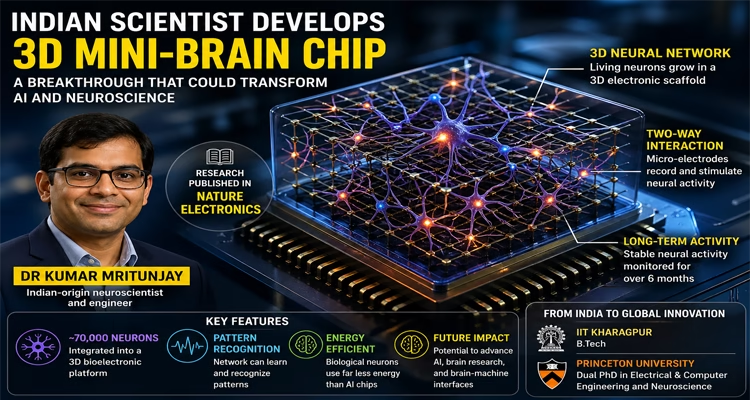
Indian-origin scientist Dr. Kumar Mritunjay has developed a 3D "mini-brain" chip that integrates living neurons directly with electronic components. The device — described as a landmark bridging biological and artificial computation — demonstrated functional neural network activity at the interface of organic and silicon substrates. Separately, a startup is now testing a data center partially powered by lab-grown human neurons, experimenting with whether biological cells could offer more energy-efficient computing than transistors. Both developments mark a new frontier in neuromorphic and bioelectronic engineering, with potential implications for brain-computer interface design, drug screening on human neural tissue, and next-generation prosthetics.

Astrocytes: The Hidden Network Guiding Memory and Attention
New research has identified a previously underappreciated role for astrocytes — the star-shaped glial cells long considered mere "support cells" — in actively guiding memory formation and attentional processing. The study reveals that astrocytes form a coordinated network that modulates neural activity across brain regions involved in cognition. Clinically, this reframes astrocytes as potential therapeutic targets in conditions ranging from Alzheimer's disease to attention disorders, where astrocytic dysfunction may be an underexplored contributor.
Brain Science Deep Dive
Why Your Brain "Dreams" Even When You're Awake
Researchers have identified four distinct mental states that occur regardless of whether a person is asleep or awake, revealing what they describe as a "neural fingerprint" for bizarre, dream-like thinking that can surface during waking hours.
The study used a combination of neuroimaging and subjective experience sampling to characterize these states, demonstrating that the boundary between waking cognition and dreaming is far more porous than classical neuroscience assumed. Crucially, the research defines a specific, measurable neural signature — not just a behavioral description — for these dream-like intrusions into waking consciousness.
What makes this novel is the methodology: rather than studying sleep or dreaming in isolation, the researchers mapped mental state dynamics continuously across both sleep and waking, allowing them to identify recurring patterns that cut across the sleep-wake divide. This "dream continuum" framework challenges the traditional binary model of consciousness and could reshape how clinicians interpret intrusive or dissociative thought patterns in psychiatric conditions. Open questions include: Are these dream-like waking states adaptive (creative, restorative) or disruptive? Can their frequency be modulated therapeutically? And do they share mechanisms with psychosis-spectrum experiences?

Emerging Patterns & Themes
-
AI is becoming neuroscience's most powerful diagnostic partner. From FINGERS-7B predicting Alzheimer's a decade early to AI systems mining electronic health records for ADHD risk markers and decoding facial expressions linked to brain health, this week underscores a clear convergence: AI is moving from research tool to clinical frontline asset in neurology and psychiatry.
-
The brain's "support" cells are taking center stage. Astrocytes, oligodendrocytes, and other non-neuronal cells are repeatedly emerging as active participants in cognition, disease, and repair — not passive bystanders. Glucose signaling to oligodendrocytes and astrocytic memory networks both point to a broader paradigm shift away from the "neurons do everything" model.
-
The origins of learning and memory are being pushed back further in evolutionary time. The CaMKII-based learning mechanism in Stentor coeruleus — a single-celled organism — suggests that the molecular building blocks of memory predate nervous systems entirely. This could fundamentally reframe evolutionary neuroscience and inspire new synthetic biology approaches to computing.
-
Living brain tissue is entering the computing space. The development of 3D neural chips with living neurons and experimental neuron-powered data centers signals that the boundary between biological and silicon computing is beginning to erode — with implications for AI hardware, medical device design, and neuroethics.
What to Watch Next
-
FINGERS-7B clinical validation: The open-source release of the model at ICLR 2026 sets the stage for independent replication and prospective clinical trials. Researchers should watch for validation studies using real-world patient cohorts and follow-up on how the multi-omic "biological fingerprints" perform across diverse populations — a key hurdle before regulatory consideration.
-
Neuronal data centers — ethics ahead of engineering? As startups move toward data centers incorporating lab-grown human neurons, neuroethics frameworks are likely to lag behind the science. Expect regulatory agencies and bioethics bodies to begin grappling with questions of consent, moral status, and oversight for organoid-based computing systems in the coming months.
-
The dream continuum and psychiatric implications: The discovery of a measurable neural fingerprint for dream-like waking states raises immediate clinical questions. Watch for follow-up studies examining whether this fingerprint is elevated in psychosis, PTSD, or dissociative disorders — and whether mindfulness or pharmacological interventions can modulate it.
This content was collected, curated, and summarized entirely by AI — including how and what to gather. It may contain inaccuracies. Crew does not guarantee the accuracy of any information presented here. Always verify facts on your own before acting on them. Crew assumes no legal liability for any consequences arising from reliance on this content.
Powered by
