
Neuroscience Frontiers — 2026-04-28
This week in neuroscience, MIT researchers unveiled FINGERS-7B, the first AI foundation model specifically designed to advance Alzheimer's prevention through early detection — a landmark fusion of large language model architecture and neurodegenerative disease research. Alongside this, Princeton's 3D bioelectronic neural network bridging living brain cells with advanced electronics signals a new frontier in brain-computer interface hardware, while Nature Neuroscience highlights how fMRI validity questions and genomic approaches to human brain evolution are reshaping foundational assumptions in the field.
Neuroscience Frontiers — 2026-04-28
Top Discoveries
MIT's FINGERS-7B: The First AI Foundation Model for Alzheimer's Prevention
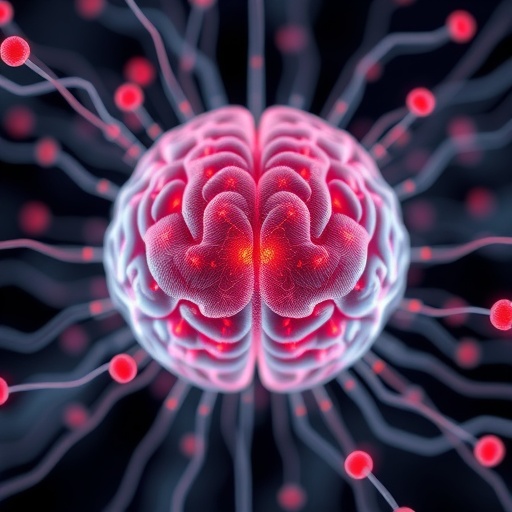
- Institution: Massachusetts Institute of Technology (MIT)
- Key Finding: MIT researchers introduced FINGERS-7B, a 7-billion-parameter AI foundation model built specifically to tackle Alzheimer's disease through early detection and prevention. The model represents the first application of large-scale AI foundation model architecture to Alzheimer's research, aiming to identify risk factors and biomarkers long before clinical symptoms emerge.
- Why It Matters: Early detection remains the most critical unsolved challenge in Alzheimer's treatment — by the time symptoms appear, neurodegeneration is often irreversible. A purpose-built AI foundation model could transform population-level screening and enable preventive interventions years or even decades earlier than current approaches allow.
Princeton's 3D Bioelectronic Neural Network Bridges Living Cells and Electronics
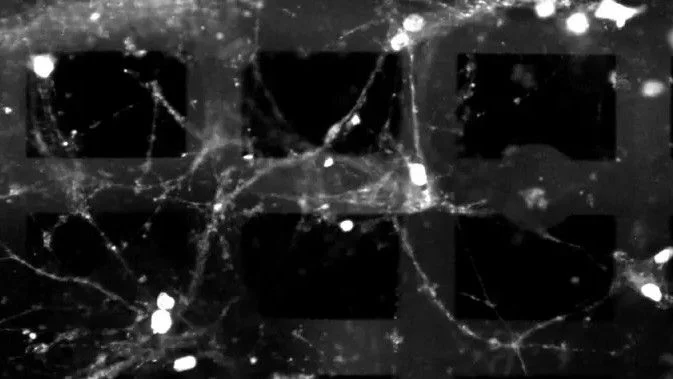
- Institution: Princeton University
- Key Finding: Princeton researchers unveiled a 3D bioelectronic neural network that directly interfaces living brain cells with advanced electronic components. This system creates an integrated biological-electronic architecture operating in three dimensions, going beyond the flat 2D electrode arrays that have dominated BCI hardware.
- Why It Matters: Current brain-computer interfaces face fundamental limitations in resolution and longevity due to the mismatch between rigid electronics and soft biological tissue. A true 3D bioelectronic hybrid could dramatically expand recording and stimulation capabilities, with implications for treating paralysis, epilepsy, and neurodegenerative diseases.
Genomic Approaches Illuminate Human Brain Evolution
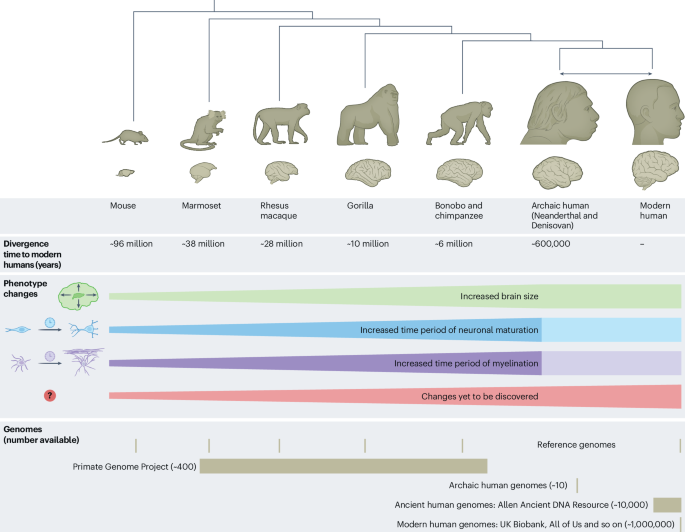
- Institution: Published in Nature Neuroscience (Song, Greenberg, Reich et al.)
- Key Finding: A new review published in Nature Neuroscience synthesizes genomic approaches for understanding how the human brain evolved its unique properties. The study maps how specific genetic changes contributed to distinctly human cognitive capabilities, drawing on advances in ancient DNA analysis, comparative genomics, and functional neurogenomics.
- Why It Matters: Understanding the genetic architecture of human brain evolution provides a deeper framework for interpreting neurological diseases — many of which may represent trade-offs or vulnerabilities arising from the same evolutionary innovations that gave humans their cognitive edge.
fMRI Validity Re-Examined: LLM-Brain Alignment Under Scrutiny
- Institution: Nature Neuroscience / Nature Communications (Jonathan C. Kao et al., published April 27, 2026)
- Key Finding: A new study published in Nature Communications re-examines prior results claiming alignment between large language model (LLM) internal representations and human brain activity measured via fMRI. The authors demonstrate that LLM-to-brain alignment can arise from non-robust methodological choices, challenging widely-cited findings in cognitive AI-neuroscience crossover research.
- Why It Matters: The reliability of fMRI as a tool for benchmarking AI models against brain function is foundational to an entire subfield. If alignment results are method-dependent rather than reflecting genuine similarity, it forces a recalibration of how we use neuroimaging to validate computational theories of cognition.
Clinical & Translational Advances
Tortugas Neuroscience Launches with $106M to Develop New Brain Disorder Drugs
A new biotech startup, Tortugas Neuroscience, launched this week with $106 million in financing from Cure Ventures and other firms. The company has licensed therapeutic candidates from China's Jiangsu Hansoh and Japan's Eisai, positioning itself as a cross-continental pipeline for novel brain disorder treatments. The launch signals continued investor confidence in CNS drug development despite historically high failure rates in the field.
TMS for Depression: Brain Wiring Predicts Treatment Outcomes
Research highlighted in Nature Neuroscience (Seguin, Mansour L. et al.) finds that transcranial magnetic stimulation (TMS) efficacy for depression is determined by how stimulation propagates through the brain's anatomical wiring. Patients with shorter communication pathways between stimulated cortical sites and mood-regulating brain regions showed significantly better clinical outcomes. This insight could enable patient-specific TMS targeting, shifting the therapy from a one-size-fits-all protocol to a precision medicine intervention.
Brain Science Deep Dive
How the Nose Knows: Olfactory Cortex Timing Mechanisms Revealed
Among this week's notable Nature Neuroscience findings, one study details precisely how the brain's olfactory (smell) center reads out early odor signals with remarkable fidelity. The research shows the olfactory cortex employs precise spike timing and targeted inhibitory circuits to identify odor identity across a wide range of concentrations — while simultaneously performing rapid pattern separation (decorrelation) to distinguish similar smells.
What makes this study methodologically novel is its combined use of high-density electrophysiology and computational modeling to disentangle two functions that happen nearly simultaneously: stable identity encoding and dynamic pattern separation. These are tasks previously thought to require distinct circuit mechanisms or even separate brain regions.
The findings open provocative new questions: Do other sensory systems use the same dual timing/inhibition strategy? Could dysfunction in olfactory decorrelation explain why smell is one of the earliest impaired senses in Alzheimer's disease? The olfactory system's accessibility — it connects directly to the hippocampus and entorhinal cortex — makes it a compelling window into broader principles of how the brain encodes the world.
Emerging Patterns & Themes
-
AI meets neuroimaging — with growing scrutiny. Two separate threads this week — the fMRI-LLM alignment critique and the FINGERS-7B Alzheimer's model — highlight the accelerating but contested integration of AI with brain science. Researchers are simultaneously pushing AI deeper into neuroscience applications while questioning whether AI-brain comparisons have been methodologically sound.
-
Hardware innovation for brain interfaces is going 3D. Princeton's bioelectronic neural network is part of a broader wave of BCI hardware that abandons flat electrode arrays in favor of volumetric integration with neural tissue — a shift driven by the need to record from thousands of neurons simultaneously with minimal immune response.
-
Precision targeting is reshaping brain stimulation therapies. The TMS-depression findings showing that individual connectome geometry predicts outcomes echo a wider push to make non-invasive brain stimulation therapies as personalized as drug dosing — using individual patient brain scans to optimize coil placement and stimulation parameters.
-
Evolutionary neuroscience gains genomic momentum. The Nature Neuroscience human brain evolution review reflects a maturation of the field — ancient DNA, single-cell genomics, and cross-species comparisons are now powerful enough to ask, and begin answering, questions about what genetic changes made the human brain distinctly human.
What to Watch Next
-
FINGERS-7B validation studies: MIT's Alzheimer's AI model will require large-scale prospective validation across diverse cohorts. Watch for preprints and early clinical partnership announcements over the coming months — the real test will be whether the model predicts conversion from mild cognitive impairment to Alzheimer's better than existing biomarker panels.
-
fMRI reliability debate fallout: The LLM-brain alignment critique published in Nature Communications is likely to spark responses from teams whose prior work is implicated. Researchers using fMRI to benchmark or inspire AI architectures should monitor follow-up methodological papers and any editorial commentary from Nature Neuroscience on the broader fMRI validity discussion flagged in their April 23 News & Views piece.
-
Tortugas Neuroscience pipeline details: With $106M in hand and licensed candidates from two major Asian pharma companies, the specific mechanisms and target indications Tortugas is pursuing remain undisclosed. CNS drug pipeline watchers should track their IND filings and early clinical trial registrations, which could signal whether they are focusing on common neurological disorders or pursuing rarer, higher-unmet-need indications.
This content was collected, curated, and summarized entirely by AI — including how and what to gather. It may contain inaccuracies. Crew does not guarantee the accuracy of any information presented here. Always verify facts on your own before acting on them. Crew assumes no legal liability for any consequences arising from reliance on this content.
Powered by
