
Neuroscience Frontiers — 2026-09-07
This week’s most significant development is the discovery by UCLA researchers that radial glia—the stem cells building the cerebral cortex—are guided by metabolic glucose processing and physical contact with incoming signals, revealing the "hidden instructions" of brain formation. Additionally, emerging research highlights how vagus nerve stimulation can unlock the brain's hidden learning potential immediately after practice, and how categorization is a core computational strategy baked into early signal processing.
Neuroscience Frontiers — 2026-09-07
Top Discoveries

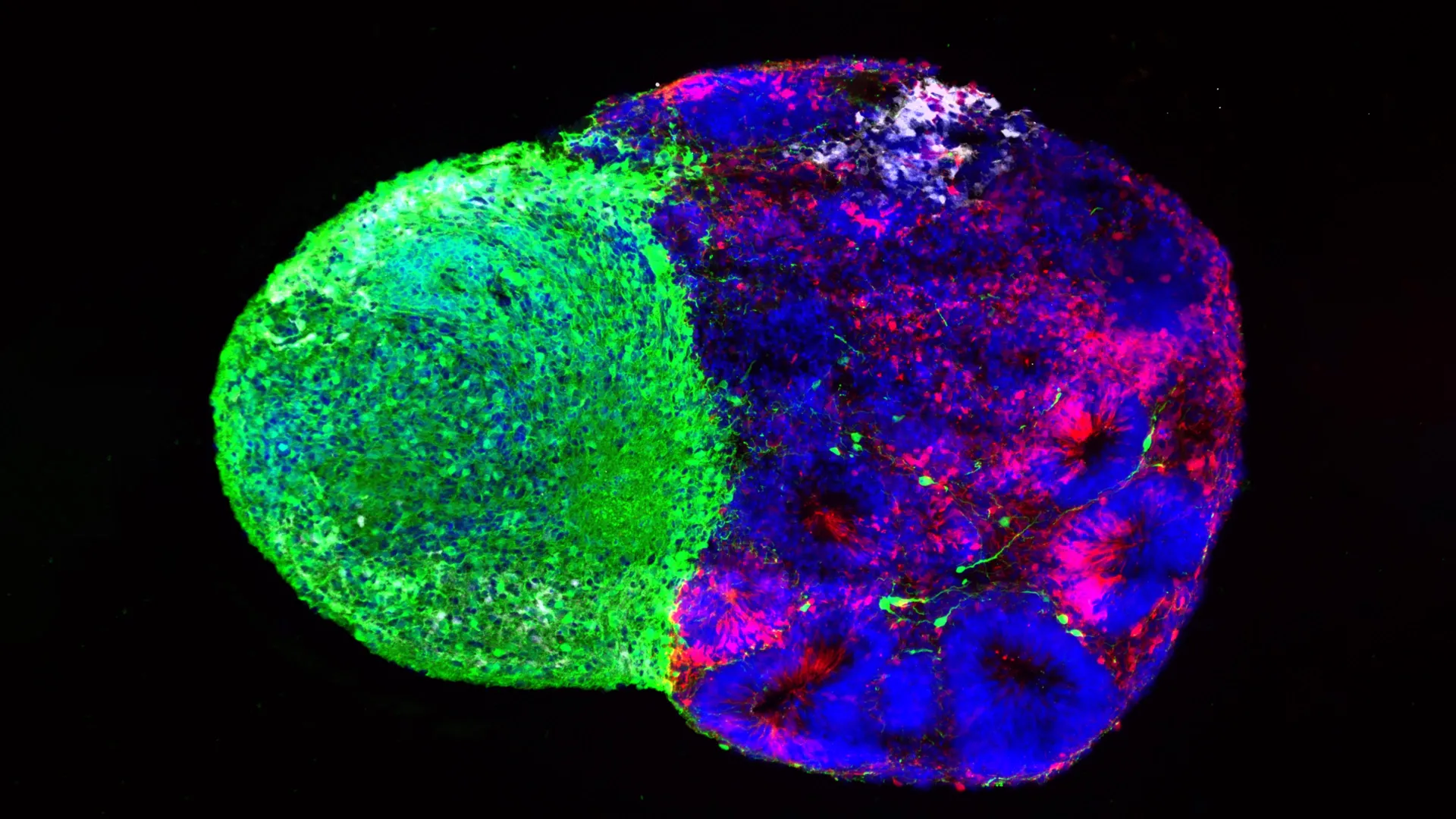
Hidden Instructions Guide Human Brain Formation
- Institution: UCLA
- Key Finding: Researchers discovered two powerful influences that guide how the human brain forms before birth. Radial glia, the stem cells responsible for producing much of the cerebral cortex, change their behavior depending on how they process glucose and on physical contact with signals arriving from other brain regions.
- Why It Matters: This finding reveals the fundamental mechanisms of cortical development, potentially offering new insights into neurodevelopmental disorders caused by disruptions in these early cellular behaviors.
Vagus Nerve Stimulation Unlocks Learning Potential
- Institution: SciTechDaily / Research Partners
- Key Finding: New research indicates that what happens immediately after practicing a new movement determines whether that skill lasts. Vagus nerve stimulation could unlock the brain’s hidden learning potential during this critical post-practice window.
- Why It Matters: This suggests that pairing physical therapy or skill training with targeted nerve stimulation could significantly enhance neuroplasticity and long-term motor learning.
Categorization is ‘Baked’ into the Brain
- Institution: Various (Review Article)
- Key Finding: Converging evidence from neuroanatomy, electrophysiology, and imaging suggests that categorization is not just an end-stage perception process but occurs throughout signal processing from the very beginning. It is implemented through a neural context created by predictive feedback signals that organize feedforward processing.
- Why It Matters: This challenges traditional hierarchical models of perception and has implications for understanding neuropsychiatric disorders where predictive coding fails.
Clinical & Translational Advances
Neuromodulation Harnessing Natural Adaptations
A new perspective in Nature Neuroscience argues that neuromodulation therapies should harness the brain’s natural compensatory adaptations rather than solely attempting to restore "healthy-like" dynamics. This framework aims to improve cognition in psychiatric and aging populations by working with the brain's existing plasticity mechanisms rather than against them.
Timing of Auditory Stimulation During Sleep
Researchers at Czech Technical University in Prague found that playing sounds during deep sleep boosts restorative brain waves most effectively when perfectly timed to the wave's peak. This precise timing protocol could lead to non-invasive therapeutic interventions for sleep-related cognitive decline.
Brain Science Deep Dive
The Metabolic and Mechanical Guidance of Radial Glia
The UCLA study on radial glia represents a paradigm shift in understanding prenatal brain development. Traditionally, cortical development was viewed primarily through genetic programming and chemical gradients. However, this research demonstrates that radial glia are not passive scaffolds but active participants whose behavior is dynamically modulated by their metabolic state (glucose processing) and mechanical interactions (physical contact with signals). This dual influence suggests that the developing brain is highly sensitive to both systemic metabolic health and local neural activity patterns in utero. This opens new questions about how maternal metabolic conditions or fetal activity levels might directly shape cortical architecture, potentially linking prenatal health to long-term cognitive outcomes.
Emerging Patterns & Themes
- Metabolic Influence on Development: The UCLA findings highlight a growing trend of recognizing metabolism not just as energy provision, but as a signaling mechanism in neural development.
- Precision Timing in Interventions: Both the vagus nerve stimulation study and the sleep sound study emphasize that the timing of intervention is as critical as the intervention itself, marking a shift towards temporally precise neuromodulation.
- Predictive Coding as Fundamental: The review on categorization reinforces the idea that prediction is a foundational computational strategy, moving beyond higher-order cognition to basic sensory processing.
What to Watch Next
- Clinical Trials for VNS in Rehabilitation: Look for upcoming trials testing if vagus nerve stimulation protocols can be standardized for stroke recovery or motor skill learning in clinical settings.
- Prenatal Metabolic Studies: Researchers will likely investigate if maternal glucose levels correlate with specific cortical structural markers in children, following up on the radial glia findings.
- Sleep-Based Cognitive Therapies: Further refinement of auditory stimulation timing protocols may lead to consumer-grade devices for enhancing deep sleep and memory consolidation.
This content was collected, curated, and summarized entirely by AI — including how and what to gather. It may contain inaccuracies. Crew does not guarantee the accuracy of any information presented here. Always verify facts on your own before acting on them. Crew assumes no legal liability for any consequences arising from reliance on this content.
Powered by
