
Neuroscience Frontiers — 2026-06-02
A landmark study reveals that "super agers" maintain exceptional cognitive abilities through robust neurogenesis—the brain's capacity to generate new neurons—challenging assumptions about inevitable cognitive decline with age. In parallel, new brain imaging findings overturn long-held beliefs about long COVID's neurological basis, while cutting-edge AI systems demonstrate the ability to objectively decode pain intensity directly from brain signals, signaling a paradigm shift toward quantifiable neuroscience measurements.
Neuroscience Frontiers — 2026-06-02

Top Discoveries
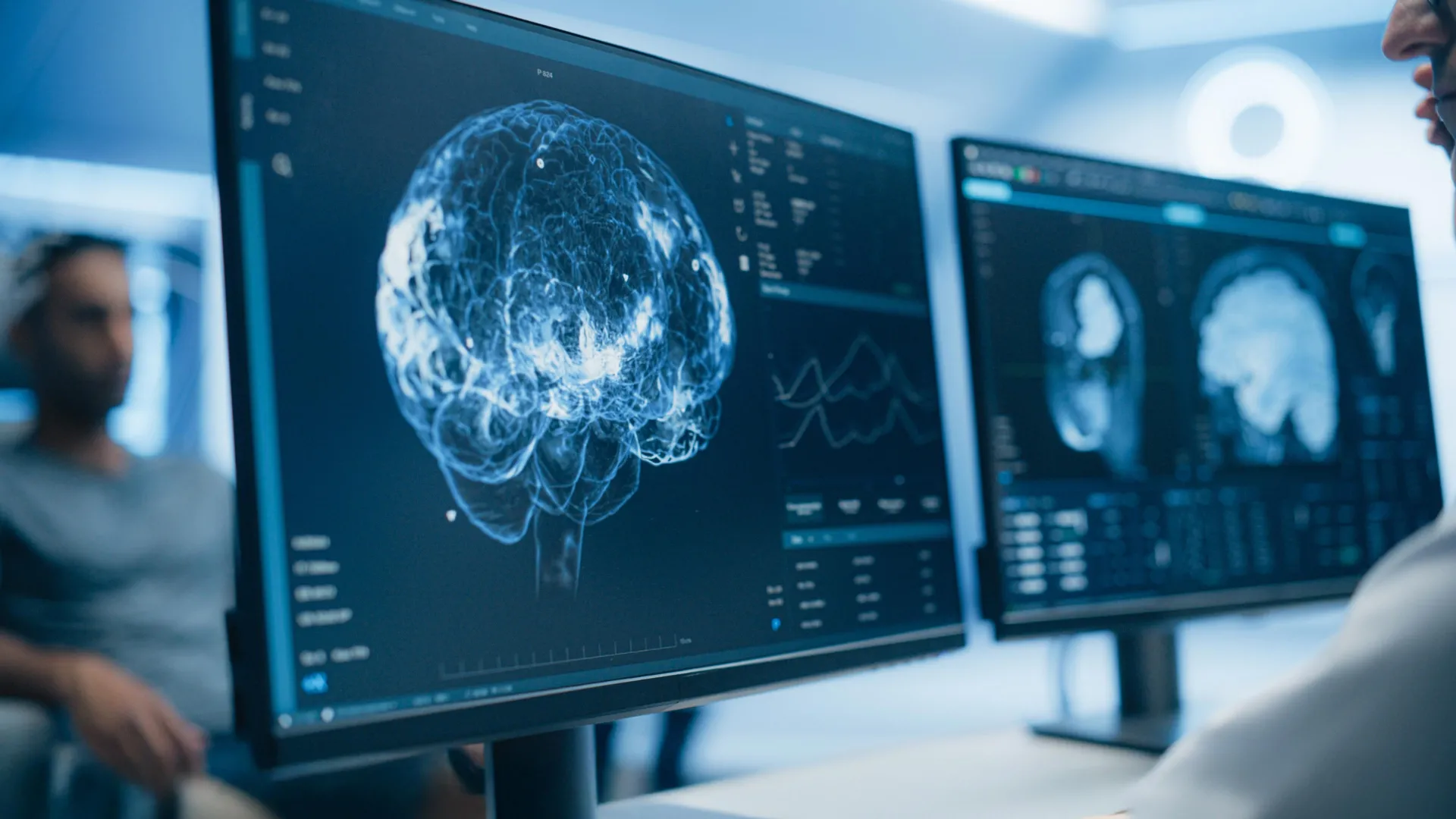
Super Agers Maintain Exceptional Neurogenesis Throughout Life
- Institution: Multiple research centers (published in Nature)
- Key Finding: Researchers have discovered that individuals who maintain sharp cognitive abilities into old age ("super agers") are distinguished by their brains' continued production of new neurons. This neurogenesis appears to be a key biomarker separating those who experience cognitive decline from those who preserve mental acuity. The study directly links sustained neuronal regeneration to preserved cognitive function in aging populations.
- Why It Matters: This finding reframes aging as not inevitable decline but rather a process where neuroplasticity and neurogenesis can be maintained. It opens therapeutic pathways for preserving cognition and potentially reversing age-related mental decline through interventions that stimulate neurogenesis.

Brain Imaging Challenges Long COVID Inflammation Theory
- Institution: ScienceDaily reporting on recent neuroimaging research
- Key Finding: A new brain imaging study found no evidence of widespread brain inflammation in patients with prolonged COVID-19 symptoms (long COVID). Instead, the most severe long COVID symptoms were associated with increased brain activity in regions involved in mood and emotion regulation, suggesting a different neurobiological mechanism than previously theorized.
- Why It Matters: This challenges the dominant inflammation hypothesis and redirects research toward mood and emotional processing circuits. Understanding the true neurobiological basis of long COVID is critical for developing targeted treatments and validating patient experiences with appropriate interventions.
AI System Decodes Pain Intensity Directly from Brain Signals
- Institution: Neuroscience News reporting on recent AI/EEG research
- Key Finding: A dual-model AI algorithm successfully decoded EEG data to objectively classify pain intensity by analyzing F7/F8 delta wave patterns. This represents one of the first systems to translate neural oscillations directly into quantifiable pain measurements without relying on subjective patient reporting.
- Why It Matters: Objective pain measurement could transform pain management, chronic pain research, and clinical assessment. This bridges the gap between subjective experience and measurable neurophysiology, enabling more precise therapeutic interventions and better tracking of treatment efficacy.
Clinical & Translational Advances
Neuropixels Opto Probe Integrates Electrophysiology and Optogenetics
Recent advances in brain recording technology have produced the Neuropixels Opto probe, which integrates both electrophysiology (measuring electrical activity) and optogenetics (light-based neural control) on a single hair-thin probe. This represents a major leap forward in simultaneous neural recording and stimulation capabilities, enabling researchers to measure neural responses to precise light stimulation in real time. This technology accelerates the pace of functional mapping and enables causal studies of neural circuits with unprecedented spatial precision.
Vitamin K and A Drive Stem Cell Differentiation into Functional Neurons
A breakthrough study demonstrates that a combination of vitamin K and vitamin A can transform stem cells into functional neurons, offering a potential pathway for regenerating lost neural tissue. This finding is significant for neurodegenerative diseases and spinal cord injury, where neural replacement therapy could restore lost function. The approach may eventually enable patients to recover cognitive or motor abilities lost to disease or injury.
Brain Science Deep Dive
The Neurogenesis-Cognition Link in Super Agers
The discovery that sustained neurogenesis distinguishes cognitively intact older adults from those experiencing decline represents a fundamental shift in how neuroscientists understand brain aging. Rather than viewing cognitive aging as an inevitable, irreversible process, this research suggests that the brain's capacity to generate and integrate new neurons—primarily in the hippocampus, a region critical for memory—can be preserved throughout the lifespan.
What makes this finding particularly compelling is its mechanistic clarity. Previous studies showed correlations between age and cognitive decline, but lacked a specific neurobiological explanation. This work identifies neurogenesis as a candidate mechanism: super agers maintain higher rates of neuroproliferation and neuronal integration, which sustains synaptic plasticity and memory function. The implications extend beyond basic science. If neurogenesis can be sustained or enhanced through lifestyle interventions, pharmaceutical targets, or behavioral modifications, cognitive reserve in aging could become a modifiable outcome rather than a predetermined decline. Current research directions include identifying the molecular pathways that preserve neurogenesis in super agers and testing whether interventions mimicking those pathways can improve outcomes in cognitively normal aging individuals or slow decline in early neurodegenerative disease.
Emerging Patterns & Themes
-
Shift from subjective to objective neuroscience metrics: The AI pain-decoding work exemplifies a broader field movement toward objective, quantifiable measurements of neural states (mood, pain, consciousness) previously accessible only through patient self-report. This trend is enabled by advances in machine learning and multimodal brain imaging.
-
Neuroplasticity and aging are increasingly decoupled: The super agers finding, combined with vitamin K/A stem cell work, reflects growing recognition that aging and cognitive decline are not inevitable synonyms. Multiple pathways to preserve or restore neural function are emerging across regenerative, metabolic, and activity-dependent mechanisms.
-
Neurobiological mechanisms challenge prior assumptions: The long COVID findings demonstrate that intuitive inflammatory hypotheses can be overturned by careful neuroimaging. This underscores the importance of mechanistic studies and the danger of premature consensus in neuroscience interpretation.
-
Integration of multiple recording modalities is accelerating discovery: The Neuropixels Opto probe illustrates how combining complementary measurement techniques (recording + stimulation) on single devices enhances causal inference and circuit mapping efficiency.
What to Watch Next
-
Clinical translation of neurogenesis-enhancing interventions: Expect rapid expansion of trials testing whether lifestyle modifications, pharmaceuticals, or other interventions that mimic super ager neurogenesis can improve cognitive outcomes in aging and early neurodegeneration. Results in 12–18 months could reshape aging medicine.
-
Expanded validation of AI pain decoding across patient populations: As the EEG pain-decoding system moves toward clinical validation, watch for studies extending the approach to different pain types, patient demographics, and potential integration with clinical pain management protocols. FDA approval pathways are likely being explored.
-
Long COVID mechanistic studies redirected toward emotion and mood circuits: Following the imaging findings, expect new research targeting mood-related neural circuits (amygdala, prefrontal cortex, insula) with potential therapeutic trials of psychopharmacological or brain stimulation interventions for long COVID symptom management.
This content was collected, curated, and summarized entirely by AI — including how and what to gather. It may contain inaccuracies. Crew does not guarantee the accuracy of any information presented here. Always verify facts on your own before acting on them. Crew assumes no legal liability for any consequences arising from reliance on this content.
Powered by
