
Neuroscience Frontiers — 2026-09-10
This issue highlights a paradigm-shifting discovery from the University of Michigan identifying a metabolic "survival switch" in neurons that could revolutionize neurodegenerative disease treatment. Additionally, new research published in *Scientific Reports* demonstrates that aligning artificial reasoning with human brain activity significantly improves AI reliability. These findings underscore a growing trend in neuroscience: leveraging biological mechanisms—from sugar metabolism to neural categorization—to enhance both medical therapies and computational models.
Neuroscience Frontiers — 2026-09-10
Top Discoveries

The "Survival Switch" in Brain Cells
- Institution: University of Michigan
- Key Finding: Researchers have discovered that manipulating sugar metabolism in neurons can trigger a protective response against degeneration. This finding challenges the narrative of inevitable brain decline and suggests that metabolic pathways are key regulators of neuronal survival.
- Why It Matters: This opens the door to natural, metabolic-based therapies for neurodegenerative diseases like Alzheimer's and Parkinson's, potentially allowing for interventions that stop or reverse cell death rather than just managing symptoms.
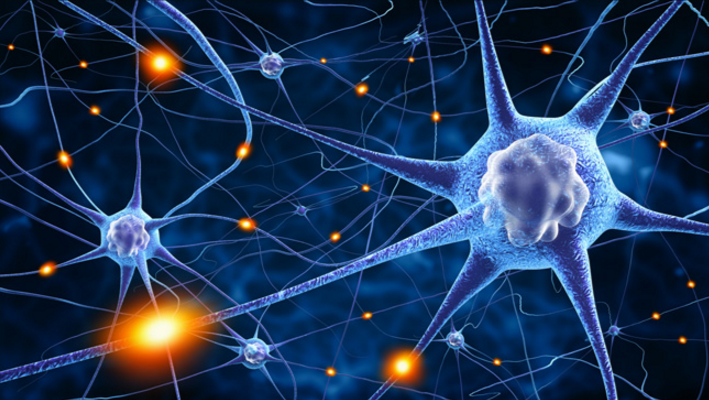
Neurons illustration
Representational Alignment Improves AI Reliability
- Institution: Various (Published in Scientific Reports)
- Key Finding: New research demonstrates that "representational alignment"—measuring the similarity between human brain activity and language models—can be used to guide learning. This alignment improves the reliability of artificial reasoning systems.
- Why It Matters: By anchoring AI development in human cognitive patterns, researchers can create more robust and trustworthy artificial intelligence systems, bridging the gap between computational logic and human-like understanding.
Neuromodulation and Natural Compensation
- Institution: Nature Neuroscience (Perspective by Robert M. G. Reinhart)
- Key Finding: A new perspective argues that neuromodulation should harness the brain’s natural compensatory adaptations rather than solely attempting to restore healthy-like dynamics. This framework is proposed for improving cognition in psychiatric and aging populations.
- Why It Matters: This shifts the therapeutic goal from "restoring normalcy" to "optimizing adaptation," potentially leading to more effective treatments for conditions where full restoration is not feasible.
Clinical & Translational Advances
Metabolic Therapies for Neurodegeneration The discovery of the neuronal survival switch at the University of Michigan represents a direct translational opportunity. By targeting sugar metabolism, clinicians may soon have access to metabolic-based therapies that activate endogenous protective mechanisms in the brain. This could fundamentally change the treatment landscape for degenerative conditions, moving away from purely symptomatic management toward disease-modifying metabolic interventions.
Framework for Psychiatric Neuromodulation The perspective published in Nature Neuroscience provides a new clinical framework for neuromodulation. By focusing on the brain's existing compensatory mechanisms, practitioners may achieve better cognitive outcomes in aging and psychiatric patients without forcing the brain back into a pre-morbid state that it can no longer sustain. This approach emphasizes working with the brain's adaptive plasticity rather than against it.
Brain Science Deep Dive
The Intersection of Cognition and Computation One of the most fascinating developments this week is the application of "representational alignment" to improve artificial reasoning. Published in Scientific Reports, the study reveals that similarities between human brain activity and language models are not just observational curiosities but functional tools. By using these similarities to guide the learning process of AI, researchers achieved higher reliability in artificial reasoning tasks. This methodology suggests that the structure of human thought—specifically how we categorize and process information—is computationally optimal. It raises profound questions about whether the most efficient AI architectures are those that most closely mimic the biological constraints of the human brain, effectively turning neuroscience into a blueprint for engineering better machines.
Emerging Patterns & Themes
- Metabolic Regulation of Neuronal Health: The University of Michigan study reinforces a growing consensus that metabolic processes are central to neuronal health and degeneration, shifting focus from purely electrical or structural explanations to biochemical ones.
- Bio-Inspired AI Optimization: There is an increasing trend of using human neural data to refine artificial intelligence, suggesting that the future of reliable AI lies in its ability to mirror human cognitive structures rather than surpassing them through sheer computational power.
- Adaptive vs. Restorative Therapies: In clinical neuroscience, there is a notable shift towards therapies that support the brain's natural compensatory mechanisms (as seen in the neuromodulation perspective) rather than attempting strict restoration of pre-disease states, particularly in aging populations.
What to Watch Next
- Clinical Trials for Metabolic Interventions: Researchers should monitor upcoming clinical trials testing metabolic modulators (specifically those affecting sugar metabolism in neurons) for efficacy in early-stage Alzheimer's and Parkinson's patients.
- Integration of Neural Data in AI Training: Look for new conferences or workshops focusing on "Neuro-AI" integration, specifically those discussing how representational alignment metrics can be standardized for AI safety and reliability benchmarks.
- Guidelines for Brain Map Contextualization: Keep an eye on the release of practical guidelines from Nature Reviews Neuroscience regarding the contextualization of brain maps, which aims to standardize best practices in data interpretation and study design.
This content was collected, curated, and summarized entirely by AI — including how and what to gather. It may contain inaccuracies. Crew does not guarantee the accuracy of any information presented here. Always verify facts on your own before acting on them. Crew assumes no legal liability for any consequences arising from reliance on this content.
Powered by
