
Neuroscience Frontiers — 2026-10-12
The 2026 Nobel Prize in Physiology or Medicine awarded to Karl Deisseroth, Peter Hegemann, and Georg Nagel for their pioneering work on optogenetics continues to dominate the neuroscience conversation, with fresh retrospectives highlighting the human side of the breakthrough and its clinical promise. Beyond the Nobel, new research from Nature Neuroscience reveals how aging and Alzheimer's disease reshape brain connectivity along distinct organizational axes, offering new diagnostic signatures for pathological brain aging.
Neuroscience Frontiers — 2026-10-12
Top Discoveries
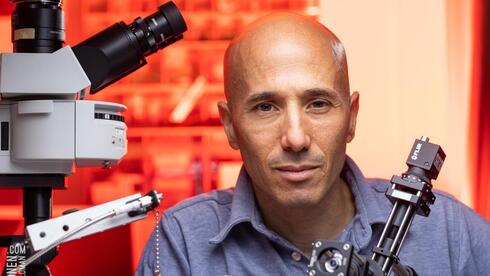
Israeli Scientist Reflects on Optogenetics' Path to the Nobel Prize
- Institution: Stanford University / Weizmann Institute (via Ynet News)
- Key Finding: Ofer Yizhar, a key collaborator at Stanford with Nobel laureate Karl Deisseroth, shared insights into the "risky experiments" and late-night work that led to turning light into a switch for brain cells. The technology allows for precise control of neural activity, marking a significant leap in understanding how memories, feelings, and behaviors are shaped by nerve cells.
- Why It Matters: This personal account underscores the collaborative and often uncertain nature of groundbreaking scientific innovation, while highlighting optogenetics' potential to revolutionize treatments for neurological disorders by targeting specific neural circuits with light.
Aging and Alzheimer's Reshape Brain Connectivity Along Distinct Axes
- Institution: Nature Neuroscience (Study by Jonathan Rittmo et al.)
- Key Finding: A recent study published in October 2026 demonstrates that normal aging and Alzheimer's disease do not simply degrade brain connectivity uniformly. Instead, they reshape connectivity along distinct axes of brain organization, providing unique neural signatures that can distinguish between healthy brain aging and pathological decline.
- Why It Matters: Identifying these distinct signatures offers a potential pathway for earlier and more accurate diagnosis of Alzheimer's disease, moving beyond general cognitive tests to specific neuroimaging biomarkers.
SORDINO-fMRI: Silent, Motion-Resistant Brain Imaging in Behaving Animals
- Institution: Nature Neuroscience (MacKinnon and colleagues)
- Key Finding: Researchers have introduced SORDINO-fMRI, a new framework for functional magnetic resonance imaging that is silent and resistant to motion artifacts. This method allows for the capture of global brain dynamics during complex behaviors in mice, enabling simultaneous network-level recordings with cellular or chemical validation without the interference of traditional fMRI noise.
- Why It Matters: This technological advancement opens new opportunities in preclinical imaging and systems neuroscience, allowing for more naturalistic studies of brain function during behavior, which has long been hindered by the constraints of traditional fMRI scanners.
Clinical & Translational Advances
Optogenetics as a Therapeutic Tool
The awarding of the 2026 Nobel Prize has renewed focus on the translational potential of optogenetics. While initially a research tool, the ability to control specific neurons with light is now being explored for treating conditions like Parkinson's disease, depression, and blindness. The Nobel committee recognized the trio for discovering a "molecular switch" for nerve cells, laying the foundation for this new era of medical treatment.
Distinguishing Healthy Aging from Alzheimer's
The new findings on distinct connectivity axes in Alzheimer's patients provide a direct avenue for clinical application. By mapping these specific organizational changes, clinicians may develop better diagnostic tools to identify early-stage Alzheimer's before severe cognitive decline occurs, potentially allowing for earlier intervention with emerging therapies.
Brain Science Deep Dive
The Methodology of Motion-Resistant Imaging
The introduction of SORDINO-fMRI represents a significant methodological shift in how we observe the living brain. Traditional fMRI requires subjects to remain still, often producing loud noises that alter natural behavior. MacKinnon and colleagues developed SORDINO-fMRI to overcome these limitations by creating a silent, motion-resistant framework. This novelty lies in its ability to capture global dynamics during complex behaviors in mice, rather than just passive states. The system enables artifact-free simultaneous network-level recordings, which can be validated at the cellular or chemical level. This opens up critical questions about how brain networks interact during real-world tasks, free from the stress and artificiality of previous imaging methods. By removing motion artifacts, researchers can now study the brain's natural computational strategies in a way that was previously impossible, bridging the gap between cellular mechanisms and systemic behavior.
Emerging Patterns & Themes
- Celebration of Technological Innovation: The 2026 Nobel Prize highlights a continued trend of rewarding foundational tools (like optogenetics) that enable new discoveries, rather than single therapeutic breakthroughs.
- Precision in Diagnostics: Research into Alzheimer's and aging is moving toward identifying specific "signatures" or patterns of connectivity rather than relying on general measures of brain volume or activity.
- Behavioral Context in Imaging: New tools like SORDINO-fMRI reflect a broader theme in neuroscience: the need to study the brain in action, during complex behaviors, rather than in static or resting states.
What to Watch Next
- Clinical Trials for Optogenetic Therapies: With the Nobel Prize bringing mainstream attention, look for updates on early-phase clinical trials testing optogenetic approaches for vision restoration and movement disorders.
- Validation of Connectivity Signatures: Researchers will likely attempt to validate the distinct connectivity axes identified in Alzheimer's patients across larger, more diverse cohorts to confirm their diagnostic utility.
- Adoption of SORDINO-fMRI: Watch for other labs adopting this new imaging framework to see if it becomes a standard tool for studying active brain networks in animal models.
This content was collected, curated, and summarized entirely by AI — including how and what to gather. It may contain inaccuracies. Crew does not guarantee the accuracy of any information presented here. Always verify facts on your own before acting on them. Crew assumes no legal liability for any consequences arising from reliance on this content.
Powered by
