
Neuroscience Frontiers — 2026-10-01
Recent findings reveal that AI exposure may alter human brain development patterns, while breakthroughs in long COVID research identify dopamine system damage as a key mechanism for persistent fatigue and cognitive symptoms. These discoveries highlight emerging concerns about technology's neurological impact alongside new therapeutic targets for post-viral conditions.
Neuroscience Frontiers — 2026-10-01
Top Discoveries
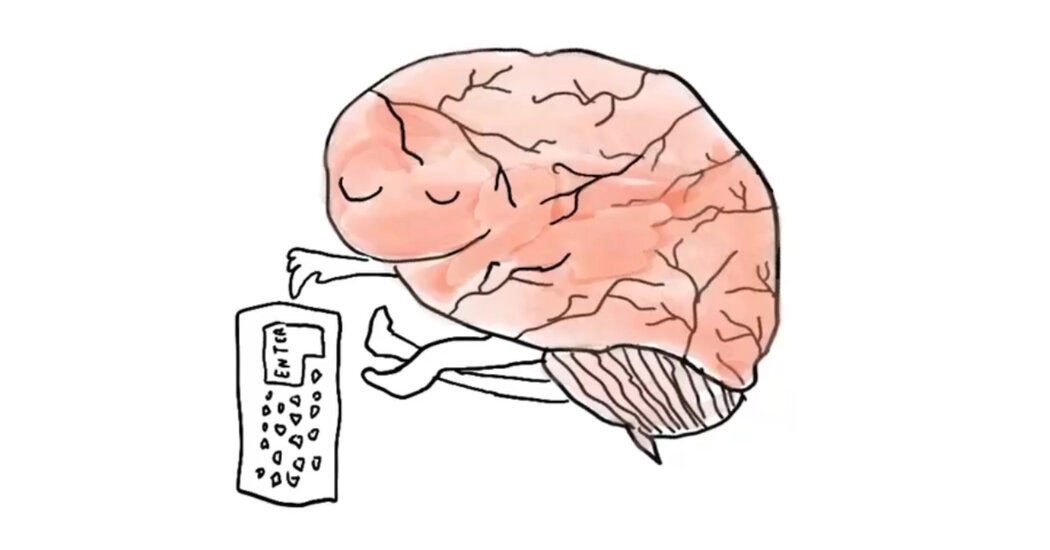
AI Chatbots May Reshape Brain Development and Learning Patterns
- Institution: Multiple neuroscience research groups (reported by The New York Times)
- Key Finding: Early evidence suggests that heavy reliance on AI chatbots during critical developmental windows may alter how the brain processes information and learns new skills. The research indicates that cognitive outsourcing to AI tools could reduce the need for active neural engagement in problem-solving tasks.
- Why It Matters: If confirmed, this finding could reshape educational policy and parental guidance around screen time and AI tool usage during childhood and adolescence. Understanding these mechanisms is critical before AI adoption becomes ubiquitous in schools.
Long COVID Damages Dopamine-Releasing Neurons, Explaining Fatigue and Brain Fog
- Institution: ScienceDaily-affiliated research consortium
- Key Finding: Brain imaging studies have identified evidence that long COVID may damage dopamine-releasing neurons in the substantia nigra and ventral tegmental area, explaining persistent fatigue, low motivation, slowed movement, and memory difficulties that plague post-COVID patients months after initial infection.
- Why It Matters: This discovery opens a pathway to targeted treatments that restore dopamine function in long COVID patients, potentially offering relief to millions suffering from debilitating post-viral symptoms. Dopamine-targeted therapies could become a major clinical avenue for long COVID management.
Restoring Brain Blood Vessel Function Reverses Autism-Related Behaviors in Adult Mice
- Institution: Neuroscience research laboratories
- Key Finding: Repairing brain blood vessel function via P2Y2 receptor activation successfully reversed autism-spectrum behavioral symptoms in adult mice, suggesting that vascular dysfunction may underlie certain autism-related social and motor deficits.
- Why It Matters: This preclinical finding challenges assumptions that autism-related behaviors are fixed after early development, suggesting potential therapeutic windows in adulthood through vascular interventions. It also implicates blood-brain barrier integrity as a novel target for autism research.
Amprion and PREMA Cognition Partner to Advance Multimodal Neurodegenerative Disease Assessment
- Institution: Amprion Inc. and PREMA Cognition (private biotech firms)
- Key Finding: A new collaboration integrates molecular biomarkers with complementary neuroimaging and cognitive assessment technologies to create a more comprehensive understanding of how neurodegenerative diseases present and progress over time.
- Why It Matters: Multimodal biomarker approaches enable earlier detection of neurodegeneration and may improve clinical trial design for diseases like Alzheimer's and Parkinson's, accelerating drug development pipelines.
Clinical & Translational Advances
Dopamine System as Therapeutic Target for Long COVID
The discovery of dopamine neuron damage in long COVID patients opens immediate clinical opportunities. Dopamine agonists, monoamine oxidase inhibitors, and other dopaminergic agents—already approved for Parkinson's disease—could be rapidly repurposed and tested in long COVID populations. This represents a direct translation pathway from basic neuroscience discovery to patient treatment within months.
Brain-Computer Interface for Simultaneous Word and Gesture Decoding
Recent advances (reported in Nature Neuroscience, September 2026) demonstrate that neural devices using artificial intelligence can now decode both intended words and hand gestures directly from brain activity recordings. This dual-decoding capability significantly expands the potential for brain-computer interfaces in paralysis patients and could restore communication and control to severely disabled individuals.
Brain Science Deep Dive
The Dopamine Hypothesis of Long COVID: A Paradigm Shift in Post-Viral Neurology
The identification of dopamine system dysfunction in long COVID represents a critical shift in how researchers approach persistent post-viral symptoms. Traditional long COVID models focused on systemic inflammation, microclots, and autonomic dysfunction. However, the new neuroimaging evidence shows that the virus—or the immune response to it—may directly target dopaminergic neurons in brain regions critical for motivation, movement initiation, and memory consolidation.
What makes this discovery particularly significant is its mechanistic clarity. Dopamine plays a central role in reward processing, motor control, and cognitive engagement. Damage to dopamine-producing neurons would predict exactly the symptom cluster observed in long COVID: fatigue (loss of motivational drive), brain fog (reduced cognitive processing), and movement disorders (loss of motor initiative). This isn't merely correlational—it explains why long COVID patients report feeling unmotivated despite wanting to engage in activities.
The therapeutic implications are immediate. Dopamine replacement strategies (levodopa, dopamine agonists) are already FDA-approved and well-tolerated. Clinical trials testing these agents in long COVID patients could begin within weeks. The challenge ahead is determining whether dopamine restoration alone is sufficient, or whether additional interventions targeting inflammation, vascular dysfunction, or viral persistence will be needed alongside dopaminergic support.
Emerging Patterns & Themes
-
AI's Neurobiological Impact: The emerging concern about AI chatbots reshaping brain development highlights a critical gap in neuroscience research—we are adopting transformative technologies without fully understanding their neurological consequences. This parallels historical concerns about screen time but with added complexity around cognitive outsourcing.
-
Vascular Dysfunction as Universal Mechanism: Multiple recent findings—from autism to long COVID to neurodegenerative disease—implicate blood-brain barrier integrity and cerebrovascular function as central pathways. This suggests a convergence toward understanding brain disease through the lens of neurovascular coupling rather than isolated neuronal pathology.
-
Multimodal Biomarkers as Clinical Standard: The shift toward integrating molecular, imaging, and behavioral biomarkers reflects maturation in the field. Single-biomarker approaches are increasingly seen as insufficient; clinically actionable diagnosis now requires convergent evidence across multiple modalities.
-
Neuroplasticity Beyond Childhood: The autism reversal findings in adult mice challenge long-held assumptions about developmental windows, suggesting that behavioral and neural phenotypes remain plastic longer than previously thought, opening therapeutic opportunities across the lifespan.
What to Watch Next
-
Long COVID Clinical Trials: Multiple research institutions are expected to initiate Phase 2 trials of dopaminergic agents in long COVID patients within Q4 2026. Results could reshape treatment guidelines for millions of post-COVID patients globally.
-
AI Neurodevelopment Studies: Longitudinal studies tracking brain imaging and cognitive outcomes in children with varying degrees of AI exposure will be critical. Results could inform regulatory frameworks and clinical recommendations within 12–18 months.
-
Multimodal Biomarker Validation in Alzheimer's Disease: The Amprion-PREMA partnership and competing initiatives aim to establish integrated biomarker panels as standard-of-care in early Alzheimer's diagnosis, with clinical adoption expected by mid-2027.
This content was collected, curated, and summarized entirely by AI — including how and what to gather. It may contain inaccuracies. Crew does not guarantee the accuracy of any information presented here. Always verify facts on your own before acting on them. Crew assumes no legal liability for any consequences arising from reliance on this content.
Powered by
