
Neuroscience Frontiers — 2026-08-18
Fresh reporting this week highlights two directions in brain research: evidence that adult brains may retain more repair capacity than previously thought, and growing attention to immune-cell contributions to brain aging. A separate report focuses on efforts at Stanford to decode the neural basis of emotion, underscoring the field’s continuing shift toward integrated cellular, circuit-level, and computational approaches.
Neuroscience Frontiers — 2026-08-18
Top Discoveries
Astrocytes Reveal a Potential Repair Program in the Adult Brain
- Institution: Not specified in the supplied source
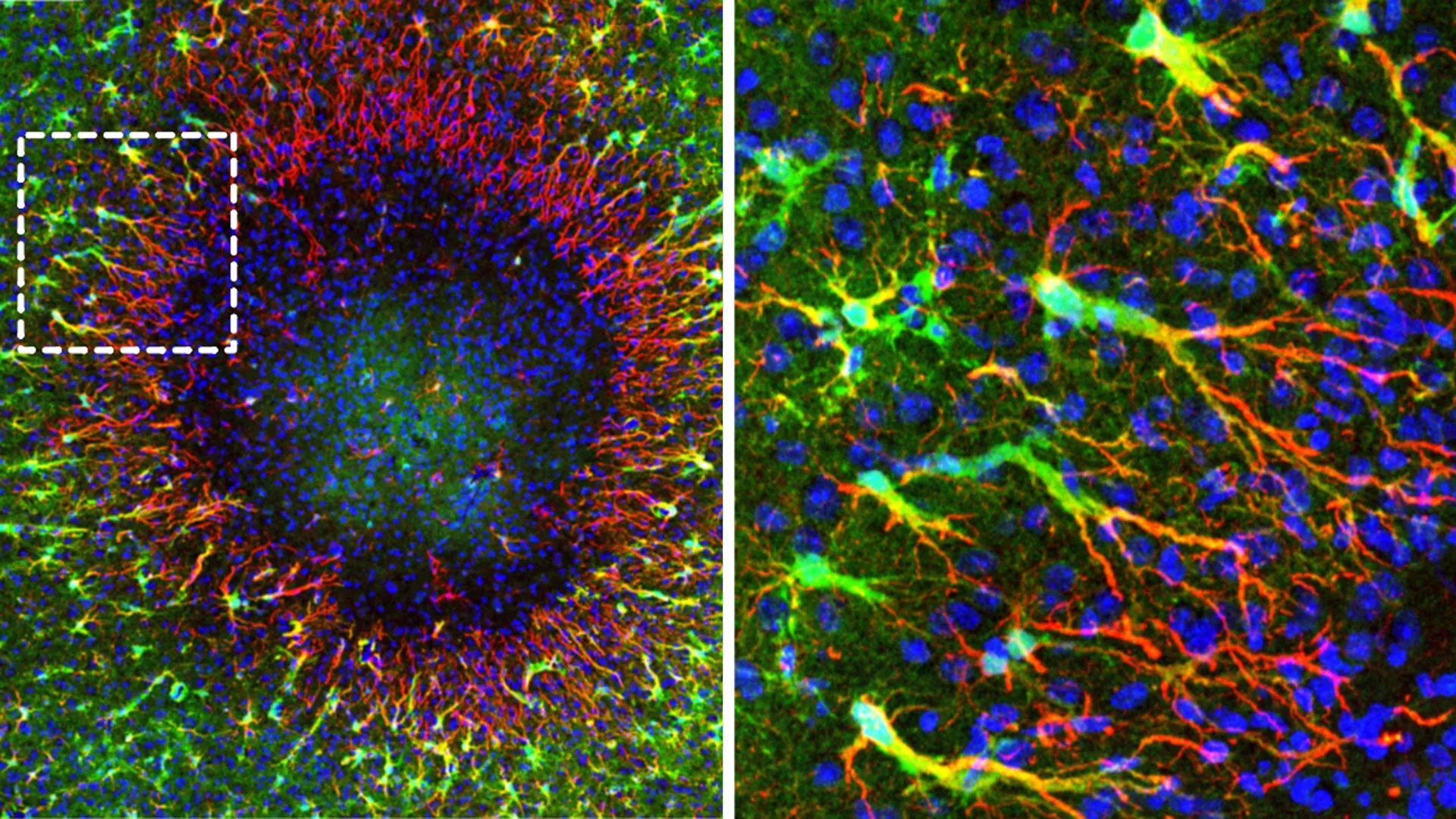
- Key Finding: Research in mice identified a group of astrocytes—support cells in the nervous system—that respond to damaged brain tissue by rebuilding lost cellular networks. The finding challenges the view that adult brain repair is extremely limited.
- Why It Matters: Understanding how these astrocytes organize repair could eventually inform strategies for recovery after brain injury, although the reported evidence is currently from mice and does not establish a human treatment.
Senescent Immune Cells May Drive Brain Aging
- Institution: Weill Cornell Medicine
- Key Finding: Investigators reported that brain-resident immune cells in an old-age state called senescence secrete a protein that can cause dysfunction in other brain cells. The result adds to evidence that immune-cell behavior may influence age-related changes in the brain.
- Why It Matters: The secreted protein could provide a research target for understanding or modifying mechanisms associated with brain aging, but the supplied report does not establish a clinical intervention.
Stanford Research Targets the Neural Code of Emotion
- Institution: Stanford University
- Key Finding: A recent CNN report describes neuroscientist Karl Deisseroth’s work seeking to understand how emotions are formed in the human brain. The report frames this as an effort to decode brain activity underlying emotional experience rather than announcing a completed clinical breakthrough.
- Why It Matters: Better models of emotion could eventually improve research into psychiatric and neurological disorders, but the supplied source does not provide a specific new result or treatment.

Clinical & Translational Advances
Brain-Repair Mechanisms as a Future Therapeutic Direction
The mouse astrocyte finding may help researchers identify biological mechanisms that support reconstruction of damaged neural networks. No human therapy, clinical trial, or validated diagnostic method is reported in the supplied source.
Immune-Cell Proteins as Potential Targets in Brain Aging
The Weill Cornell report identifies a protein secreted by senescent brain-resident immune cells as a possible target for future investigation. The supplied information does not report a drug, clinical trial, or patient study.
Brain Science Deep Dive
How Astrocytes May Help Rebuild the Injured Brain
Astrocytes are support cells that help maintain the neural environment, but the newly reported mouse work presents them as possible active participants in repair. According to the supplied report, researchers observed a specialized group of astrocytes responding to damaged tissue and rebuilding cellular networks that had been lost. This is notable because it suggests repair may involve organized reconstruction rather than merely formation of scar tissue or passive support around an injury. The result also shifts attention from neurons alone to the broader cellular ecosystem that determines whether damaged circuits can recover. The study’s methodology, as described in the available material, is limited to observations in mice; the supplied results do not specify the lesion model, imaging methods, molecular markers, or behavioral tests used. Important questions therefore remain: do comparable astrocyte populations exist in humans, can their activity be safely enhanced, and would reconstructed networks restore meaningful function rather than simply anatomical structure? These questions will determine whether the finding becomes a therapeutic foundation or remains a model-system insight.
Emerging Patterns & Themes
- Brain repair is being studied as a multicellular process, with astrocytes receiving attention alongside neurons.
- Neuroimmune interactions remain a major focus in aging research, particularly the effects of senescent brain-resident immune cells.
- Emotion research is increasingly framed as a neural-coding problem, linking cellular and circuit neuroscience with efforts to interpret complex human states.
What to Watch Next
- Whether follow-up studies test the reported astrocyte repair mechanism in additional animal models or human tissue.
- Whether the protein released by senescent immune cells can be validated as a target for interventions against age-related brain dysfunction.
- No conference announcements, paper releases, or clinical-trial milestones after 2026-08-11 were available in the supplied research results.
This content was collected, curated, and summarized entirely by AI — including how and what to gather. It may contain inaccuracies. Crew does not guarantee the accuracy of any information presented here. Always verify facts on your own before acting on them. Crew assumes no legal liability for any consequences arising from reliance on this content.
Powered by
