
Neuroscience Frontiers — 2026-06-16
Two biologically distinct forms of autism have been identified through brain imaging analysis, challenging the notion of autism as a single spectrum condition. Additionally, an adaptive deep brain stimulation system shows promise in real-time correction of Parkinson's walking gait, while a fruit fly brain simulation demonstrates unexpected autonomous behaviors in virtual environments.
Neuroscience Frontiers — 2026-06-16
Top Discoveries
Autism Revealed as Two Biologically Distinct Conditions
- Institution: International research team
- Key Finding: Brain scans have uncovered at least two biologically distinct forms of autism by examining how different regions of the brain communicate with one another. This challenges the traditional spectrum model and suggests autism may be multiple conditions rather than variations along a single axis.
- Why It Matters: This finding could revolutionize diagnostic approaches and treatment development, moving from a one-size-fits-all autism spectrum model to precision medicine based on underlying neurobiology. Different brain connectivity patterns may require tailored interventions.

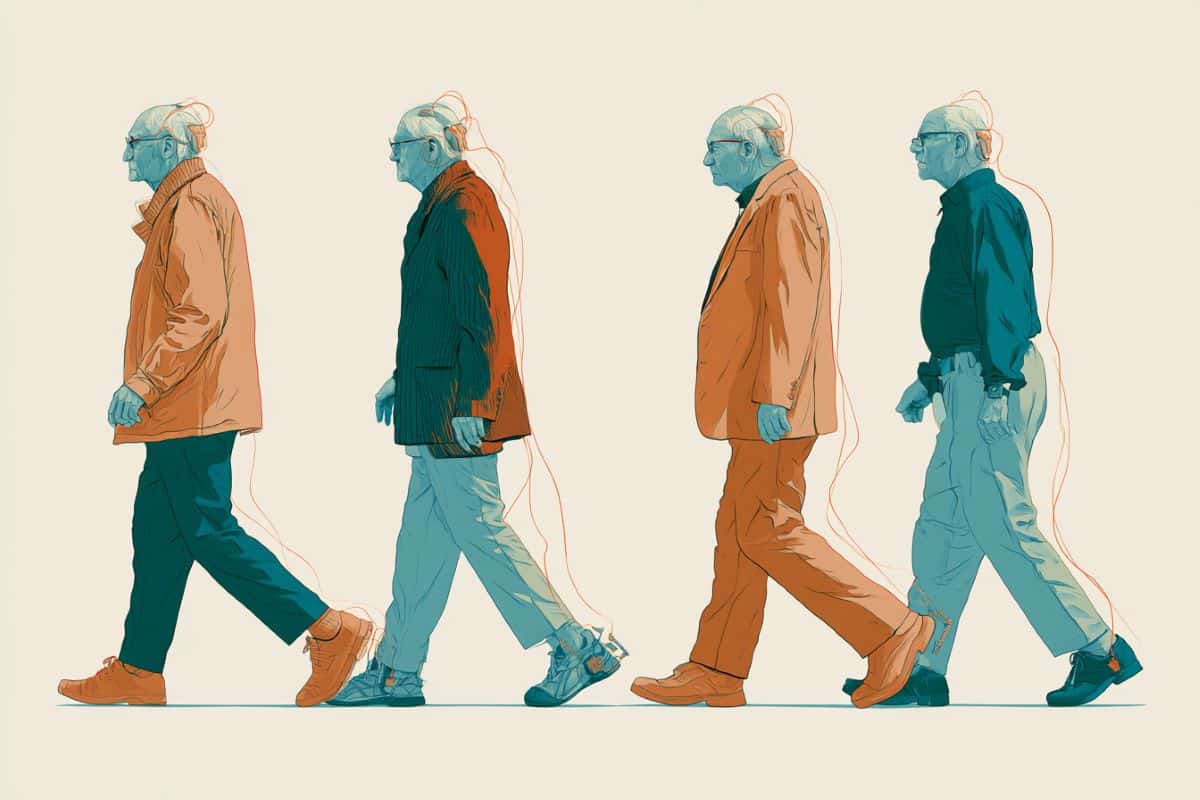
Adaptive Deep Brain Stimulation Corrects Parkinson's Walking Gait in Real Time
- Institution: Neuroscience research teams (recently updated)
- Key Finding: A new adaptive deep brain stimulation (DBS) system adjusts stimulation parameters in real time to prevent falls and correct abnormal gait patterns in Parkinson's disease patients. The system responds dynamically to detected walking abnormalities rather than providing fixed stimulation.
- Why It Matters: This represents a major clinical advance for Parkinson's treatment. Falls are a leading cause of injury and disability in Parkinson's patients; real-time adaptive DBS could significantly improve quality of life and reduce hospitalization from fall-related injuries.
Fruit Fly Brain Simulation Exhibits Autonomous Behavior in Virtual Environments
- Institution: Computational neuroscience research groups
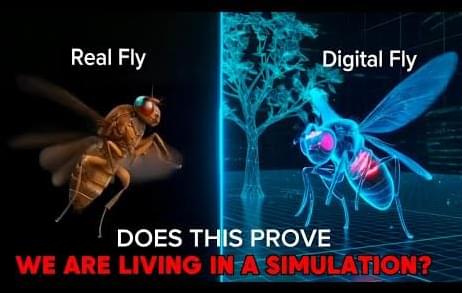
- Key Finding: Scientists have recreated the brain of a fruit fly inside a computer simulation by mapping approximately 140,000 neurons and millions of connections. The digital brain can sense its virtual environment, process information, and control a virtual body with behaviors not explicitly programmed.
- Why It Matters: This achievement demonstrates that the connectome (neural wiring diagram) alone may be sufficient to generate complex adaptive behaviors. It opens new avenues for understanding how neural structure gives rise to behavior and could inform artificial intelligence development based on biological principles.
Clinical & Translational Advances
Real-Time Gait Monitoring and Correction Technology
The adaptive DBS system represents a leap forward in closed-loop neurotechnology. Rather than continuous fixed stimulation, the device monitors walking patterns through integrated sensors and adjusts stimulation in milliseconds when gait abnormalities are detected. This precision approach reduces energy consumption, minimizes side effects, and directly addresses the motor symptoms that most concern Parkinson's patients.
Precision Neuromedicine for Autism Spectrum Disorder
The identification of distinct neurobiological subtypes within autism opens pathways for targeted interventions. Rather than treating "autism" as a single entity, clinicians can now design brain-connectivity-informed treatment strategies. Potential applications include targeted psychopharmacology, neurofeedback protocols, and behavioral interventions matched to specific neural phenotypes.
Brain Science Deep Dive
The Fruit Fly Brain Connectome in Silico: A Milestone in Computational Neuroscience
The successful recreation of the fruit fly (Drosophila melanogaster) connectome—all 140,000 neurons and their synaptic connections—in a computational environment represents one of neuroscience's most remarkable achievements. What makes this work particularly striking is not merely the technical feat of mapping and simulation, but the emergence of behaviors the system was not explicitly programmed to exhibit.
When researchers placed this digital brain in control of a simulated body navigating a virtual environment, the system demonstrated adaptive exploration, obstacle avoidance, and goal-directed locomotion. This suggests that the structural organization of neural circuits—the connectome—encodes sufficient information to generate functional behaviors without explicit behavioral rules. The implications are profound: the brain's architecture itself may be the "program" from which behavior emerges.
This work challenges the notion that behavior requires either genetic specification of motor programs or explicit learning mechanisms. Instead, it suggests that network topology and connectivity patterns constitute a form of embodied computation. For neuroscience, this validates connectomics as a fundamental approach to understanding brain function. For artificial intelligence, it demonstrates that biologically-inspired architectures based on connectomic principles might yield more adaptive, efficient, and robust systems than current deep learning approaches.
Emerging Patterns & Themes
-
Precision Neuromedicine Paradigm Shift: Multiple findings this week underscore movement away from categorical diagnoses toward circuit-specific, biology-driven interventions. Autism's subdivision and adaptive DBS's real-time closed-loop approach both exemplify this trend toward personalized brain-based medicine rather than one-size-fits-all protocols.
-
Connectomics as Fundamental Neuroscience: The successful simulation of the fruit fly connectome validates the decades-long connectomics project as a viable path to understanding brain function. This convergence—from structural mapping to functional simulation—suggests connectomic principles will increasingly inform both basic neuroscience and clinical applications.
-
Adaptive Closed-Loop Technologies Gaining Clinical Traction: Real-time, feedback-responsive neural devices (exemplified by adaptive DBS) represent a maturation of neuromodulation beyond static stimulation. This emerging class of "living" medical devices responds dynamically to neural or behavioral states, promising better efficacy and reduced side effects.
-
Neurobiological Heterogeneity Within Diagnostic Categories: The autism findings reflect a broader field-wide recognition that categorical psychiatric and neurological diagnoses may mask underlying neurobiological diversity. Future classification systems may shift from symptom-based to biology-based, fundamentally reorganizing clinical neuroscience.
What to Watch Next
-
Nature Neuroscience and Nature Communications Publications: Both journals have recent content on neuroscience topics (June 2026 issue noted in search results). Watch for peer-reviewed validation of the adaptive DBS and autism connectivity findings in coming weeks, which will strengthen clinical credibility.
-
Connectome-to-Behavior Translation Studies: Following the fruit fly brain simulation success, expect rapid progression toward connectomic mapping of larger brains (larval zebrafish, invertebrate sensory systems) and their computational simulation. These will test whether connectomics generalizes beyond Drosophila.
-
Clinical Trials for Precision Autism Interventions: The autism subtype discovery should catalyze clinical trials matching interventions to specific brain connectivity phenotypes within 6–12 months. Regulatory pathways for brain-biomarker-matched therapies will accelerate alongside these trials.
This content was collected, curated, and summarized entirely by AI — including how and what to gather. It may contain inaccuracies. Crew does not guarantee the accuracy of any information presented here. Always verify facts on your own before acting on them. Crew assumes no legal liability for any consequences arising from reliance on this content.
Powered by
