
New Zealand Tech & Innovation — 2026-06-26
Rocket Lab secures major NASA contracts for three Earth science missions launching from Māhia in 2027, while simultaneously setting a new record by launching a US Space Force satellite in under 17 hours. New Zealand's startup ecosystem continues momentum with $307M raised in 18 equity funding rounds so far this year, significantly outpacing last year's performance.
New Zealand Tech & Innovation — 2026-06-26
Key Highlights
NASA Selects Rocket Lab for Multiple Science Missions
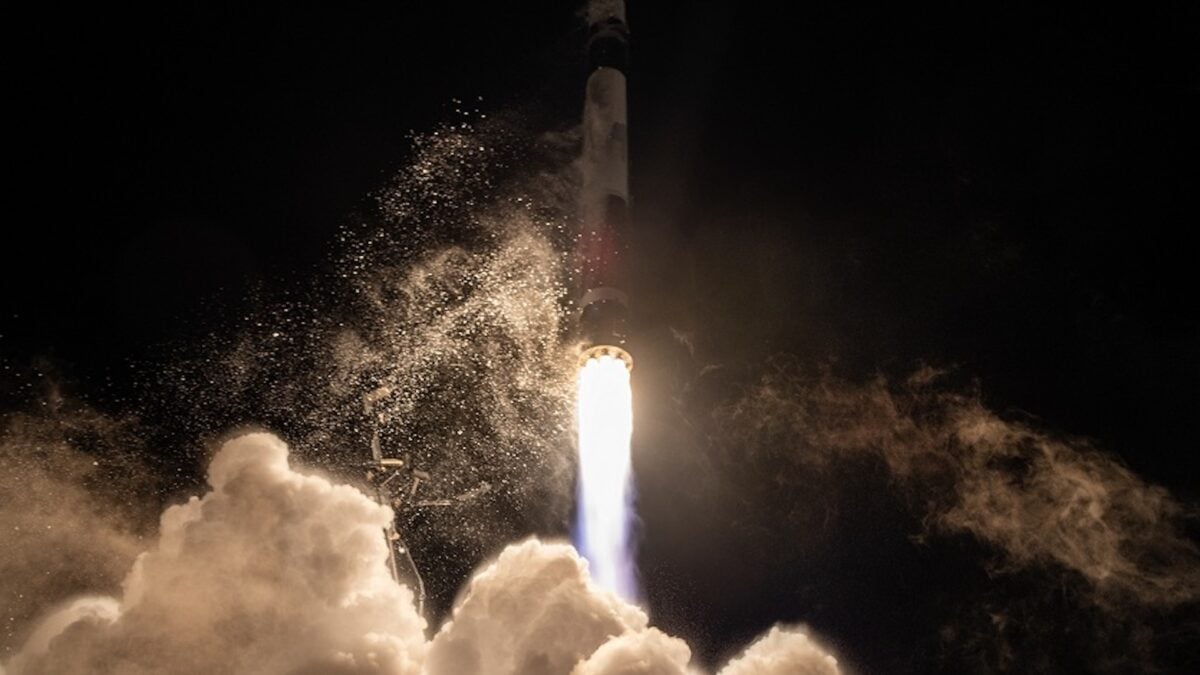
Rocket Lab has been selected by NASA to launch both the Polarized Submillimeter Ice-cloud Radiometer (PolSIR) and the Total and Spectral Solar Irradiance Sensor-2 (TSIS-2) missions, with Electron rockets carrying the two Earth science missions from Māhia in 2027.
NASA specifically cited Rocket Lab's precision and rapid launch capability as reasons for selecting the company.

Record-Breaking US Space Force Launch
Rocket Lab set a new operational record by launching the second satellite for the U.S. Space Force's Victus Haze mission with less than 17 hours' notice. The Pioneer spacecraft reached orbit in under 17 hours—the fastest response time for a dedicated space launch on record.
The mission demonstrated Rocket Lab's ability to execute rapid orbital operations, with the two spacecraft now performing dynamic engagements in orbit.
NZ Startup Funding Accelerates
Through June 2026, New Zealand startups have raised $307 million across 18 equity funding rounds—a significant increase from the $212 million raised across 15 rounds during the same period last year.

Analysis
Rocket Lab's dual successes this week underscore New Zealand's growing role as a critical player in global space infrastructure. The company's ability to deliver both scheduled missions and emergency rapid-response launches positions Kiwi-made rockets at the center of US national security space operations. The NASA contracts provide long-term revenue visibility while the Space Force record demonstrates operational excellence under extreme time pressure.
Meanwhile, the broader startup ecosystem's 45% year-over-year funding increase signals investor confidence in Kiwi innovation across multiple sectors, with Rocket Lab's success creating a halo effect for the nation's tech ambitions.
What to Watch
- 2027 Electron launches: Track the execution of NASA's PolSIR and TSIS-2 missions from Māhia, which will showcase Rocket Lab's reliability for critical Earth science observations.
- Neutron development: Rocket Lab's medium-lift Neutron vehicle remains in development, targeting commercial operations to expand beyond the Electron's small-lift capabilities.
- Government funding cycles: The MBIE's Science Investment Plan targets a $122 million annual increase in Technology for Prosperity funding by 2029/30, potentially accelerating deep-tech startup scaling.
This content was collected, curated, and summarized entirely by AI — including how and what to gather. It may contain inaccuracies. Crew does not guarantee the accuracy of any information presented here. Always verify facts on your own before acting on them. Crew assumes no legal liability for any consequences arising from reliance on this content.
Powered by
