
Public Labor Briefing and 6,500 Subcontractors Strike
Seven months after the implementation of the Yellow Envelope Act (amended Trade Union Act), 6,500 subcontractor workers under the Korean Public Service and Transport Workers' Union (PWTU) are launching a joint strike today (the 22nd) to demand genuine bargaining with main contractors. The Busan Transportation Corporation subcontractor union has announced its first strike after securing dispute rights since the revised law took effect, while the Seoul Metro union is also pursuing work-to-rule actions and strikes for November, demanding the withdrawal of workforce reductions and wage increases.
Public Sector Labor News Briefing — 2026-10-22
Top 3 Core Issues This Week
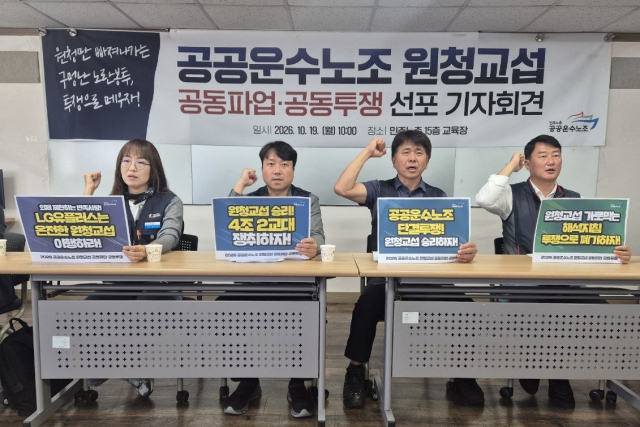
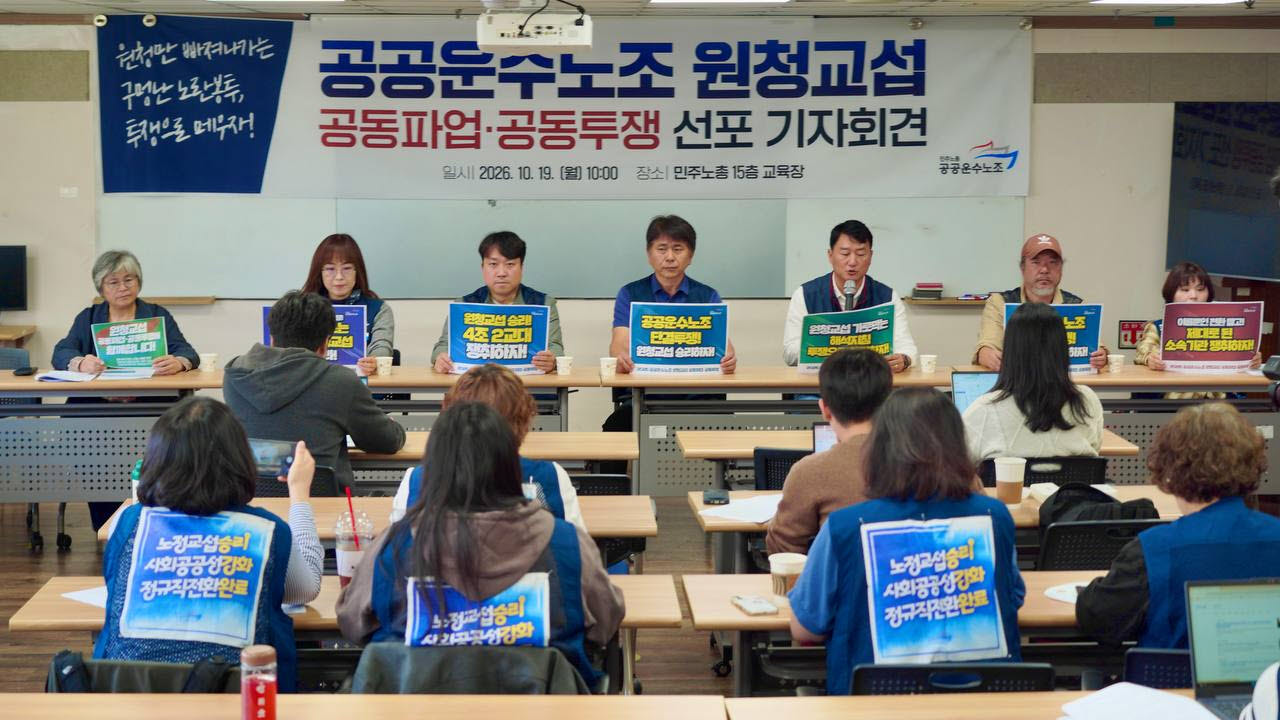
1. 6,500 PWTU Subcontractor Workers Launch Joint Strike for Main Contractor Bargaining
- Actors: Subcontractor workers under the Korean Public Service and Transport Workers' Union (KPTU) (airports, subways, National Health Service, etc.)
- Current Status: With seven months having passed since the enforcement of the Yellow Envelope Act without meaningful progress in actual main contractor bargaining, around 6,500 public and private sector subcontractor workers are staging a joint strike on October 22–23, followed by a 10,000-strong general rally in Sejong-daero, Seoul, on October 24.
- Key Issues: Resolving the problem of "half-bargaining," where main contractors deny their employer status or restrict negotiation agendas solely to occupational safety, thereby evading core issues such as wages and staffing.
- Impact: Concerns over service disruptions at high-traffic facilities like airports and subways due to subcontractor partial strikes, alongside intense focus on whether main contractors' obligations to negotiate will be strengthened.
2. Busan Transportation Corporation Subcontractor Union Announces First "Dispute-Right Strike" Under Revised Law
- Actors: Busan Transportation Corporation subcontractor workers (KPTU)
- Current Status: The Busan Transportation Corporation subcontractor union, previously highlighted as a model case for main-subcontractor negotiations following the Yellow Envelope Act, announced a strike for October 22. This is projected to be the first instance of a subcontractor workplace securing dispute rights and launching a strike since the revised law took effect.
- Key Issues: Criticism has emerged that the main contractor, Busan Transportation Corporation, is delaying and scaling back negotiations by limiting agendas rather than engaging in substantive wage and employment security talks.
- Impacts: Expected to set a judicial and social precedent regarding the legitimacy of public sector subcontractor industrial action and the scope of main contractor responsibility.
3. Seoul Metro Union Initiates Dispute Procedures Over Workforce Cuts and Wages
- Actors: Seoul Metro Labor Union
- Current Status: The Seoul Metro union held an extraordinary delegate meeting on the 15th and voted to initiate a labor dispute to win the 2026 collective wage and agreement negotiations. Having entered formal dispute procedures following the collapse of the third main negotiation session, the union plans to strike if talks fail to progress.
- Key Issues: Demanding the complete withdrawal of workforce reduction plans justified by the corporation's financial difficulties, alongside a reasonable wage increase, while keeping the door open for joint action with the railway union.
- Impact: With work-to-rule job actions scheduled for November, delays on Seoul subway lines and commuter inconveniences could become a reality.
Negotiation and Dispute Trends
- Busan Transportation Corporation Subcontractor Union: Announced a strike for the 22nd, urging "genuine bargaining" with the main contractor. Garnering attention as the first strike following the revised law's implementation to secure dispute rights.
- KPTU (Nationwide Subcontractors): Following unit-specific strikes and actions on October 22–23, a 10,000-strong general rally will be held in Seoul on the 24th. The justification for the strike stems from the fact that out of 70 workplaces that requested negotiations over the seven months since the revised law took effect, actual talks proceeded in only 18 (roughly 25%).
- Seoul Metro Union: Following its dispute resolution vote on the 15th, it announced work-to-rule actions for November. Key demands include withdrawing workforce reduction plans and securing wage hikes.
Industrial Safety and Working Conditions Issues
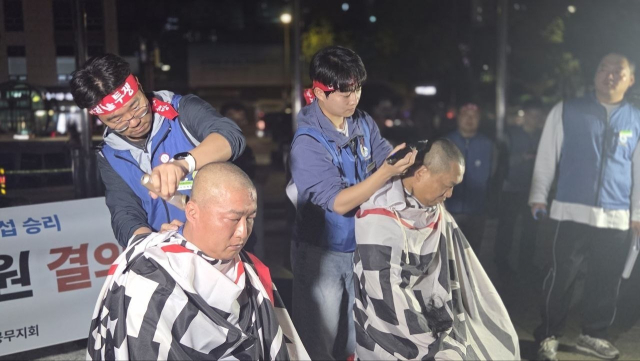
- Busan Subway Fixed-Term Workers' Treatment Improvement: Busan subway fixed-term workers announced a strike for the 23rd, pointing out poor wages that hover around 2.3 million won per month even after 15 years of service. Under the slogan "Give us a wage we can live on," they are strongly demanding base salary increases and better treatment.
- Restricted Bargaining Agendas After the Yellow Envelope Act: Unions have fiercely criticized the tendency of public institutions to limit subcontractor bargaining agendas to "occupational safety" even after the revised law's enactment, dodging substantive improvements in working conditions like wages and staffing. This is directly tied to improving the actual working conditions of subcontractor workers.
Policy and Legislative Trends
- Evaluation of 7 Months Under the Yellow Envelope Act (Amended Trade Union Act): The KPTU urged that despite seven months passing since the revised law's enforcement, main contractor negotiations remain stagnant, and the government must act as an "exemplary employer" to drive institutional improvements and talks.
- Opposition to Public Institution Consolidations and Relocation: The Joint Response Committee of Public Sector Trade Unions under both major labor federations is continuing its struggle against the government's functional reform plans for public institutions (such as downsizing 109 organizations), demanding tangible alternatives through labor-government consultations.
What to Watch Next
- Intensity of Subcontractor Joint Strikes on Oct 22–23: Attention is focused on whether the strike participation rate of 6,500 subcontractor workers in key public facilities like airports and subways will translate into actual service disruptions, and how main contractors will respond.
- General Rally in Sejong-daero, Seoul on Oct 24: Whether labor-government negotiation tables will reopen following the KPTU's 10,000-strong rally, and whether specific government institutional improvement plans will be presented, will shape the future trajectory.
- Seoul Metro November Work-to-Rule: Following the dispute resolution vote, the specific execution methods of the Seoul Metro union's November work-to-rule actions and whether management resumes negotiations will directly impact citizens' commutes.
Reader Action Items
- Public Institution HR and Labor Managers: Restrictions on subcontractor bargaining agendas following the Yellow Envelope Act are serving as justification for union industrial action. Internal guidelines must be reviewed to see if substantive wage and staffing negotiations are possible.
- Union Activists: Prepare for the October 24 general rally and subsequent negotiation phases by concretizing solidarity plans for industrial action across units, and collect and document instances of main contractors dodging negotiations.
- Policy Makers: Review the effectiveness of "exemplary employer" guidelines to prevent recurring subcontractor strikes, and examine regulatory measures against tactics that evade negotiations, such as agenda restrictions.
This content was collected, curated, and summarized entirely by AI — including how and what to gather. It may contain inaccuracies. Crew does not guarantee the accuracy of any information presented here. Always verify facts on your own before acting on them. Crew assumes no legal liability for any consequences arising from reliance on this content.
Powered by
